Panettone
User Reviews
5
Panettone
Description
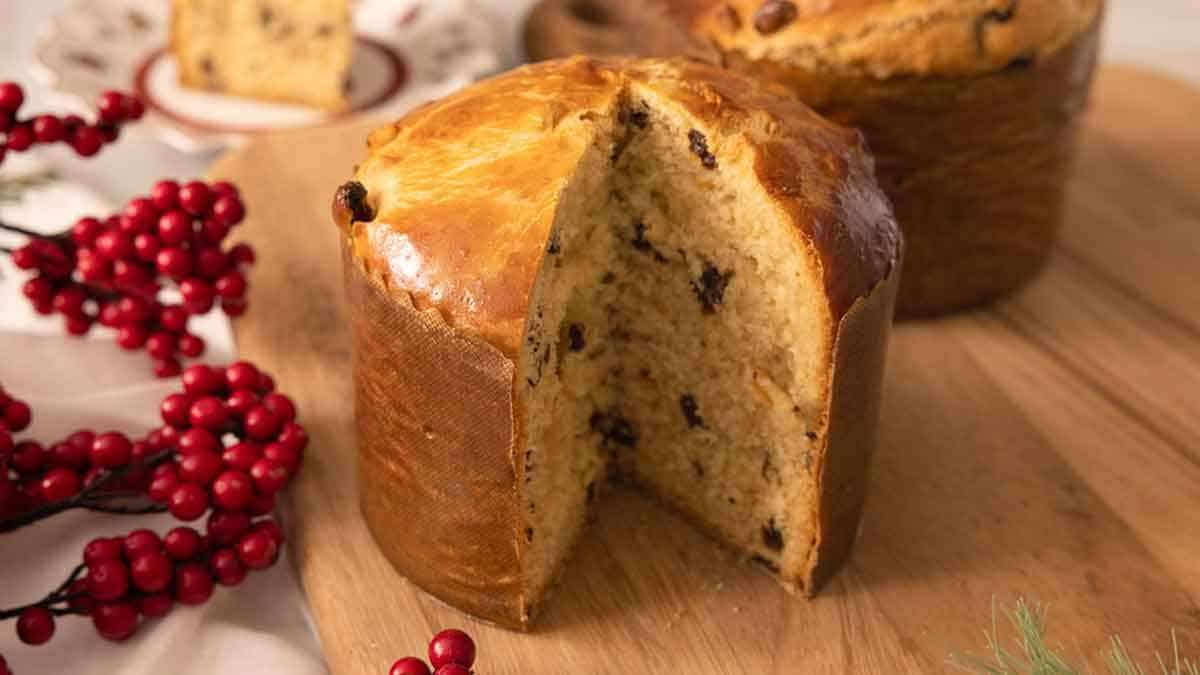
This Panettone recipe begins with soaking raisins and candied or chopped orange peel in rum and hot water to infuse fruit with moisture and flavor. A yeast sponge starter is prepared using warm water, yeast, and flour, then left to ferment for several hours to encourage natural leavening and complexity. The dough is then mixed with additional yeast, flour, sugar, melted butter, eggs, vanilla, salt, orange zest, and slivered almonds, and kneaded until smooth. It is left to rise in a warm place until doubled, which can take considerable time due to lower yeast quantities and cooler environments.
The dough's softness and richness come from the butter and eggs, while the orange zest and almonds contribute citrus aroma and a subtle crunch. The rum-soaked fruit keeps the bread moist and adds bursts of sweet and tangy flavor beneath the tender crumb. Panettone is traditionally baked in tall molds to encourage its characteristic domed shape.
This sweet bread is ideal as a festive treat during holidays, served sliced plain or with butter and preserves. Its texture is fluffy yet substantial enough to hold up to slicing. The recipe requires patience for the rises but rewards with a complex, fragrant bread.
Notes emphasize measuring flour carefully to avoid a dense texture, warming eggs to room temperature for better incorporation, and maintaining an optimal rising temperature between 75 to 78°F. The use of store-bought yeast accelerates the process compared to sourdough solutions but retains the layered flavors from the starter and long fermentation.
Ingredients
For the Soaked Fruit:
- 1¼ cup raisins
- ¾ cup orange peel chopped, candied, or lemon peel
- ¼ cup rum
- ¼ cup water hot
For the Starter:
- ½ cup water warm
- ¼ teaspoon active dry yeast part of a .25-ounce packet
- 1 cup all-purpose flour 135g, plus 2 tablespoons
For the Dough:
- ⅓ cup water warm
- 2 teaspoons active dry yeast remaining part of a .25-ounce packet
- 4 cups all-purpose flour (480g)
- ¾ cup granulated sugar (150g)
- ½ cup butter melted (113g, unsalted
- 4 large egg room temperature and divided
- 1 tablespoon vanilla extract
- 1¼ teaspoon salt
- orange zest of 1
- ½ cup almonds slivered
Instructions
For the Soaked Fruit:
- In a small bowl, stir together the raisins, candied orange peel, rum, and hot water. Cover and let soak for 8 hours or up to 2 days.
For the Sponge:
- In the bowl of a stand mixer, combine warm water and yeast. Let stand until the yeast is dissolved. Add the flour and mix until well combined. Cover and let rise for at least 8 hours and up to 12 hours.
For the Dough:
- Once the sponge is very bubbly, stir together warm water and yeast and let stand until foamy, about 5 minutes.
- Add it to the starter along with the flour, sugar, butter, 3 eggs, vanilla, and salt. Using the dough hook attachment, mix on low speed until ingredients are combined. Add the orange zest and continue mixing until a smooth dough is formed, about 15 minutes. (The dough should be mostly pulling away from the sides of the bowl. If it doesn’t after 12 minutes add another tablespoon or two of flour.) Scrape the dough down into the bottom of the bowl and cover. Let rise in a warm place until doubled in size, about 2 to 3 hours.
- Meanwhile, drain any remaining liquid from the soaked fruit. Place two 9x13cm panettone molds on a baking sheet.
- Once the dough is risen, return the dough bowl to the stand mixer with the dough hook attachment. Add the drained fruit and slivered almonds. Mix on low speed until the fruit and nuts are well dispersed in the dough, about 1 to 2 minute. (The dough will become very sticky.)
- Transfer the dough to a well floured surface. Sprinkle the dough with flour and knead a few times to shape into a ball. Cut the dough in half and shape each half into a ball, flouring the dough and your hands as needed. Place one dough ball in each of the panettone molds. Cover loosely with a damp tea towel or plastic wrap and let rise until the dough just comes above the rim of the mold, about 3 hours.
- When the bread is almost done rising, preheat the oven to 400F.
- Beat the remaining egg and lightly brush over the top of the risen dough. Place the baking sheet in the oven. Immediately reduce the oven temperature to 350F.
- Bake for 40 minutes or until the top is golden brown and a toothpick inserted into the center comes out clean, covering loosely with foil half through if the top is getting dark brown quickly. (It should also sound hollow when tapped.) Let cool completely on a wire rack. Keep the panettone in the paper molds and tightly wrapped in plastic wrap until ready to serve, or up to 2 weeks. Gently peel the paper off the sides before slicing.
Notes
- Use your preferred dried or candied fruits; raisins and orange peel are traditional but can be substituted.
- Measure flour with a scale or fluff and level to avoid adding too much, which leads to dense loaf.
- Knead dough until it cleans the bowl; add more flour gradually if sticky beyond 12 minutes of mixing.
- Warm eggs to room temperature before mixing to ensure even incorporation and avoid overmixing.
- Maintain dough rise in a warm (75-78°F) environment, such as an oven with the light on, to encourage proper fermentation.
- Allow sponge to ferment overnight (8 to 12 hours) for flavor development and leavening.
Nutrition Information
Show DetailsNutrition Facts
Serving: 12servings
Amount Per Serving
Calories 449 kcal
% Daily Value*
| Calories | 449kcal | 22% |
| Carbohydrates | 74g | 25% |
| Protein | 11g | 22% |
| Fat | 12g | 18% |
| Saturated Fat | 6g | 30% |
| Polyunsaturated Fat | 1g | 6% |
| Monounsaturated Fat | 4g | 20% |
| Trans Fat | 1g | 50% |
| Cholesterol | 85mg | 28% |
| Sodium | 286mg | 12% |
| Potassium | 285mg | 6% |
| Fiber | 4g | 16% |
| Sugar | 21g | 42% |
| Vitamin A | 332IU | 7% |
| Vitamin C | 2mg | 2% |
| Calcium | 41mg | 4% |
| Iron | 3mg | 17% |
* Percent Daily Values are based on a 2,000 calorie diet.
User Reviews
Overall Rating
5
You'll Also Love