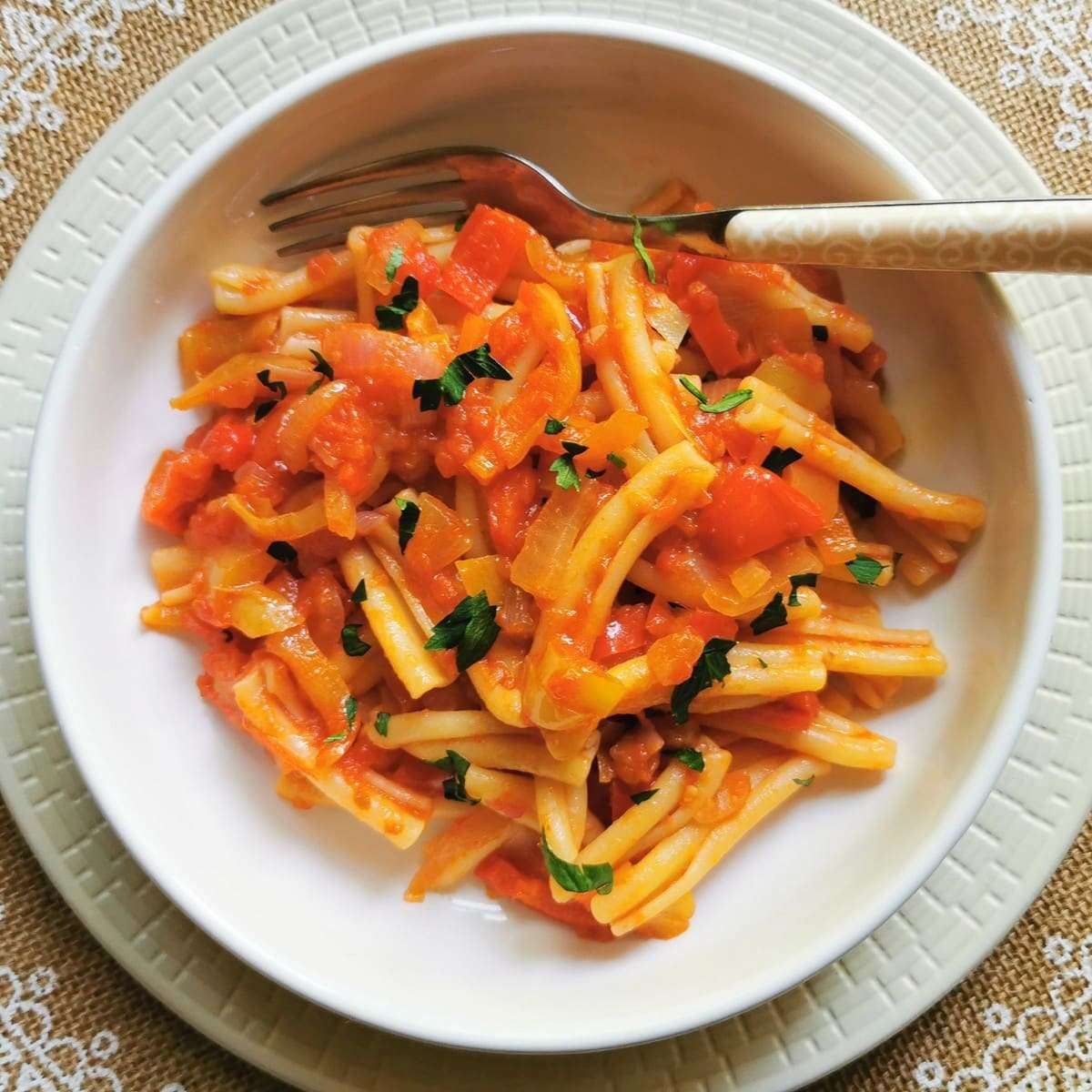
Pasta alla Peperonata (sweet pepper sauce)
User Reviews
5
-
Prep Time
15 mins
-
Cook Time
45 mins
-
Total Time
1 hr
-
Servings
4
-
Calories
568 kcal
-
Course
Main Course, Salad
-
Cuisine
Mediterranean, Italian
Pasta alla Peperonata (sweet pepper sauce)
Description
This dish uses a variety of sweet bell peppers cooked gently with sliced onions and whole garlic cloves in extra virgin olive oil until softened. The addition of tomato passata and halved cherry tomatoes contributes a fresh tomato flavor, while bay leaf and wine vinegar introduce subtle herbal and acidic notes. The sauce simmers slowly with occasional stirring to develop depth and meld flavors. Once the sauce is ready, it is combined with al dente cooked casarecce pasta, allowing the sauce to coat each piece thoroughly. Fresh herbs like basil or parsley can be used to garnish, and grated Parmesan adds a savory finish if desired.
The combination of sweet peppers from three colors creates a visually appealing and taste-rich sauce that is gentle yet vibrant. The simmering breaks down the vegetables to a soft texture, making the sauce smooth and well integrated with the pasta's firmness and shape. The use of wine vinegar balances the natural sweetness for a nuanced taste profile.
This pasta works well as a main vegetarian course or as a side paired with grilled meats or seafood. It is suitable for reheating and can be made ahead to allow flavors to mature. Variations in pasta shape still work well and gluten-free pasta options can adapt the recipe to dietary needs.
Ingredients
- 14 oz casarecce pasta
- 2 red sweet pepper bell peppers/capsicums), sliced
- 2 yellow sweet peppers sliced
- 2 orange sweet pepper sliced
- 2 cloves garlic peeled
- 2 red onions preferably from Tropea. Peeled and sliced
- 1 handful cherry tomato cut in half
- 10 oz tomato passata I used Cirio or Mutti rustica
- 1 bay leaf
- 3-4 tablespoon extra virgin olive oil
- 1 tablespoon wine vinegar
- salt for pasta and to taste
- black pepper to taste
- basil optional, for garnish, or parsley, fresh
- parmigiano reggiano optional topping, or vegetarian parmesan
Instructions
- In a large frying pan or skillet, heat the extra virgin olive oil over medium heat. Add the sliced onions, whole garlic cloves, and peppers. Cook, stirring often, until the vegetables start to soften.
- Stir in the tomato passata, halved cherry tomatoes, bay leaf, and wine vinegar. Season with salt. Reduce the heat to low-medium and simmer covered for 30-40 minutes, stirring occasionally. Remove the bay leaf after cooking.
- While the sauce is simmering, bring a large pot of water to a boil then add salt. Allow the water to come to the boil again and cook the pasta until al dente, according to package instructions. Before draining, reserve a cup of the pasta cooking water.
- Add the drained pasta directly to the sauce in the skillet. Mix well to coat the pasta evenly. If the sauce seems too thick, add a little reserved pasta cooking water to adjust the consistency.
- Serve the pasta hot, garnished with freshly ground black pepper, chopped basil or parsley, and a generous sprinkling of grated cheese, if desired.
Notes
- Leftover peperonata can be saved as a side dish or used as a topping for bruschetta.
- The pasta and sauce can be baked before serving by adding grated Parmesan or mozzarella on top.
- Different short pasta shapes such as penne, cavatelli, orecchiette, or rigatoni can be used.
- Gluten-free pasta brands work well to make the dish gluten-free; the sauce itself is naturally gluten-free, vegan, and nut-free.
Nutrition Information
Show DetailsNutrition Facts
Serving: 4Serving
Amount Per Serving
Calories 568 kcal
% Daily Value*
| Calories | 568kcal | 28% |
| Carbohydrates | 99g | 33% |
| Protein | 17g | 34% |
| Fat | 13g | 20% |
| Saturated Fat | 2g | 10% |
| Polyunsaturated Fat | 2g | 12% |
| Monounsaturated Fat | 8g | 40% |
| Sodium | 38mg | 2% |
| Potassium | 1058mg | 23% |
| Fiber | 9g | 36% |
| Sugar | 14g | 28% |
| Vitamin A | 4321IU | 86% |
| Vitamin C | 278mg | 309% |
| Calcium | 67mg | 7% |
| Iron | 4mg | 22% |
* Percent Daily Values are based on a 2,000 calorie diet.
User Reviews
Overall Rating
5
You'll Also Love