Pull-Apart Keto Bread Rolls
User Reviews
5
Pull-Apart Keto Bread Rolls
Description
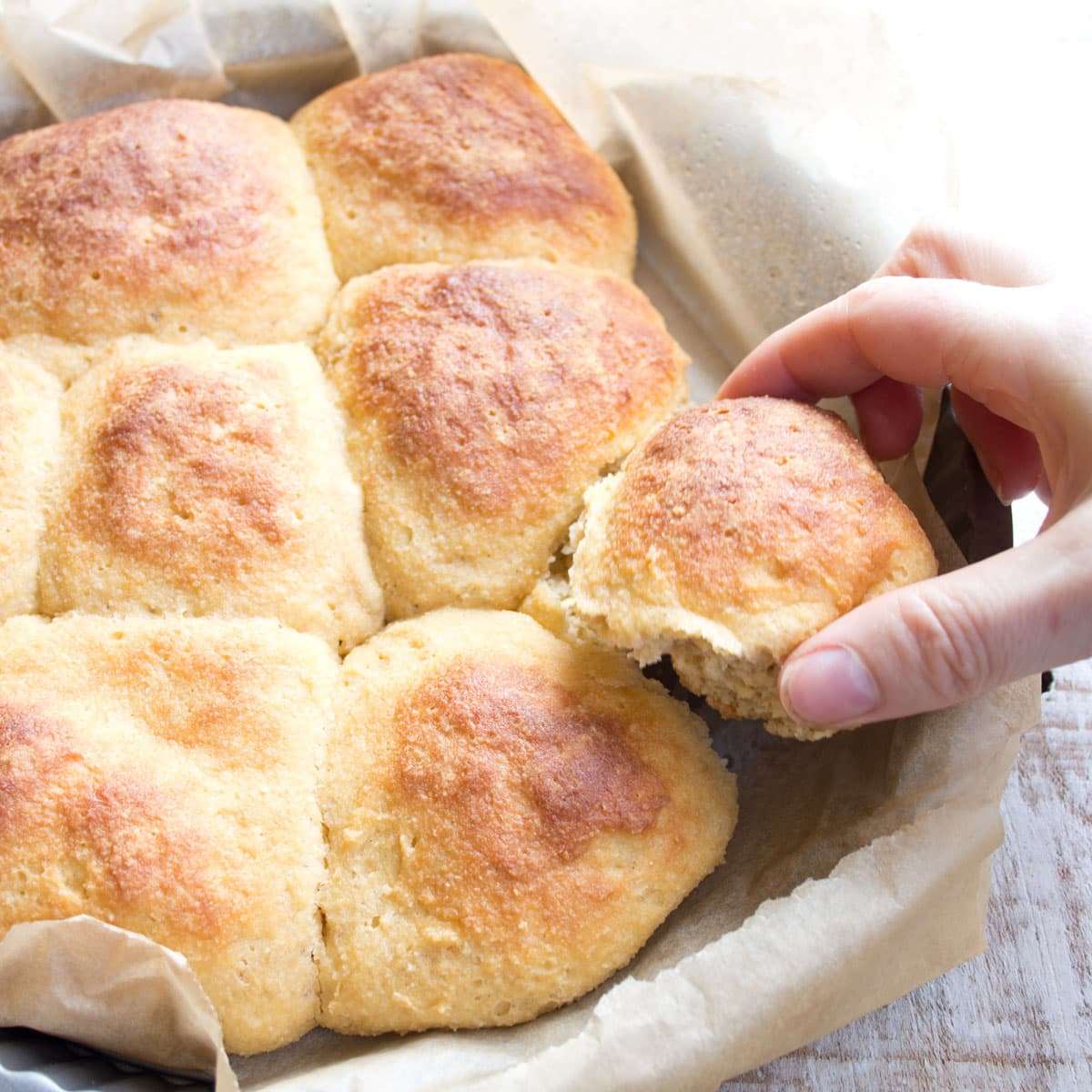
Pull-Apart Keto Bread Rolls start with a base of almond flour, whey protein powder, psyllium husk powder, and baking powder mixed dry. Active dry yeast is proofed with inulin and warm water to activate fermentation. Eggs and melted butter at warm temperatures are whisked with the activated yeast mixture and Greek yogurt to form a batter. The dry ingredients are incorporated gradually, thickening the dough due to psyllium's absorbing qualities. The dough is shaped into eight balls placed spaced apart on parchment lined baking dishes. Baking produces rolls with a low-carb profile and a sturdy, slightly chewy crumb typical of almond flour baked goods. Maintaining correct temperatures during ingredient mixing helps ensure the yeast stays active and the rolls rise well.
The rolls can serve as a suitable substitute for bread in keto-friendly meals. The texture supports pull-apart serving style, making them convenient for snacking or accompaniment with spreads or fillings.
Proofing the yeast is crucial; the mixture should froth and thicken before combining with other ingredients to avoid dense or tough rolls. Adjust oven temperature to 190 Celsius / 375 Fahrenheit for baking at high altitudes. These rolls contain about 1g net carbs each.
Ingredients
Dry Ingredients
- 2 cups / 200g almond flour or ground almonds
- 3 tablespoon whey protein powder
- 3 tablespoon psyllium husk powder
- 2 teaspoon baking powder
- 2 teaspoon inulin
- 2 teaspoon active dry yeast
- salt optional, generous pinch
Wet Ingredients
- 2 egg room temperature, large
- 2 egg room temperature, white
- ¼ cup / 50g butter melted
- scant ¼ cup / 50g Greek yoghurt
- ⅓ cup / 80ml water lukewarm
Instructions
- Proof the yeast! Put the yeast and inulin into a bowl and add the warm water (40 Celsius / 105 Fahrenheit). If you don't have a thermometer, the water should be warm to the touch. Cover the bowl with a kitchen towel and leave in a warm place for 5-10 minutes until it starts to froth and thicken.
- In the meantime, combine the dry ingredients - almond flour, protein powder, psyllium husk powder, baking powder - in another bowl and set aside.
- Using an electric mixer or a food processor, whisk the room temperature eggs and egg whites, melted (warm, not hot!!) butter and the activated yeast mixture until well combined.
- Add the yoghurt and the first half of the dry ingredients mixture. Blend until combined, then add the second half of the flour mix. The dough will thicken quickly as the psyllium and the almond flour absorb the moisture.
- Line a pie dish or a casserole dish with parchment paper. Lightly wet your hands and form eight dough balls. Make sure you leave some space around the rolls as they will significantly increase in size.
- Cover the dish with lightly oiled cling film and a kitchen towel and return to a warm space for around 50 to 60 minutes until the rolls have substantially expanded - see the images in the post. I like to place my tray on top of the radiator.
- Towards the end of the rising time, pre-heat the oven to 175°C/350 Fahrenheit.
- Bake for around 15 minutes or until the rolls are starting to brown. Then cover loosely with aluminium foil and continue to bake for another 7-10 minutes.
Notes
- Ensure all wet ingredients are at proper warm or room temperature to prevent killing the yeast during activation.
- Proof the yeast with warm water and inulin until frothy to confirm it's active before proceeding.
- Make eight rolls for about 1 gram net carb per roll.
- At high altitude, increase oven temperature to 190°C (375°F) to achieve proper baking.
Nutrition Information
Show DetailsNutrition Facts
Serving: 8Serving
Amount Per Serving
Calories 257 kcal
% Daily Value*
| Serving | 60g | |
| Calories | 257kcal | 13% |
| Total Carbohydrates | 7.1g | 2% |
| Protein | 12.4g | 25% |
| Fat | 20.1g | 31% |
| Saturated Fat | 5g | 25% |
| Polyunsaturated Fat | 0.4g | 2% |
| Monounsaturated Fat | 1.9g | 10% |
| Fiber | 4.5g | 18% |
| Sugar | 1.9g | 4% |
* Percent Daily Values are based on a 2,000 calorie diet.
User Reviews
Overall Rating
5
You'll Also Love