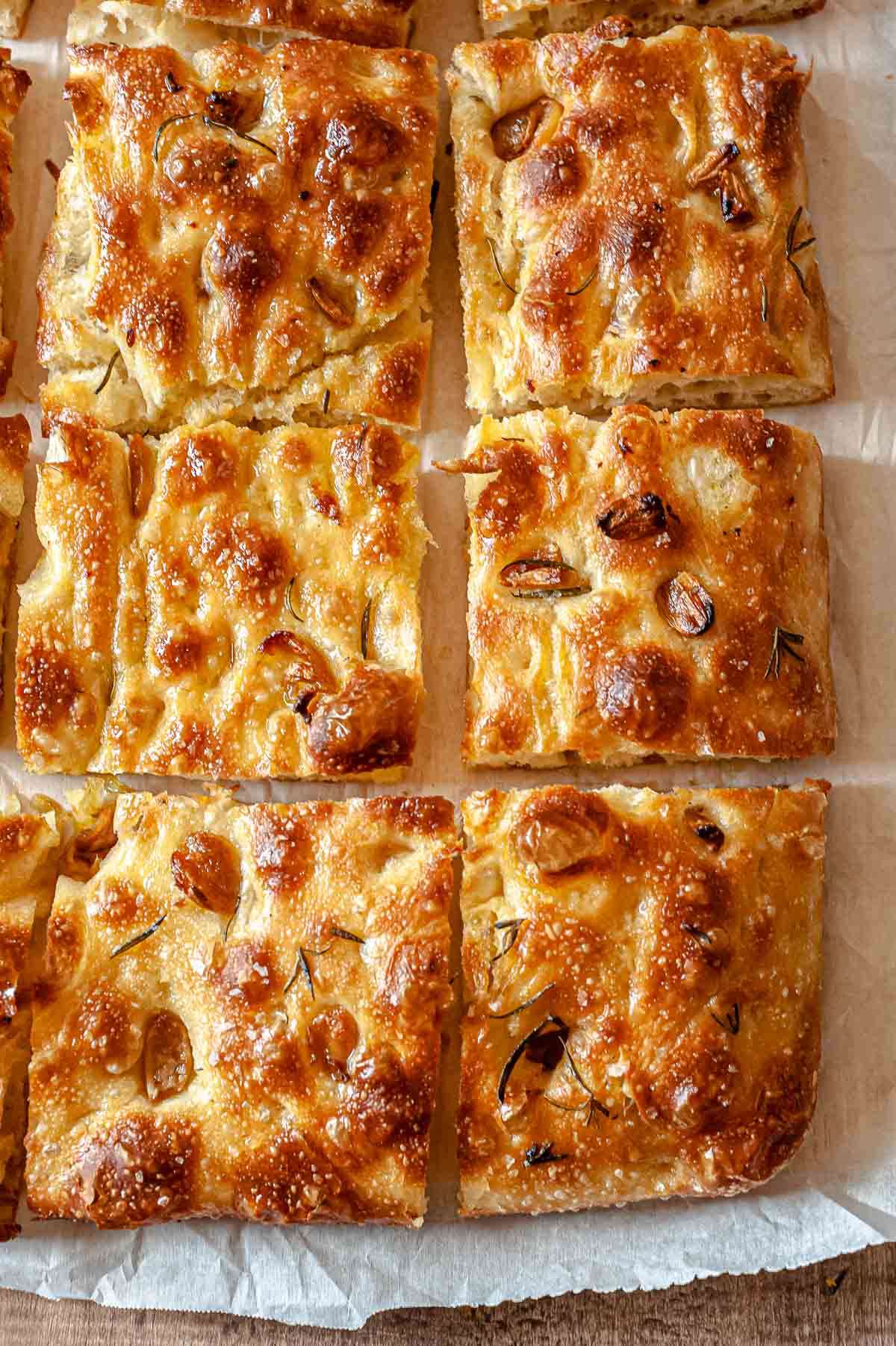
Roasted Garlic and Rosemary Focaccia Recipe
User Reviews
4.9
Roasted Garlic and Rosemary Focaccia Recipe
Description
The recipe uses a biga starter, made from bread flour, warm water, and yeast, left to ferment overnight to build flavor and gluten. Combined with more flour, water, olive oil, salt, and yeast, the dough is sticky and elastic. After resting and folding to develop gluten, it is topped with whole rosemary sprigs and a head of garlic roasted separately until soft and caramelized.
The focaccia bakes to a golden crust with rosy bits where the herbs and garlic infuse the surface. Using bread flour provides strength and chewiness, while the olive oil contributes moisture and flavor. Variations include adding olives, tomatoes, or different herbs to suit taste.
This bread serves well alongside soups, salads, or as a sandwich base. The recipe’s notes suggest substitutions like all-purpose flour and preferred olive oil types and encourage exploring toppings for personalization.
Ingredients
Biga
- 1/2 cup water 125g, warm, 80-90°F
- 1 cup bread flour 125g
- 1/2 teaspoon active dry yeast
Focaccia
- biga all
- 1 ½ cups water 350g, warm
- ¾ cup olive oil divided, plus more for coating
- 3 cups bread flour 375g
- 2 teaspoons kosher salt
- 1/2 teaspoon active dry yeast
- 2 rosemary 6-inch sprigs
- 1 garlic large head
- ¾ teaspoon sea salt divided, flaky
Instructions
- Make the biga: In a medium bowl combine the water, flour and yeast. Cover the bowl with plastic wrap and let it sit at room temperature for 1 ½ to 2 hours. Then transfer it to the refrigerator overnight and up to 48 hours.
- The next day make the dough: Remove the biga from the refrigerator. It will look fully hydrated, expanded and should be a little bubbly.
- Into a large bowl add the water, all of the biga (235g), 3 tablespoons of olive oil and stir to combine. It’s ok if it doesn't totally come together, you just want to break up the biga a bit.
- Add the flour, salt, and yeast and stir with a wooden spoon until the flour is hydrated. You will have a sticky, bumpy, shaggy but homogeneous dough. Cover with plastic wrap and set it in a warm corner of your kitchen for 30 minutes.
- Lift and fold the dough: Wet your hands to stretch and fold the dough. To do this, scoop your fingers down the sides of the bowl so they meet under the dough in the middle. Lift the dough up above the bowl. You should have dough spilling over the top of your index fingers and your pinky fingers reaching down toward the bowl in an upside down U-shape. Put one end down in the bowl, then the other so they overlap a bit. Lift and fold the dough over itself 3 times. Coming from different edges of the dough each time. Cover with plastic wrap. Repeat this process every 30 minutes for the next 2 1/2 hours. You don’t want to rush this as it helps develop the structure of the dough and builds flavor.
- Transfer the dough to the baking sheet: Place a sheet of parchment paper in the bottom of a baking sheet for thinner focaccia or a 9x13 cake pan for thicker focaccia. Generously coat the parchment paper with 1/3 cup olive oil. Place the dough on the baking sheet or pan, and turn it over gently to coat.
- Stretch and dimple the dough: Spread your fingers apart and bend them like you’re trying to mimic the talons of a bird. Using the tips of your fingers gently insert them into the dough in multiple places, creating dimples and stretching the dough gently toward the edges of the pan. You will do this 3 to 4 times over the next 1 to 1 1/2 hours.
- Preheat the oven to 450°F.
- Roast the garlic: While you rise and stretch the dough, roast the garlic. You will add the roasted garlic to the dough during the stretching process.
- Using a sharp knife, slice the top ¼ to ½-inch off the top of the garlic bulb exposing the individual cloves. Remove any loose papery skins. Place the garlic cut side up in the center of a piece of foil large enough to envelope the bulb.
- Drizzle the garlic with 1 tablespoon olive oil and sprinkle it with salt and pepper. Make sure the whole bulb is coated in the oil. Fold the foil around the garlic. Place it in a small baking dish or ramekin and pop it in the oven for 25-30 minutes. When it’s ready the cloves will be soft, and creamy.
- Add garlic and rosemary to the dough: Remove the garlic from the oven, open the foil and let it cool until it’s easy to handle but still warm. Press on the uncut base of the bulb to squeeze the cloves out. Drop them onto the focaccia dough in different places.
- Strip the rosemary sprigs of their needles and sprinkle them across the dough. Press the garlic and rosemary into the dough when you dimple and stretch it.
- Add olive oil and dimple one more time: Before the final dimple, drizzle 3 tablespoons of olive oil over the bread and sprinkle with ½ teaspoon of flaky sea salt. Dimple it again.
- When all is said and done the dough should be coated in oil, pretty close to the edges of the sheet pan, and have lots of bubbles and dimples.
- Bake the focaccia: Place the sheet pan in the oven and bake for 18-20 minutes. When it’s done it should be golden brown with darker brown bubbles. Remove from the oven.
- Drizzle with more olive oil and sprinkle with a ¼ teaspoon flaky sea salt. Give it about 5 minutes to cool, then transfer it to a cutting board. It should be crisp on the outside, tender, slightly chewy and full of air pockets on the outside. Eat it as is or top it with my favorite, eggplant caponata.
Notes
- Experiment with toppings like olives, grape tomatoes, or different herbs such as thyme, basil, or oregano to vary flavors.
- Bread flour is recommended for better structure, but all-purpose flour can be used as a substitute.
- Using quality olive oil affects the flavor; try Italian extra virgin or Spanish Hojiblanca olive oil for their distinctive finishes.
Nutrition Information
Show DetailsNutrition Facts
Serving: 12servings, up to
Amount Per Serving
Calories 2715 kcal
% Daily Value*
| Calories | 271.5kcal | 14% |
| Carbohydrates | 30.5g | 10% |
| Protein | 5g | 10% |
| Fat | 14.2g | 22% |
| Saturated Fat | 2g | 10% |
| Polyunsaturated Fat | 1.7g | 10% |
| Monounsaturated Fat | 9.9g | 50% |
| Sodium | 536.3mg | 22% |
| Potassium | 44.5mg | 1% |
| Fiber | 1g | 4% |
| Sugar | 0.1g | 0% |
| Vitamin A | 5.7IU | 0% |
| Vitamin C | 0.1mg | 0% |
| Calcium | 8.4mg | 1% |
| Iron | 0.5mg | 3% |
* Percent Daily Values are based on a 2,000 calorie diet.
User Reviews
Overall Rating
4.9
You'll Also Love