Sabja Seeds | How to Prep Basil Seeds
User Reviews
5
Sabja Seeds | How to Prep Basil Seeds
Description
This preparation method for sabja seeds involves selecting clean seeds, optionally rinsing to remove debris, and soaking them in ample water for 20 to 30 minutes. During soaking, seeds absorb water and develop a soft, gelatinous coating that changes their texture from hard and dry to smooth and slightly slippery.
Once soaked, the seeds can be strained and incorporated into a range of dishes such as drinks, sherbets, falooda, or ice creams, where they add a subtle texture and mild flavor. Proper hydration is key to avoiding clumps by ensuring the seeds have enough water to swell freely.
Any leftover soaked seeds should be stored refrigerated and consumed within 1 to 2 days to maintain freshness and prevent spoilage. This simple ingredient preparation enhances their culinary versatility and texture in recipes.
Ingredients
- ½ tablespoon sabja seeds or as required (sweet basil seeds or falooda seeds or tukmaria)
- ¾ to 1 cup water - to soak
Instructions
- Take the sweet basil seeds in a bowl. Pick up the chaff or husks or stones if there are any from them.
- If you prefer you can rinse them in a small fine strainer.
- Pour water. remember to add enough water. Otherwise the soaked seeds become lumpy when they start swelling. They only absorb water as much as they required. So you can always add extra water to avoid the lumps being formed.
- The basil seeds will soon begin absorbing water.
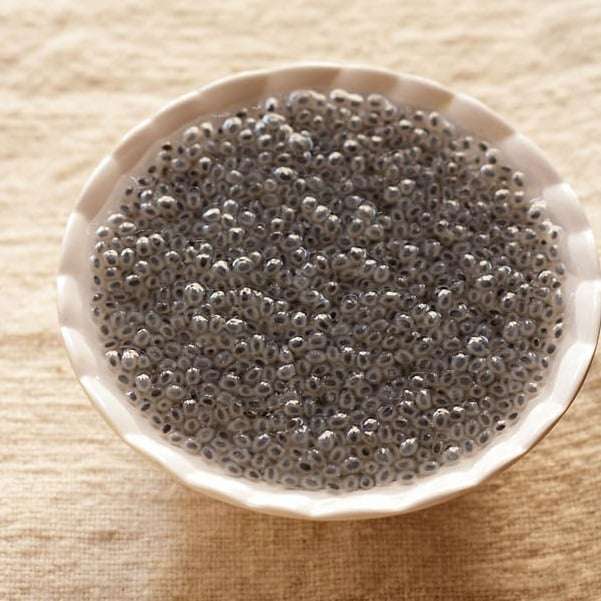
- Soak them for 20 to 30 minutes. Once they absorb the water, a translucent gelatin like coating is formed around them.
- Strain and then use these soaked basil seeds in drinks, coolers, sherbets, ice creams, falooda or kulfi.
- Refrigerate any leftover soaked sabja seeds in the refrigerator for 1 to 2 days.
Nutrition Information
Show DetailsNutrition Facts
Serving: 1small bowl
Amount Per Serving
Calories 29 kcal
% Daily Value*
| Calories | 29kcal | 1% |
| Carbohydrates | 3g | 1% |
| Protein | 1g | 2% |
| Fat | 2g | 3% |
| Saturated Fat | 0.2g | 1% |
| Polyunsaturated Fat | 1g | 6% |
| Monounsaturated Fat | 0.1g | 1% |
| Trans Fat | 0.01g | 1% |
| Sodium | 10mg | 0% |
| Potassium | 24mg | 1% |
| Fiber | 2g | 8% |
| Vitamin A | 3IU | 0% |
| Vitamin B1 (Thiamine) | 0.04mg | |
| Vitamin B2 (Riboflavin) | 0.01mg | |
| Vitamin B3 (Niacin) | 1mg | |
| Vitamin C | 0.1mg | 0% |
| Vitamin E | 0.03mg | |
| Calcium | 43mg | 4% |
| Vitamin B9 (Folate) | 3µg | |
| Iron | 0.5mg | 3% |
| Magnesium | 22mg | 6% |
| Phosphorus | 52mg | |
| Zinc | 0.3mg |
* Percent Daily Values are based on a 2,000 calorie diet.
User Reviews
Overall Rating
5
You'll Also Love