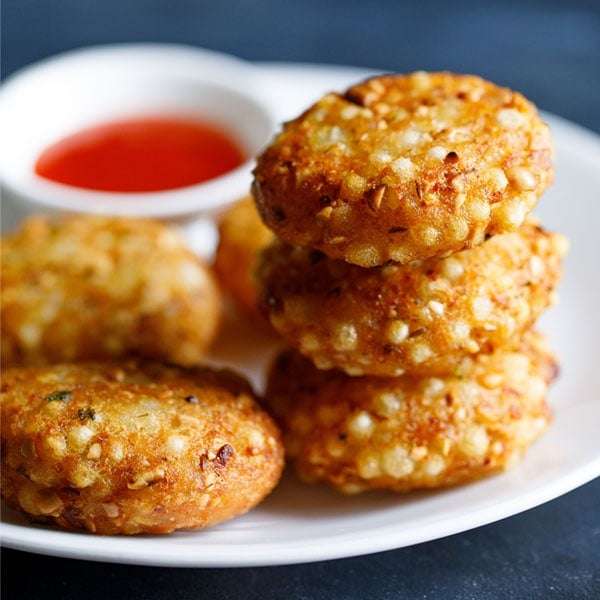
Sabudana Vada Recipe (Maharashtrian Style)
User Reviews
5
Sabudana Vada Recipe (Maharashtrian Style)
Description
Sabudana Vada Recipe (Maharashtrian Style) combines soaked sabudana (tapioca pearls) with mashed potatoes and roasted peanuts to form a mixture seasoned with cumin seeds, green chilies, and ginger. After soaking the sabudana overnight to achieve a soft, floury texture, the mixture is shaped into patties and deep-fried in neutral cooking oil. This method creates a crispy outer crust while retaining a tender inside, with roasting peanuts adding crunch and a subtle nutty flavor.
The cumin seeds and green chilies provide gentle aromatic and spicy notes, while lemon juice and coriander leaves can brighten the taste if included. These vadas are traditionally served hot as a snack or breakfast item, popular during fasting days in Maharashtra.
Proper soaking and thorough draining of sabudana is crucial to avoid sogginess or bursting in oil. Medium to medium-high oil temperature helps achieve a golden, crispy texture without over-absorbing oil or burning. Variations such as substituting buckwheat flour for binding or swapping potatoes with sweet potatoes or adding herbs like mint or curry leaves allow customization while retaining the dish's essence.
This recipe can be scaled easily and is best enjoyed fresh to preserve the crispiness and prevent oil absorption. Leftovers can be reheated carefully to maintain texture.
Ingredients
- 1 cup sabudana (sago or tapioca pearls)
- 4 potato medium-sized
- ½ cup peanuts
- 1 teaspoon cumin seeds - optional
- 1 to 2 green chili finely chopped or ½ to 1 teaspoon
- 1 teaspoon ginger - finely chopped
- 2 teaspoons lemon juice (optional)
- 2 tablespoons Coriander leaves optional, chopped
- 1.5 teaspoon sugar or as required
- 1 to 2 tablespoons buckwheat flour or amaranth flour - optional
- rock salt (edible and food grade) or sendha namak
- neutral cooking oil as required, for deep frying, generic cooking oil
Instructions
Soaking Sabudana
- You need to plan ahead and soak the sago pearls. It is very important to soak the sago really well.Important: Please refrain from using un-soaked or under-soaked sabudana to avoid scalding or burns as they will burst and shatter in oil when frying.
- First optionally, using a colander or mesh strainer rinse 1 cup sabudana lightly twice draining all the water.
- Soak the sabudana or sago in water for 5 hours at least or overnight. I soaked the sago pearls overnight and by morning they had become soft.
- When properly soaked, the sabudana pearls will be tender without any hard center. When you press the pearls between your forefinger and thumb, they should get mashed easily with a floury moist texture on your fingers.
- If you feel some hardness in the center, then soak for some more time. Drain all the water really well from the soaked sabudana.
- There should not be any water logged in the soaked pearls. Water will make the patties moist and sticky. The patties will soak up a good amount of oil while frying making them loaded with oil. So drain the water really well.
- You can opt to gently and lightly press the soaked pearls in the strainer with a spoon or spatula. Or set aside the pearls in a strainer (keeping a bowl beneath) for some 20 to 30 minutes dripping of any extra water.
- After draining the water thoroughly transfer the sabudana in a mixing bowl and set aside.
Cooking Potatoes
- Scrub and rinse 4 medium-sized potatoes thoroughly in water first.
- 1. Stove-top pressure cooker: Place the potatoes in a 3 litre cooker. Add water which just about covers the potatoes. Pressure cook potatoes for 10 to 12 minutes or 4 to 5 whistles on medium heat.When the pressure settles down on its own in the cooker, open the lid and check the potatoes. Pass a knife or fork through the center of the potatoes and it should slide easily without any resistance.
- 2. Cooking in a pan: Take water and add peeled and chopped potatoes. The water should cover the potatoes. Add a 2 to 3 pinches of salt if preferred.Cover and simmer potatoes until fork tender. Drain the water really well. When the potatoes are tender, using a strainer, drain all the water.
- 3. For Instant Pot cooking: Place a trivet in the inner steel of your Instant Pot. Add 1.5 cups water. Place the rinsed potatoes on the trivet. Seal with the lid and position the valve to sealing. Press the manual/pressure cook button and set the time to 10 or 12 minutes with high pressure option.After you hear the beep when the pressure cooking is complete, wait for 5 minutes and then do a quick pressure release. Remove the potatoes with tongs and place them in a plate or tray. Check the potatoes to see if they are cooked tender with a fork or knife.
- Let the potatoes become warm. Later peel and then chop them or mash them.
Roasting Peanuts
- On a skillet or in a shallow pan, roast the groundnuts/peanuts till they become crisp and crunchy.
- Cool and then coarsely powder in a mortar-pestle or in a dry grinder. You can even make a fine powder.
Making Sago Mixture
- Add the mashed potatoes and coarsely ground roasted groundnuts to the sabudana in the mixing bowl.
- Add edible rock salt, cumin seeds, sugar, ginger, green chillies, coriander leaves and lemon juice to the sabudana . Mix the entire mixture very well.
- Now take some portion of the mixture in your hands and shape them into flat round vada or patty. Set aside.
- Repeat until you use up the entire dough mixture.
Making Sabudana Vada
- Heat oil for deep frying in a kadai. Add a tiny ball made from the mixture.
- Fry it on medium flame. If this ball does not break while frying, then you are good to go.
- If it breaks, then add 1 to 2 tablespoons of rajgira atta (or amaranth flour) to the mixture and mix well.
- Now gently place the vada in the oil. Keep the heat to medium or medium-high while frying. If the oil is warm, the vada will absorb a lot of oil and become soggy.
- Add the vada for frying depending on the size of the kadai. Do not crowd the kadai or pan.
- When one side gets golden, then only flip the vada. Otherwise, don't even touch as they might break if not cooked.
- Turn over a couple of times so as to fry the sabudana vada evenly. Fry until they are crisp and golden
- Remove them with a slotted spoon. Place on kitchen paper towels to absorb excess oil. Fry the remaining batches of the patties this way.
- Serve Sabudana Vada hot or warm.
Serving Suggestions
- Sabudana Vada can be made for Hindu fasting days or an evening snack too. It is crispy and delicious and thus tastes great with simple Coconut Chutney and even sweetened Curd (Yogurt).
- To make the sweetened curd, you will just need to add some sugar to the curd and mix it. If short of time, you can even serve with sweet Tamarind Chutney or tomato ketchup.
- You can also enjoy it with Coriander Chutney.
Make Ahead Options
- To make ahead, boil, peel, mash and store the potatoes in your refrigerator a day prior. Roast peanuts and powder them. Refrigerate them for 1 to 2 days.
- You can soak the sabudana a day earlier and keep it in the refrigerator after draining the water.
- Any leftover dough mixture stays well in the fridge for 1 to 2 days.
Notes
- Ensure sabudana pearls are soaked thoroughly until soft to avoid bursting during frying.
- Drain all water from the soaked sabudana to prevent soggy vadas.
- Use medium to medium-high oil heat for frying; too hot or too cool oil affects texture and oil absorption.
- Add binding flours like buckwheat flour if patties break or burst in oil.
- Peanuts should be roasted and skin removed for best texture and flavor.
- Variations include using sweet potatoes instead of regular potatoes or adding herbs like mint or curry leaves.
- Vadas are best enjoyed fresh to maintain crispiness.
Nutrition Information
Show DetailsNutrition Facts
Serving: 18Sabudana Vada
Amount Per Serving
Calories 107 kcal
% Daily Value*
| Calories | 107kcal | 5% |
| Carbohydrates | 17g | 6% |
| Protein | 2g | 4% |
| Fat | 4g | 6% |
| Saturated Fat | 0.5g | 3% |
| Polyunsaturated Fat | 0.5g | 3% |
| Monounsaturated Fat | 2g | 10% |
| Sodium | 88mg | 4% |
| Potassium | 233mg | 5% |
| Fiber | 2g | 8% |
| Sugar | 1g | 2% |
| Vitamin A | 5IU | 0% |
| Vitamin B1 (Thiamine) | 0.05mg | |
| Vitamin B2 (Riboflavin) | 0.03mg | |
| Vitamin B3 (Niacin) | 1mg | |
| Vitamin B6 | 0.2mg | |
| Vitamin C | 10mg | 11% |
| Vitamin E | 1mg | |
| Vitamin K | 1µg | |
| Calcium | 10mg | 1% |
| Vitamin B9 (Folate) | 12µg | |
| Iron | 1mg | 6% |
| Magnesium | 21mg | 5% |
| Phosphorus | 45mg | |
| Zinc | 0.3mg |
* Percent Daily Values are based on a 2,000 calorie diet.
User Reviews
Overall Rating
5
You'll Also Love