Sinigang na Baboy (Filipino Pork Sinigang Soup w/ Vegetables)
User Reviews
5
-
Prep Time
20 mins
-
Cook Time
1 hr 5 mins
-
Additional Time
35 mins
-
Total Time
2 hrs
-
Servings
8
-
Calories
6069 kcal
-
Course
Main Course, Dinner
-
Cuisine
Filipino
Sinigang na Baboy (Filipino Pork Sinigang Soup w/ Vegetables)
Description
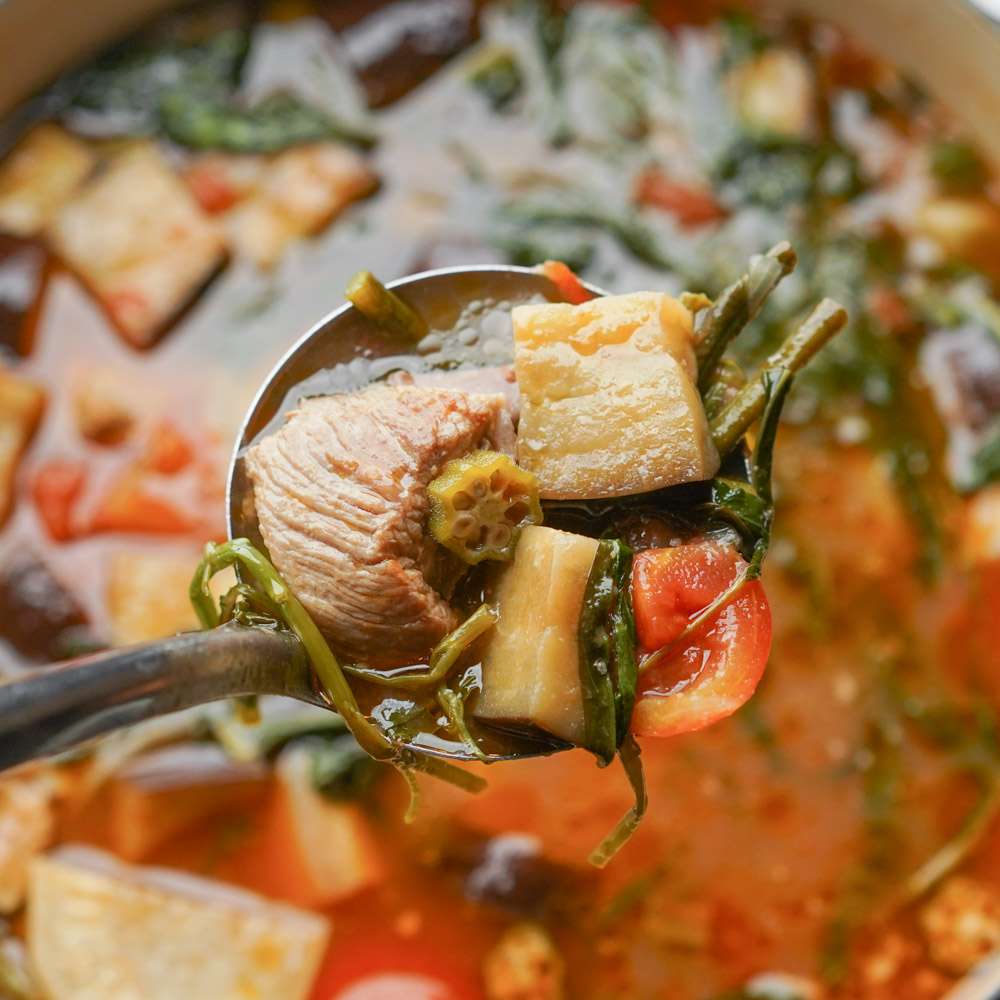
Sinigang na Baboy combines pork spare ribs and pork belly browned to develop a rich base, then simmered with tomatoes, onions, garlic, and water infused with tamarind paste to create a distinctively sour broth. The method involves deglazing the pot after searing the meat to incorporate flavorful fond and simmering gently until the pork is tender.
Vegetables including eggplant, okra, daikon radish, string beans, and water spinach are added to the broth, contributing various textures from crisp-tender to soft. The salt and fish sauce season the soup with umami and depth, while optional lime juice and finger chili provide adjustable sourness and heat to taste.
Serve Sinigang na Baboy hot as a main course, often with steamed rice, to enjoy the balance of sour, savory, and vegetable richness. The broth's light acidity contrasts the hearty pork and fresh vegetables, making it a comforting and refreshing dish.
Ingredients
Tamarind paste
- 3/4 /4 c tamarind paste homemade or store bought
Sinigang
- 1 lb pork spare ribs
- 1 lb pork belly cut into ½ inch cubes
- 1 tbsp vegetable oil
- 1 yellow onion chopped, medium
- 10 cloves garlic minced
- 5 Roma tomatoes quartered, small
- 8 c water filtered
- 2 2/3 /3 tbsp salt and more as needed
- 1 tbsp fish sauce
Vegetables
- 1 eggplant cut into ½" pieces, small
- 7 pieces okra cut into ½" pieces
- 4 inches daikon radish cut in ¼" slices, then cut into half rounds
- 7 string beans cut into 3" pieces
- 30 tems kang kong aka water spinach, on choy
- ½ tsp black pepper to taste
- lime juice optional for more sourness
- 1 finger chile pepper optional for spiciness
Instructions
Tamarind paste
- Make your own tamarind paste using my instructions, or prepare store-bought tamarind paste, rehydrating if necessary.
Sinigang
- Pat the pork dry with a paper towel to improve browning during searing.
- In a large pot over medium heat, add the vegetable oil and begin to sear your meat in batches until all the sides have a nice golden brown crust. This should be about 2-5 minutes per batch. Try to not crowd the meat while searing. Transfer the meat onto a clean plate.
- In the same pot, add the onions and saute for about one minute or until the onions are slightly translucent. Add the garlic and saute for 30 seconds or until it’s fragrant.
- Add 2 cups of filtered water to deglaze the pot thoroughly. Gently scrape the golden brown parts from the searing meat at the bottom of the pan.
- Add the meat back to the pot with only 4 tomatoes (reserve the 5th one for later). Add 2 tablespoons of salt and stir to dissolve.
- Add 6 cups of water or enough so the meat is completely submerged. Bring the heat up to medium-high heat, once the liquid hits a boil let it boil for about 30 seconds.
- Drop the heat to a simmer (about medium-low heat) and simmer for about 45 minutes to 1 hour or until the meat is tender to your liking.
- Add the tamarind paste, pepper, and fish sauce to the pot and stir.
- Add the last tomato, eggplant, okra, string beans, and daikon radish into the pot and stir. Simmer for 5-8 minutes or until vegetables are tender, then add kang kong and cook for an additional one minute.
- Taste the soup and adjust with salt, pepper, or lime juice based on your preference. Serve immediately with a side of rice.
Nutrition Information
Show DetailsNutrition Facts
Serving: 8Serving
Amount Per Serving
Calories 6069 kcal
% Daily Value*
| Calories | 606.9kcal | 30% |
| Carbohydrates | 35.3g | 12% |
| Protein | 17.2g | 34% |
| Fat | 45.6g | 70% |
| Saturated Fat | 16.8g | 84% |
| Cholesterol | 86.2mg | 29% |
| Sodium | 2019.9mg | 84% |
| Potassium | 877.5mg | 19% |
| Fiber | 5.1g | 20% |
| Sugar | 27.9g | 56% |
| Vitamin A | 833.2IU | 17% |
| Vitamin C | 24.5mg | 27% |
| Calcium | 87mg | 9% |
| Iron | 2.5mg | 14% |
* Percent Daily Values are based on a 2,000 calorie diet.
User Reviews
Overall Rating
5
You'll Also Love