Thepla Recipe (Multigrain Methi Thepla)
User Reviews
4.9
Thepla Recipe (Multigrain Methi Thepla)
Description
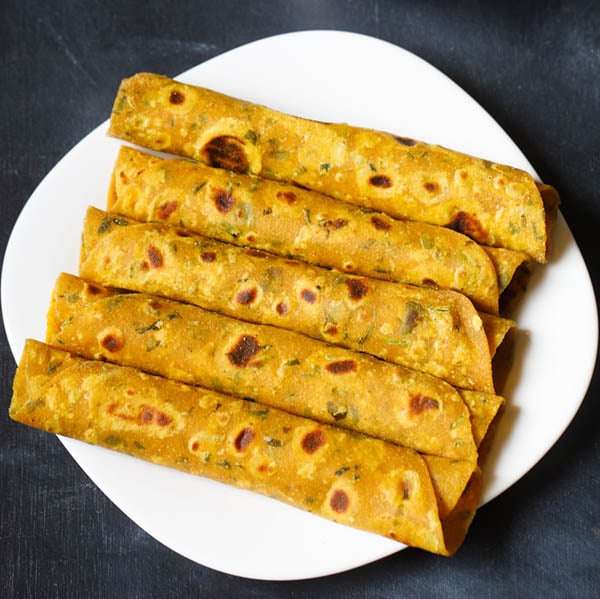
Thepla Recipe (Multigrain Methi Thepla) features a blend of fresh fenugreek leaves and several flours: whole wheat, gram flour, pearl millet, and sorghum. The combination of these grains creates a distinctive texture that is soft yet has a bit of bite. The fenugreek leaves, finely chopped, provide a signature green taste, while ginger, green chili, and spices such as cumin, coriander, turmeric, and chili powder add aromatic layers and mild heat.
The dough is made soft and pliable by the addition of yogurt, which also contributes a slight tanginess balancing the spices. The dough should be kneaded until smooth and then rolled into medium-sized flatbreads. Cooking them requires some oil for roasting, which helps develop a golden crust while keeping the interior tender.
Thepla can be enjoyed hot or at room temperature and works well as a lunchbox item or light meal when paired with yogurt or pickles. Its multigrain profile provides nutrients beyond standard wheat breads.
For best results, use mostly whole wheat flour for optimal texture and knead the dough to a soft, smooth consistency, adjusting with yogurt or water as needed. Adding oil to the dough can prolong shelf life for storing or carrying on journeys. Optionally, swapping or adding other greens like spinach or amaranth offers variation.
Ingredients
- 1 cup fenugreek leaves (fresh methi) - tightly packed
- 1 cup or (120 grams) whole wheat flour
- ¼ cup or (40 grams) gram flour (besan)
- ¼ cup or (40 grams) pearl millet flour (bajra flour)
- ¼ cup or (40 grams) sorghum flour (jowar flour)
- 1 inch ginger - crushed to a paste
- ½ to 1 teaspoon green chili chopped, crushed to a paste
- ½ teaspoon red chili powder or cayenne pepper
- ½ teaspoon turmeric powder
- ½ teaspoon cumin powder (ground cumin)
- ½ teaspoon coriander powder (ground coriander)
- ¾ teaspoon salt or add as required
- 1 tablespoon neutral cooking oil generic cooking oil
- 4 to 5 tablespoon curd (yogurt) or water for kneading or add as required
- neutral cooking oil as required for roasting thepla, generic cooking oil
Instructions
Kneading dough
- Rinse the methi leaves in running water a few times getting rid of any dirt or mud clinging on them. Then drain them really well and chop finely.
- In a mixing bowl, take whole wheat flour, gram flour, sorghum flour and pearl millet flour. I have used millet flours but you can skip them if you don't have. In this case, simply add 1.25 cups whole wheat flour and ½ cup besan.
- Add all the ginger and green chilli paste, followed by the spice powders - red chilli powder, turmeric powder, cumin powder, coriander powder.
- Season with salt. Add 1 tablespoon oil.
- Add the finely chopped fenugreek leaves. Mix everything well.
- Add curd or yogurt. For a vegan option add very little water instead of curd.
- Mix again and knead into a dough. Don't add water while kneading as methi leaves will release water.
- Knead to a soft and smooth dough. Add more curd if needed while kneading.
Rolling to flatbreads
- Make medium sized balls from the dough.
- Take a medium sized ball and sprinkle some flour on it.
- With the rolling pin begin to roll the dough to a round or disc of about 7 to 8 inches in diameter.
Cooking thepla
- On a hot tawa or skillet, place the rolled dough. Flip when one side is partly cooked, about one-fourth or half cooked. You will see some faint air pockets on the top and this is the time when you need to flip it.
- Spread oil on this side. Flip the thepla again when the second side is half-cooked.
- Now spread the oil on this side. Flip a couple of times till you get golden spots and the methi thepla is cooked evenly.
- You can also press the thepla with spatula while cooking.
- Remove and keep it in a roti basket.
- Serve Methi Thepla hot or warm or at room temperature.
Serving suggestions
- Enjoy Thepla with plain curd (yogurt), lemon or Mango Pickle, Mango Chutney, or Mango Chunda.
- You can also eat these with a simple Batata nu Shaak. These flatbreads also pairs well as a side snack with Masala Chai or Ginger Chai.
Storage
- Methi Thepla are best when enjoyed either right away or later the same day. They will keep well for up to 3 to 4 days when you make them without curd.
- So if you want to have them later after a few days, do not add curd as it will lessen its shelf life. Simply knead the dough with water. Store cooled flatbreads in an airtight container and keep at room temperature.
- They also freeze well. Simply wrap a stack of cooled Thepla in foil before storing in an airtight freezer bag, and keep in the freezer for up to 1 month.
- Thaw in the fridge and later reheat these flatbreads either in a skillet on the stove or in the oven for just a few minutes until warm.
Notes
- Use mostly whole wheat flour for easier rolling and softer texture; avoid too much gram flour to prevent hardness.
- Knead dough until soft and smooth, adjusting with yogurt or water as needed to achieve pliable consistency.
- Adding oil into the dough can help preserve theplas for longer storage and keep them soft.
- Fenugreek leaves should be finely chopped and well-drained before mixing to avoid excess moisture.
- Optional: substitute or add other green leafy vegetables such as spinach or amaranth for flavor variation.
- Use oil or ghee for roasting to enhance flavor and texture.
Nutrition Information
Show DetailsNutrition Facts
Serving: 11Methi Thepla
Amount Per Serving
Calories 136 kcal
% Daily Value*
| Serving | 1Thepla | |
| Calories | 136kcal | 7% |
| Carbohydrates | 17g | 6% |
| Protein | 4g | 8% |
| Fat | 6g | 9% |
| Saturated Fat | 1g | 5% |
| Polyunsaturated Fat | 1g | 6% |
| Monounsaturated Fat | 1g | 5% |
| Cholesterol | 1mg | 0% |
| Sodium | 167mg | 7% |
| Potassium | 102mg | 2% |
| Fiber | 2g | 8% |
| Sugar | 1g | 2% |
| Vitamin A | 37IU | 1% |
| Vitamin B1 (Thiamine) | 1mg | |
| Vitamin B2 (Riboflavin) | 1mg | |
| Vitamin B3 (Niacin) | 1mg | |
| Vitamin B6 | 1mg | |
| Vitamin B12 | 1µg | 42% |
| Vitamin C | 1mg | 1% |
| Vitamin D | 1µg | 5% |
| Vitamin E | 2mg | |
| Vitamin K | 1µg | |
| Calcium | 101mg | 10% |
| Vitamin B9 (Folate) | 9µg | |
| Iron | 2mg | 11% |
| Magnesium | 27mg | 7% |
| Phosphorus | 71mg | |
| Zinc | 1mg |
* Percent Daily Values are based on a 2,000 calorie diet.
User Reviews
Overall Rating
4.9
You'll Also Love