Bao Buns, A Foolproof Recipe
User Reviews
5
Bao Buns, A Foolproof Recipe
Description
The recipe begins by combining dry ingredients including flour, instant yeast, baking powder, and sugar, then gradually adding lukewarm water or milk to form a dough. It can be prepared manually with hand kneading or with a stand mixer for consistency. The dough is rested and kneaded until smooth and soft.
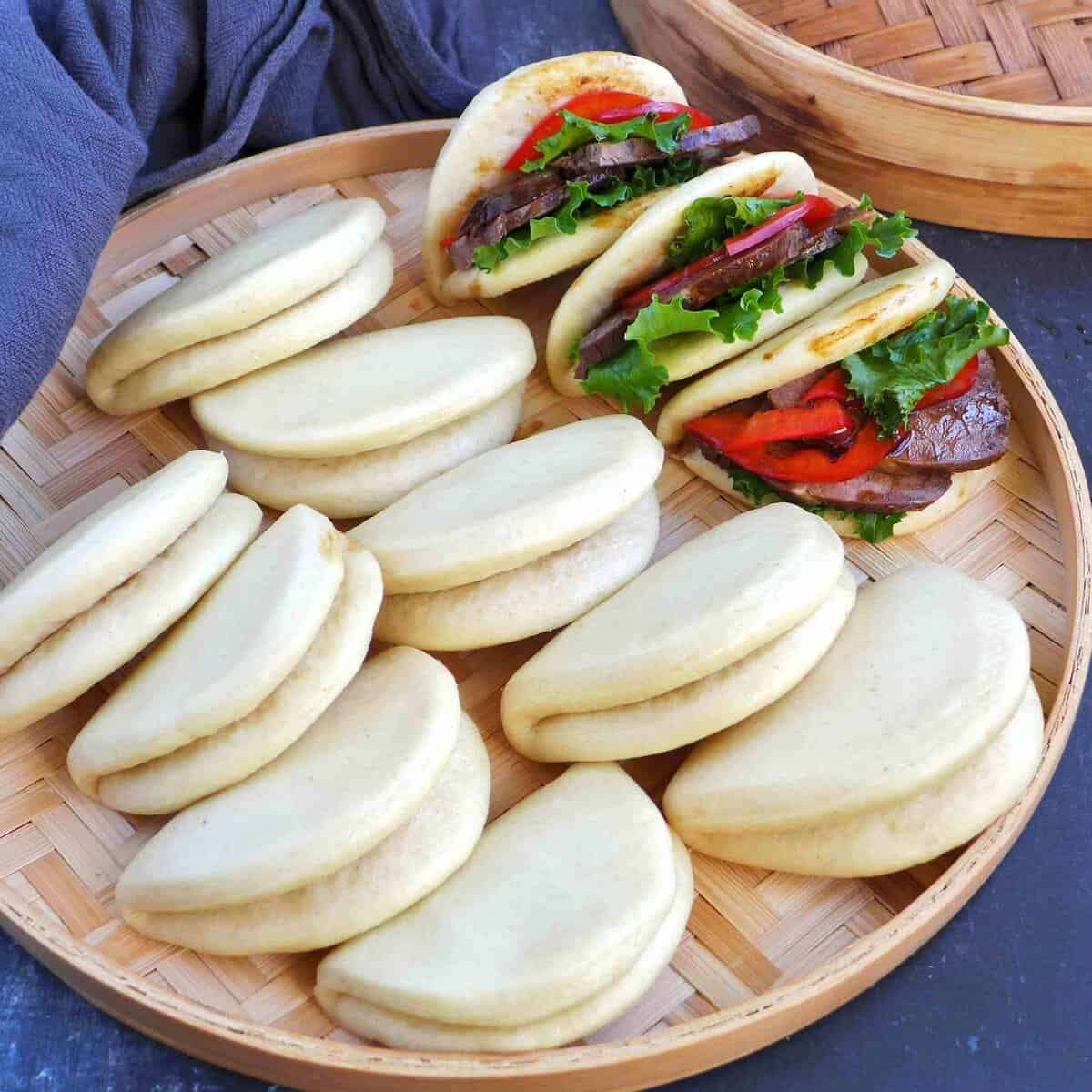
After resting, the dough is divided into equal portions, rolled into balls, and flattened into ovals. Half is brushed with oil and folded over to create a layered bun structure. The buns are then proofed to allow rising, with proofing time adjusted for room temperature variations.
The recipe offers options for flour substitutions, including low-gluten cake flour or high-gluten bread flour with cornstarch adjustment to modulate chewiness. It also details yeast activation steps if using dry active or fresh yeast and notes the dough hydration may need adjustment based on flour type. This method ensures the dough yields tender buns suitable for steaming and various fillings.
Ingredients
- 300 g all-purpose flour see note 1 for substitutes
- 1¼ teaspoon instant yeast see note 2 for substitutes
- 1 teaspoon baking powder
- 1 teaspoon white sugar
- 165 g water see note 3, lukewarm or milk
- neutral cooking oil for brushing, generic cooking oil
Instructions
Prepare the dough
- Manual Method: In a large bowl, mix flour, instant yeast, baking powder and sugar (see note 2 if using dry active yeast or fresh yeast). Gradually add water/milk while stirring with chopsticks. Combine and knead by hand until a rough-looking dough forms. Rest for 10 minutes then knead for 2-3 minutes until it becomes very smooth.
- Stand-mixer Method: Add flour, instant yeast, baking powder, sugar and water/milk to the mixing bowl (see note 2 if using dry active yeast or fresh yeast). Mix and knead with a dough hook on low speed for 8-10 minutes until a smooth dough forms.
Shape the bao buns
- Rolling pin method: Roll the dough into a rope. Divide into 8-12 equal pieces. Roll them into balls then flatten each with a rolling pin into an oval shape, about ⅕ inch (½ cm) thick (dust with flour when necessary to prevent sticking). Brush a thin layer of oil over half of the oval then fold over lengthways.
- Cutter method: Flatten the dough with a rolling pin into a rectangle, about ⅕ inch (½ cm) thick. Use a large round cutter to cut out circles, then roll each piece into an oval shape. Combine the leftover dough and repeat to cut out more (dust with flour when necessary to prevent sticking). Brush oil over half of the oval then fold over lengthways.
Rest
- Line the steamer baskets with perforated parchment paper or silicone steamer liners (or oil the surface if using metal or plastic steamers). Place the bao buns over leaving enough space in between for expansion.
- Leave to proof for about 30 minutes (see note 4) until the buns become a little bigger, plumper and feel lighter in weight.
Steam
- Add 2 cups (500ml) of water to the wok or pot that you use for steaming. Place the baskets on top (you may stack up several and cook all at once). Cover with a lid.
- Firstly, cook over high heat. As soon as the water starts to boil (when you see steam coming out through gaps), turn the heat to medium-low. From this moment, steam for 10 minutes.
Store
- Once completely cool, store leftover buns in the fridge for up to 4 days or in the freezer for 2 months. Reheat by steaming them for 5 minutes if chilled or 7 minutes if frozen.
Make ahead
- Cook them as instructed above then freeze them once cooled (It’s not recommended to freeze uncooked bao buns as the yeast dough doesn’t rise properly after freezing).
- Defrost them in the fridge overnight then steam for 5 minutes before serving. Or, reheat them without defrosting for 7 minutes.
Notes
- Low-gluten cake flour or high-gluten bread flour can substitute all-purpose flour; if using bread flour, replace one-fifth with cornstarch for a softer texture.
- If using dry active or fresh yeast, activate by mixing with sugar and lukewarm water or milk, letting it foam before combining with dry ingredients.
- Adjust water or milk amount depending on flour brand and type to achieve a soft, non-sticky dough.
- Proofing time varies with room temperature; around 30 minutes at 72-77°F (22-25°C) is typical, shorten if warmer and extend if cooler.
Nutrition Information
Show DetailsNutrition Facts
Serving: 8to
Amount Per Serving
Calories 145 kcal
% Daily Value*
| Serving | 1bun | |
| Calories | 145kcal | 7% |
| Carbohydrates | 30g | 10% |
| Protein | 5g | 10% |
| Fat | 1g | 2% |
| Saturated Fat | 0.1g | 1% |
| Polyunsaturated Fat | 0.2g | 1% |
| Monounsaturated Fat | 0.1g | 1% |
| Sodium | 55mg | 2% |
| Potassium | 58mg | 1% |
| Fiber | 2g | 8% |
| Sugar | 1g | 2% |
| Vitamin C | 0.01mg | 0% |
| Calcium | 36mg | 4% |
| Iron | 2mg | 11% |
* Percent Daily Values are based on a 2,000 calorie diet.
User Reviews
Overall Rating
5
You'll Also Love