Best Fresh Ham Roast Recipe
User Reviews
5
-
Prep Time
10 mins
-
Total Time
3 hrs 30 mins
-
Servings
12 servings
-
Calories
975 kcal
-
Course
Main Course
-
Cuisine
Italian
Best Fresh Ham Roast Recipe
Description
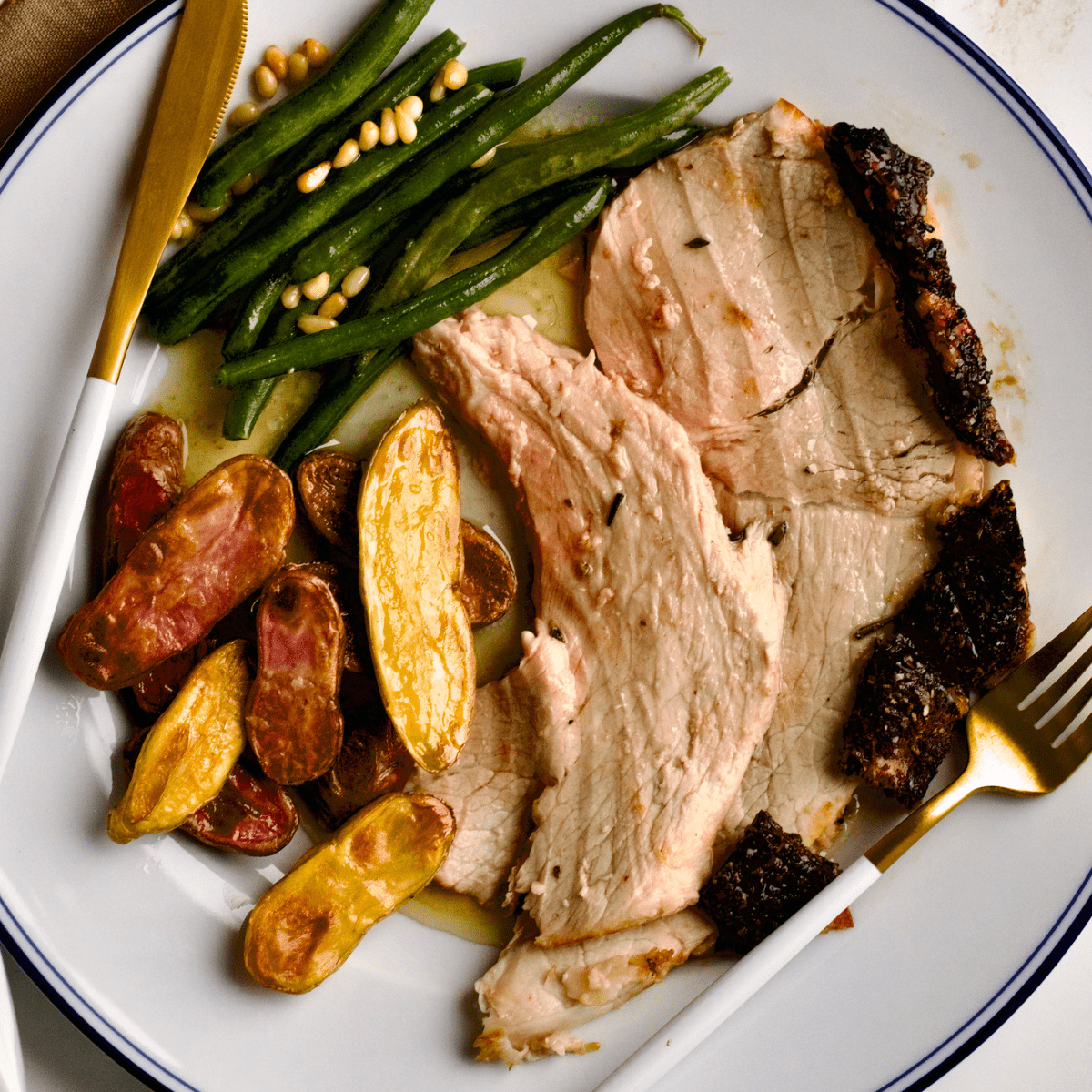
This fresh ham roast recipe begins by scoring the fat layer to allow the seasoning mixture of salt, brown sugar, pepper, and minced fresh herbs to penetrate the meat. Placing the ham on a bed of orange slices in a roasting pan infuses it with subtle citrus notes during the bake. Initial roasting at 425 degrees F develops a flavorful crust, followed by lowering the temperature to 300 degrees F to cook the ham slowly for tenderness.
The roasting pan’s liquids blend water and white wine, contributing moisture and depth of flavor to the ham. Adjustments can be made by adding more liquid as needed during cooking to prevent burning. The roast’s doneness is best checked with a thermometer to ensure it reaches a safe internal temperature of 150 to 160 degrees F.
Leftover ham stores well in an airtight container in the fridge for 3 to 5 days and can be repurposed in sandwiches or baked pasta dishes. Flavor variations include sweeter glazes with maple syrup or honey and spices like cloves for a traditional taste.
Using a meat thermometer and accounting for carryover heat helps achieve perfect doneness. Pan gravy can be made by thickening the strained pan juices with flour and adding stock.
Ingredients
- 1 pound fresh ham not precooked or cured, bone-in or boneless
- 1 ½ tablespoons kosher salt
- ½ cup brown sugar
- 3-4 orange cut into 1-inch slices
- 1 tablespoon black pepper freshly ground
- 2 tablespoons thyme minced, fresh
- 2 tablespoon rosemary minced, fresh
- 3 cups water
- 1 cup white wine
Instructions
- Place a rack in the lower third of the oven and preheat to 425 degrees F. Leave the fat layer on the ham. Score ham in a diamond pattern (crisis cross) of ½-inch-deep cuts about 1½ inches apart.
- In a small bowl, combine salt, brown sugar, pepper, thyme, and rosemary, pinching the herbs until they become fragrant. Pat mixture all over the ham and into scores on the ham roast.
- Place orange slices on the bottom of a roasting rack that is in a large roasting pan. Place ham fat-side up on the bed of orange slices on the rack. Pour water and white wine into the bottom of the pan.
- Roast for ½ an hour at 425 degrees F, uncovered.
- Turn the heat down to 300 degrees F. We want to cook it low and slowly to tenderize the meat. If needed, add water to the pan to keep pan juices from burning. Cook uncovered unless the skin starts to brown more than you like; then, you can tent it with aluminum foil.
- Bake until a meat thermometer is pressed into the thickest part of the ham and the internal temperature reaches 140 degrees, about 3- 3 1/2 hours (see notes). The top will be nice and golden brown, and the interior will be tender.
- Tent the fresh ham roast with aluminum foil and let it rest for 30 minutes before slicing with a sharp knife. Save the pan drippings to make pan gravy or spoon it over the meat before serving. Enjoy!
Notes
- Ensure the ham's internal temperature reaches at least 150-160°F for safety; use an instant-read thermometer for accuracy.
- Adjust cooking time based on the ham size; larger roasts require longer slow roasting.
- Leftovers keep well refrigerated in an airtight container for 3-5 days and can be used in sandwiches or pasta dishes.
- Add traditional spices like cloves to the rub or finish with maple syrup, honey, or soy sauce glazes for varied flavor.
- Make pan gravy by thickening drippings with flour and adding stock if desired.
- Cooking liquid alternatives include beer, cider, or stock to change flavor nuances.
Nutrition Information
Show DetailsNutrition Facts
Serving: 12servings
Amount Per Serving
Calories 975 kcal
% Daily Value*
| Calories | 975kcal | 49% |
| Carbohydrates | 14g | 5% |
| Protein | 82g | 164% |
| Fat | 63g | 97% |
| Saturated Fat | 23g | 115% |
| Polyunsaturated Fat | 7g | 41% |
| Monounsaturated Fat | 30g | 150% |
| Cholesterol | 234mg | 78% |
| Sodium | 5366mg | 224% |
| Potassium | 1176mg | 25% |
| Fiber | 1g | 4% |
| Sugar | 12g | 24% |
| Vitamin A | 142IU | 3% |
| Vitamin C | 19mg | 21% |
| Calcium | 59mg | 6% |
| Iron | 4mg | 22% |
* Percent Daily Values are based on a 2,000 calorie diet.
User Reviews
Overall Rating
5
You'll Also Love