Bibim Guksu (Korean Spicy Cold Noodles with Gochujang Sauce)
User Reviews
5
-
Prep Time
10 mins
-
Cook Time
8 mins
-
Total Time
18 mins
-
Servings
2 people
-
Calories
309 kcal
-
Course
Main Course, Soup
-
Cuisine
Korean
Bibim Guksu (Korean Spicy Cold Noodles with Gochujang Sauce)
Description
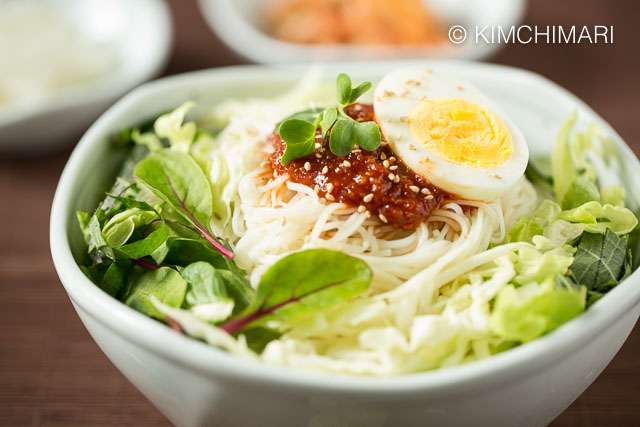
Bibim Guksu combines tender yet chewy noodles, thoroughly rinsed in cold water to enhance texture, with a gochujang sauce enriched by grated apple, onion, garlic, vinegar, and various seasonings for depth and balanced spice. Fresh and thinly sliced vegetables including cabbage, spring mix, cucumber, and leafy greens bring fresh crunch and color, while optional pickled daikon radish adds acidity to cut through the spiciness. Kimchi topping can add another layer of fermented tang and spice.
The dish is served cold, making it refreshing and well-suited to hot days. Bibim sauce is improved by chilling for a few hours, allowing flavors to meld. The noodles and sauce come together with fresh vegetables, creating a dish with textural contrast between chewy noodles and crisp toppings. It pairs well with a mild soup such as Odeng Soup.
To maintain the chewier texture of noodles, avoid overcooking and rinse repeatedly in cold water. The sauce stores well refrigerated and can be made in larger batches for convenience. Using spring mix and cole slaw cabbage mix simplifies vegetable prep without sacrificing crunch or freshness.
Ingredients
Bibim Sauce
- 1 oz apple 1 oz apple = 1/4 of an apple (see pic) = 2 Tbsp grated, Fuji (can use other kind
- 0.5 oz onion (0.5 oz = 1 Tbsp grated onion)
- 1 clove garlic
- 1 Tbsp rice vinegar
- 1 Tbsp gochujang (Korean red chili paste)
- 4 tsp Korean red chili powder Gochukaru
- 2 tsp soy sauce Jin Ganjang
- 1 Tbsp sugar
- 1 Tbsp honey
- 1 tsp sesame oil (more to taste)
- 1 tsp guk ganjang Soy Sauce for Soups
Vegetables
- 3 each red leaf lettuce leaves
- 3 each perilla leaves
- 1 cup cabbage (sliced thin)
- 1/2 cup spring mix
- 1/2 cup cucumber julienned, Korean/English/Persian/Japanese
- 1 daikon sprouts
Pickled Daikon Radish - OPTIONAL
- 4 oz Korean radish sliced 1 inch wide, or Daikon
- 1/2 tsp sea salt Korean
- 1 tbsp rice vinegar
- 1 tbsp sugar
Kimchi Topping - OPTIONAL
- 1/4 cup kimchi sliced, cabbage
- 1/2 tsp sesame oil
- 1/4 tsp sugar
Instructions
Noodles and Eggs
- Boil a pot of water to cook noodles in. Follow directions on the package. I bought this bag and this one said to boil 5 cups of water (for 100g of noodles) and cook noodles for 2-3 minutes. Then rinse 3~4 times in cold water. Drain. Note, rinsing in cold water prevents the noodles from sticking too much and also makes them chewy.
- Cook hard boiled eggs. Peel and cut into 1/2. 1/2 egg will be used for each bowl.
Bibim Sauce
- Clean and peel onion, garlic and apples. Cut onion an apples into smaller chunks to fit into your blender or chopper.
- Chop or blend until smooth. If you don't have a chopper, just grate all of them.
- To the chopped or grated onion+apple+garlic mix from 3, add vinegar, soy sauces, gochujang, sugar, honey, gochukaru (Korean red chili powder) and sesame oil. Mix and set aside or keep in fridge for later.
Vegetable Toppings
- Rinse the following: cabbage, spring mix and/or red leaf lettuce. Optionally, rinse perilla leaves (kkaetnip 깻잎) and chrysanthemum leaves (ssukat 쑥갓) for extra flavor.
- Julienne cabbage (finely). Cut lettuce and perilla into thin strips. Break chrysanthemum leaves into smaller pieces by hand.
- Assemble a bowl with noodles then arrange cut vegetables on top. Add bibim sauce and 1/2 an egg on top. Finish with some daikon sprouts (optional), sesame seeds and a swirl of sesame oil. OR serve sesame oil and sesame seeds at the table.
Pickled Radish
- Optionally, slice radish into 1 inch wide thin slices and sprinkle salt and let it sit for 10 minutes. Then add sugar and vinegar and mix. Serve as a side dish or with the noodles.
Notes
- Rinse cooked noodles multiple times in cold water to remove excess starch and improve chewiness.
- Allow bibim sauce to rest in the refrigerator for 2-3 hours to develop deeper flavor.
- Kimchi can be added as a topping, seasoned lightly with sugar and sesame oil for extra flavor.
- Use crunchy vegetables like cabbage, or substitute with similar crisp vegetables such as sliced Brussels sprouts if preferred.
- Serve bibim guksu with pickled radish such as danmuji and a mild side soup like odeng soup to balance spiciness.
- Using pre-mixed spring salad and cole slaw mixes is a convenient alternative to chopping multiple fresh vegetables.
Nutrition Information
Show DetailsNutrition Facts
Serving: 2people
Amount Per Serving
Calories 309 kcal
% Daily Value*
| Calories | 309kcal | 15% |
| Carbohydrates | 64g | 21% |
| Protein | 8g | 16% |
| Fat | 3g | 5% |
| Cholesterol | 1mg | 0% |
| Sodium | 615mg | 26% |
| Potassium | 207mg | 4% |
| Fiber | 3g | 12% |
| Sugar | 23g | 46% |
| Vitamin A | 1475IU | 30% |
| Vitamin C | 18.9mg | 21% |
| Calcium | 46mg | 5% |
| Iron | 1.9mg | 11% |
* Percent Daily Values are based on a 2,000 calorie diet.
User Reviews
Overall Rating
5
You'll Also Love