Bibimbap
User Reviews
4.8
-
Prep Time
25 mins
-
Cook Time
30 mins
-
Total Time
55 mins
-
Servings
4 servings
-
Course
Main Course
Bibimbap
Description
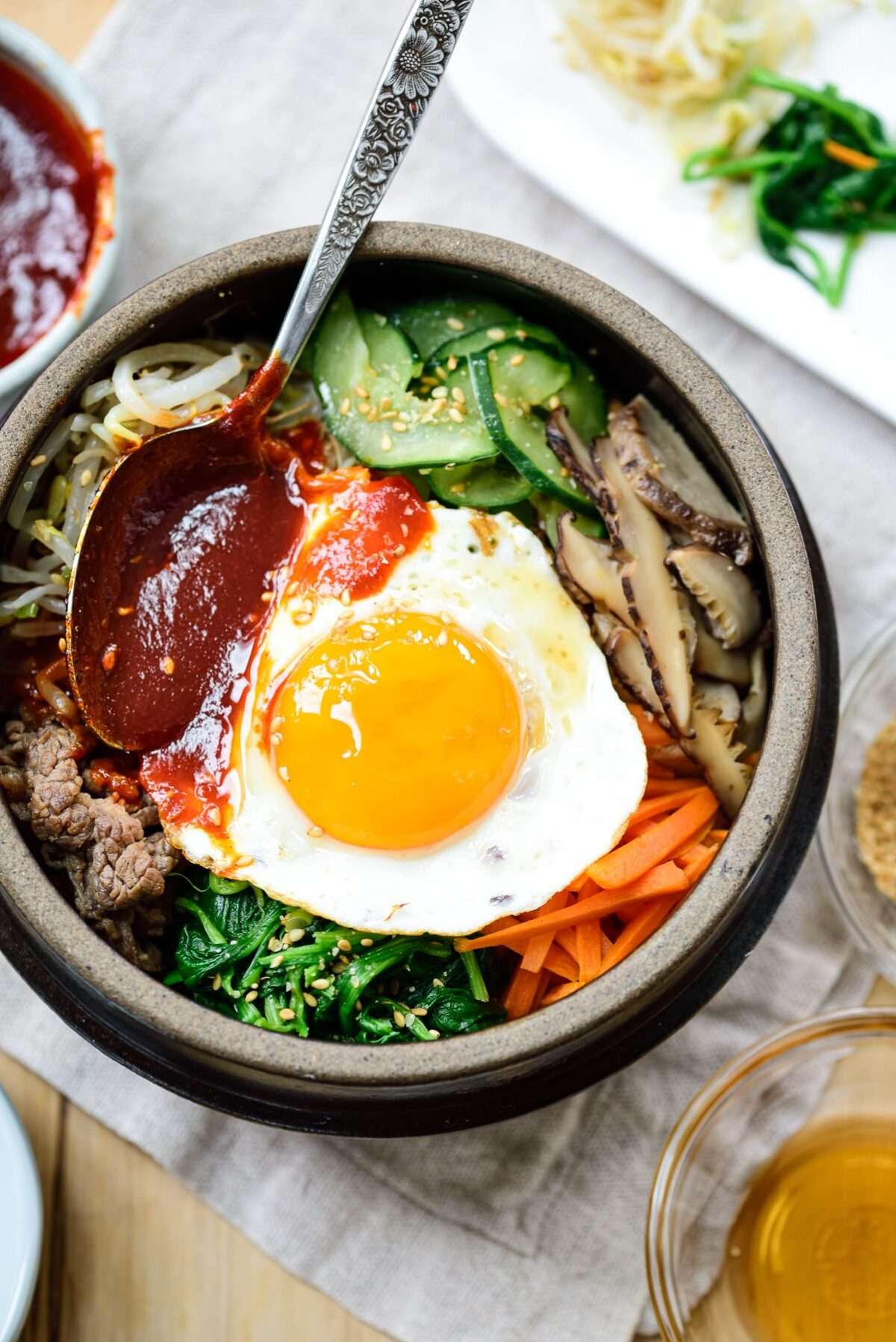
Bibimbap centers on short grain rice cooked with slightly less water than usual to achieve a drier texture suitable for mixing. Thin strips of rib eye beef are marinated with soy sauce, sugar, sesame oil, mirin, garlic, and scallions, then quickly sautéed for a tender, flavorful meat component.
The vegetables include mung bean sprouts briefly blanched and tossed with minced garlic, sesame oil, sesame seeds, and salt, and spinach blanched and shocked to maintain its bright green color. Additional vegetables such as cucumbers, carrots, and shiitake mushrooms are prepared to contribute assorted textures and flavors. The dish is optionally topped with fried eggs.
A sauce made from gochujang, sugar, sesame oil, and water provides a spicy and slightly sweet finish that ties all the ingredients together. Bibimbap can be customized with various vegetables and often includes garnishes like sesame seeds. It is a versatile, balanced dish frequently enjoyed as a full meal in Korean cuisine.
Additional vegetable options mentioned include soybean sprouts, Korean radish, zucchini, kimchi, and seaweed, offering a broad spectrum of textures and flavors to complement bibimbap.
Ingredients
Rice:
- 3 cups short grain rice
Meat:
- 8 ounces rib eye beef thinly sliced tender beef (rib eye, sirloin, etc.) or ground beef
- 1.5 tablespoons soy sauce
- 2 teaspoons sugar
- 2 teaspoons sesame oil
- 2 teaspoons mirin cooking rice wine; aka Mirim
- 1 teaspoon garlic This recipes needs 2.5 teaspoons minced garlic in total. Mince it all at once for efficiency, minced
- 1 tablespoon scallion This recipe needs 4 tablespoons, 1 or 2 scallions depending on the size, in total. Chop them all once for efficiency, chopped
- black pepper to taste
Vegetables and eggs:
- 8 ounces mung bean sprouts or soybean sprouts (kongnamul, 콩나물) - see more vegetable options below, aka sukju (숙주
- 1 spinach bunch about 8 ounces
- 2 cucumbers small, about 5 ounces
- 4 ounces shiitake mushrooms or white, cremini, etc
- 2 carrot medium, about 5 ounces
- 1.5 teaspoons garlic divided, minced
- 3 scallions divided, 3 tablespoons, chopped
- sesame oil
- sesame seeds
- salt
- 4 egg optional
- neutral cooking oil generic cooking oil
More vegetable options
- 8 ounces soybean sprouts aka Kongnamul
- 10 ounces Korean radish aka mu
Bibimbap sauce
- 4 tablespoons gochujang 고추장
- 2 teaspoons sugar adjust to taste, 1-3 teaspoons
- 1 tablespoon sesame oil
- 1 tablespoon water
Instructions
Rice:
- Cook the rice, without soaking and using a little less water than the amount you normally use. The rice for bibimbap should be a little drier than usual for best results.
Meat:
- Beef: Cut into thin 2-inch long strips. Mix in 1.5 tablespoons of soy sauce, 2 teaspoons of sugar, 2 teaspoons of sesame oil, 2 teaspoons of rice wine, 1 tablespoon of chopped scallion, 1 teaspoon minced garlic, 1/2 sesame seeds and a pinch of pepper. Marinate for 20 minutes. Sauté in a skillet for 2-3 minutes over high heat.
Vegetables:
- Bean sprouts: Bring 2 cups of water to a boil. Add the bean sprouts and briefly blanch, about 1 minute, flipping over once. Drain quickly and shock in cold water to stop cooking. Drain again. Toss with 1/2 teaspoon of minced garlic, 1 teaspoon of sesame oil, 1/2 teaspoon of sesame seeds, and salt (about 1/2 teaspoon).
- Spinach: Blanch the spinach in salted boiling water only until wilted, about 40 seconds. Drain quickly and shock in cold water. Squeeze out water. Cut into 3-inch lengths. Toss with 1 tablespoon of chopped scallion, 1/2 teaspoon minced garlic, 1 teaspoon of sesame oil, 1/2 teaspoon of sesame seeds and salt (about 1/2 teaspoon).
- Cucumbers: Cut the cucumbers in half lengthwise and then thinly slice crosswise. Generously sprinkle salt (about 1/2 teaspoon) over sliced cucumbers and set aside for 10 - 15 minutes. Squeeze out excess liquid. Toss with 1 tablespoon of chopped scallion, 1/2 teaspoon minced garlic, 1 teaspoon sesame oil and 1/2 teaspoon of sesame seeds.
- Mushrooms and carrots: Thinly slice the mushrooms and carrots. Sauté each vegetable in a lightly oiled skillet for 1 - 2 minutes over medium-high heat, sprinkling with salt (about 1/4 teaspoon).
More vegetable options:
- Kongnamul (Soybean sprouts): Bring 2 cups of water to a boil. Add the soy beansprouts and boil for 2-3 minutes. Drain quickly and shock in cold water to stop cooking. Drain again. Toss with 1/2 teaspoon of minced garlic, 1 teaspoon of sesame oil, 1/2 teaspoon of sesame seeds, and salt (about 1/2 teaspoon) to taste.
- Musaengchae (spicy radish salad): Cut 10 ounces of Korean radish (mu) into matchsticks. Add 2 tablespoons of chopped scallion, 1 tablespoon of gochugaru, 1 teaspoon minced garlic, 1/2 teaspoon salt (or more to taste), 1 teaspoon sugar, and 1 teaspoon sesame seeds. Mix everything well.
Optional Eggs:
- Fry the eggs sunny side up or to your preference.
Bibimbap sauce:
- Combine all of the sauce ingredients in a small bowl and mix thoroughly.
Assembling:
- Place a serving of rice in a big bowl. Nicely arrange a small amount of each prepared vegetable and beef over the rice. Drizzle a little sesame oil over. Top with an optional fried egg and serve with the sauce.
- For dolsot bibimbap: Lightly oil a stone or earthenware bowl with a teaspoon of sesame oil over medium heat. Add a serving of cooked rice and arrange the toppings on top. Cook for several minutes until the rice sizzles.
Notes
- Common additional vegetables for bibimbap include zucchini, Korean radish salad, onion, bellflower roots, fiddlehead ferns, lettuce, red cabbage, kimchi, and roasted seaweed sheets (gim).
- Prepare the rice with slightly less water so it is drier, which improves texture when mixed.
- Marinate beef with soy sauce, sugar, sesame oil, mirin, garlic, scallions, and pepper for at least 20 minutes before cooking.
User Reviews
Overall Rating
4.8
You'll Also Love