Bibimbap Recipe – Korean Mixed Rice with Vegetables and Meat
User Reviews
5
-
Prep Time
6 hrs
-
Cook Time
1 hr
-
Total Time
7 hrs
-
Servings
6
-
Calories
421 kcal
-
Course
Main Course
-
Cuisine
Korean
Bibimbap Recipe – Korean Mixed Rice with Vegetables and Meat
Description
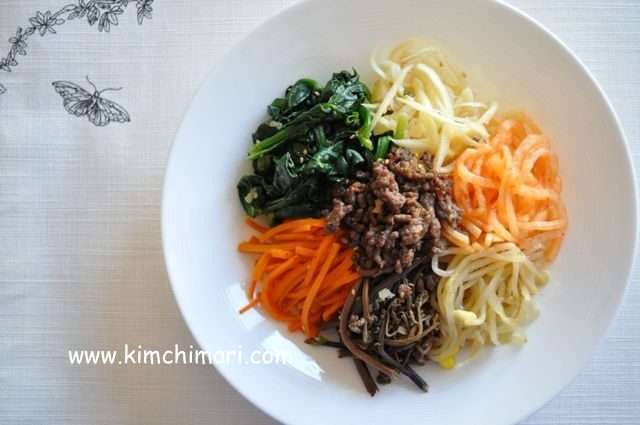
The Bibimbap recipe features layers of ingredients arranged over cooked short-grain rice, including ground beef cooked with soy sauce, sugar, cooking wine, garlic, and sesame oil. Traditional Korean side vegetables (namul) are prepared individually: bellflower roots (doraji) are soaked if dried, salted, and sautéed with garlic; spinach is blanched briefly in salted water; bracken fiddleheads are sautéed with seasonings; radish salad combines julienned radish with chili powder, sugar, rice vinegar, and salt; carrots are julienned and lightly sautéed; soybean sprouts are boiled and seasoned with garlic and sesame oil. The dish is topped with a fried egg and accompanied by a sauce made from gochujang, rice vinegar, and honey which adds sweetness and tang. The components offer a variety of soft, chewy, crunchy, and fresh textures with savory, sweet, spicy, and slightly tangy flavors, reflecting a classic Korean mixed rice bowl.
Bibimbap is best served warm with the gochujang sauce stirred in just before eating. Optionally, sprinkling roasted sea laver pieces enhances the texture and flavor. The rice should be cooked with slightly less water to avoid sogginess, ensuring a good base for mixing all ingredients.
The recipe notes highlight balancing vegetable textures and a gradual approach to seasoning with gochujang to maintain taste nuances.
Ingredients
- 2 C short grain rice
Ground Beef Seasoning
- 1/3 lb ground beef
- 2 tsp soy sauce
- 1 tsp sugar
- 2 tsp rice cooking wine
- 1 tsp sesame oil
- 1 tsp garlic minced
- 1/8 tsp garlic powder (optional)
- 1/8 tsp black pepper ground
Bellflower Roots (Doraji Namul)
- 4 oz bellflower roots 도라지 / doraji) (about 2 1/2 C or 625 ml, reconstituted
- 1/2 tsp vegetable oil
- 1/2 tsp sea salt Trader Joe's
- 1/2 tsp garlic chopped
- 1/4 tsp green onion chopped
- 1/4 tsp sesame oil
Spinach
- 1 spinach washed, bunch
- 6 C water
- 2 tsp salt
- 1 tsp sesame oil
Bracken Fiddleheads (Gosari Namul)
- 4 oz bracken fiddlehead about 2 C or 500 ml, reconstituted
- 1/2 tsp vegetable oil
- 1/4 tsp sea salt Trader Joe's
- 3/4 tsp guk kanjang alternative spelling
- 1/2 tsp garlic chopped
- 1/4 tsp green onion chopped
- 1/4 tsp sesame oil
Radish Salad (Musaengche)
- 3 C Korean radish 무 / moo, julienned
- 2 tsp sea salt Trader Joe's
- 3 1/2 tsp sugar
- 3 1/2 tsp rice vinegar
- 2 1/2 tsp Korean red chili pepper powder 고추가루 / gochugaroo
Carrots
- 1 carrot about 1 C / 250 ml, large or 2 small; julienned
- salt pinch
- 1 Tbsp vegetable oil
Soy Bean Sprouts (Kongnamul)
- 3 C soybean sprouts
- 1/2 tsp sea salt Trader Joe's
- 1/2 tsp garlic chopped
- 1/2 tsp sesame oil
- 1/3 C water
Fried Egg
- 1 egg pan fried, over easy/medium/scrambled
Condiments
- 2 tsp gochujang adjust to taste
- 1-2 tsp sesame oil
Bibim Gochujang Sauce
- 1 Tbsp gochujang
- 1 tsp rice vinegar
- 1 tsp honey or more to taste
Instructions
- Prepare ground beef by mixing in all the seasonings and then sauteeing beef on medium heat until fully cooked. Set aside.
How to prepare Bell Flower Roots (Doraji Namul)
- Doraji is usually sold dried. If your store sells the reconstituted ones buy it! If not, soak the dried roots in water overnight and drain. Rub the roots with sea salt to extract some of the bitterness.
- Split and cut doraji roots into approx 2 in long and 1/8 in thick pieces by inserting a small knife upside down (with the blade side up) and then pushing it upwards. Wash and rinse the cut doraji roots and drain.
- Heat vegetable oil in a frying pan on medium heat. Saute doraji and chopped garlic. Sprinkle 1/2 tsp salt. Saute for 3-4 minutes until the doraji pieces are tender yet still a bit crunchy. Turn off the heat, sprinkle green onions and sesame oil. Set aside.
Blanched Spinach (Shikeumchi Namul)
- Boil a pot of salted water (6 C or so + 1 tsp salt) and quickly blanch the spinach. Do not cook the spinach more than 1 minute. Spinach should be still a bit chewy and not mushy. Shock the cooked spinach in cold or ice water to stop the cooking process.
- Drain the water and squeeze out any excess water from the spinach by squeezing them gently in your hand.
- Season the blanched spinach with some salt (1 tsp) and sesame oil (1 tsp). Set aside.
Sauteed Bracken Fiddleheads (Gosari/Kosari Namul)
- Boil it for 20 – 30 minutes until they are soft then drain. Soak in cold water for 6-8 hours to draw out any bitterness.
- Trim the reconstituted Gosari by going through each piece and cutting off any hard stems.
- Cut them into bite size pieces (2 in long)
- Heat vegetable oil in a frying pan on medium heat. Saute Gosari and chopped garlic. Sprinkle 1/2 tsp salt and gook kanjang. Saute for 5 minutes on low heat. Turn off the heat, sprinkle green onions and sesame oil. Set aside.
Radish Salad (MooSaengChe Namul)
- See my Korean Radish Salad recipe for detailed instructions. You only need a little bit for bibimbap so I reduced the ingredients by half for this recipe.
Sauteed Carrots
- Add 1 T oil in frying pan on medium heat. Add julienned carrots and a pinch of salt. Saute carrots until they are soft and tender.
Soybean Sprouts (Kongnamul)
- Wash and clean the soybean sprouts. Optionally break off the root ends if they are brown.
- In a small pot, add water, soybean sprouts, salt and garlic. Bring to a boil and let it simmer for 8 minutes or so until most of the water has evaporated. Remember the sprouts may taste fishy if you open the lid during cooking. It’s good if you can use a clear glass lidded pot so you can see it without opening the lid.
- Turn off heat and sprinkle the sesame oil. Set aside.
Pan Fried Egg
- Usually the egg is fried over easy so the egg yolk is still runny.
How To Assemble Bibimbap
- In a bowl, about 1 cup cooked rice, top with each of the vegetables and the beef in the middle. Top with fried egg. Serve with gochujang and sesame oil.
Notes
- Use slightly less water when cooking rice to avoid a soggy base, improving the overall dish texture.
- Balance vegetable textures by including a variety of soft, chewy, and crunchy components for complexity.
- Prepare gochujang bibim sauce by mixing 1 tablespoon gochujang with 1 teaspoon rice vinegar and 1 teaspoon honey for added tang and sweetness.
- Add gochujang gradually to retain distinct flavors of the ingredients without overwhelming spiciness.
- Sprinkle roasted sea laver pieces as a finishing garnish to enhance flavor and texture.
Nutrition Information
Show DetailsNutrition Facts
Serving: 6Serving
Amount Per Serving
Calories 421 kcal
% Daily Value*
| Calories | 421kcal | 21% |
| Carbohydrates | 65g | 22% |
| Protein | 12g | 24% |
| Fat | 12g | 18% |
| Saturated Fat | 5g | 25% |
| Polyunsaturated Fat | 1g | 6% |
| Monounsaturated Fat | 1g | 5% |
| Trans Fat | 1g | 50% |
| Cholesterol | 45mg | 15% |
| Sodium | 700mg | 29% |
| Potassium | 426mg | 9% |
| Fiber | 4g | 16% |
| Sugar | 7g | 14% |
| Vitamin A | 2684IU | 54% |
| Vitamin C | 19mg | 21% |
| Calcium | 46mg | 5% |
| Iron | 4mg | 22% |
* Percent Daily Values are based on a 2,000 calorie diet.
User Reviews
Overall Rating
5
You'll Also Love