Bossam - Korean Pork Belly Wrap
User Reviews
5
-
Prep Time
20 mins
-
Cook Time
7 mins
-
Additional Time
1 hr 30 mins
-
Total Time
27 mins
-
Servings
6
-
Calories
840 kcal
-
Course
Main Course
-
Cuisine
Korean
Bossam - Korean Pork Belly Wrap
Description
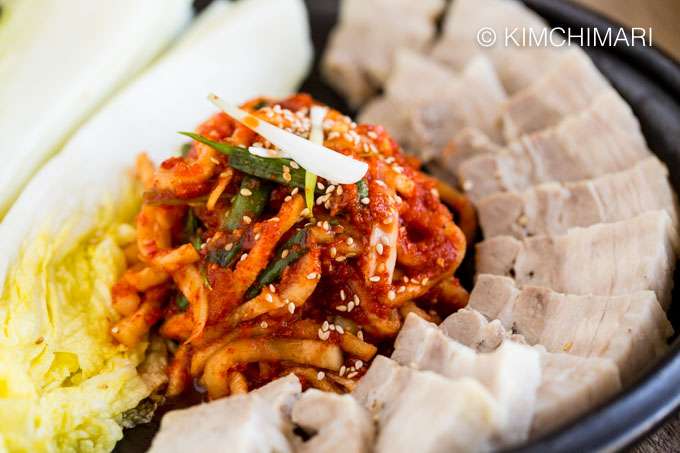
Bossam starts with napa cabbage leaves lightly pickled in a salted water brine that softens them while maintaining some crunch. Pork belly is simmered in a broth flavored with doenjang (Korean soybean paste), ginger, and coffee beans, which tenderizes the meat and creates a delicate savory profile. The kimchi radish salad combines shredded radish with chili powder, fermented salted shrimp, anchovy sauce, garlic, and other seasonings for a spicy, pungent, and slightly sweet side that complements the mild pork and cabbage.
To eat Bossam, place a slice of warm pork belly onto a cabbage leaf, add a spoonful of the kimchi radish salad or other condiments like fresh oysters or extra fermented shrimp, then fold into a wrap. It’s often enjoyed as part of a communal meal with ssamjang and additional greens. Timing the pork to serve warm enhances its succulent texture.
Notes suggest reserving some cooking broth to drizzle over the pork if it dries. For best results, pickle cabbage less than typical kimchi for a balance of softness and bite. Different pork cuts may be used but pork belly provides the traditional fattiness. Leftover pork reheats well pan-fried on medium heat without oil to preserve texture.
Ingredients
Pickled Cabbage Leaves
- 9 cups water
- 1.5 cup sea salt for kimchi, Korean cheonilyeom
Pork
- 2 lb pork belly (or pork butt, shoulder)
- 8 cups water
- 1.5 Tbsp doenjang or miso, Korean soy bean paste
- 3 piecs ginger 1 pc = 2 grams, fresh
- 2 tsp coffee beans
Kimchi Radish Salad (or Stuffing)
- 1 lb radish (Korean or daikon)
- 4 Tbsp red chili powder aka gochukaru
- 1.5 Tbsp fermented salted shrimp (saewoojeot)
- 1.5 Tbsp anchovy sauce (myeolchi aekjeot)
- 3 Tbsp garlic (chopped)
- 0.5 tsp ginger (grated)
- 1.5 Tbsp sugar
- 0.5 tsp salt sea salt
- 2 tsp sesame seeds (roasted)
- 2 green onions (sliced)
- 2 oz Water Dropwort optional, minari
Instructions
For Pickling Cabbage Leaves:
- Mix water and Korean cheonilyeom sea salt to make brine.
- Cut head of napa cabbage to loosen leaves to total about 1/2 of the cabbage. You can also just cut cabbage in half and use one side.
- Immerse cabbage leaves in brine made in 1 and let it pickle for 1 1/2 hrs or until cabbage is soft and shriveled. You don't need to fully pickle the leaves like for kimchi - I kind of like it a little less pickled with a little crunch left but it's up to you.
- Drain cabbage for 10-15 minutes until fully drained. If you are not going to use right away, refrigerate up to 3 days and use later.
- When serving, cut cabbage into 1/2 lengthwise to make it easier to eat.
For Pork:
- In a pot add water, add doenjang, fresh ginger and bring to boil.
- Add pork and cook on medium heat for about 30 minutes(for 1 lb) until it becomes tender enough for a fork to go in easily. You may need to cook longer up to an hour if you are increasing the amount of pork.
- Take pork out of the pot and let it cool for few minutes and then loosely cover with wrap or foil until it cools enough for you to slice. Reason for covering is so that it doesn't dry out while cooling. If you can, it's yummiest when you eat the pork while it's warm.
For Radish Kimchi Salad/Stuffing (Kimchi sok):
- Julienne radish - either with knife or use a mandoline.
- Cut green onions and minari (water dropwart) if you have it.
- In a small bowl, make seasoning paste by mixing Korean red chili powder, saewoojeot, anchovy sauce, chopped garlic, chopped ginger, sugar, salt except for sesame seeds.
- Add kimchi seasoning paste to bowl with radish and coat radish evenly with the paste. It may feel like it's too dry at first but radish juice will soon make it very wet.
- Add green onions and minari and mix again. Sprinkle sesame seeds on top when serving.
- *** If you want to add oysters, you need to increase salt level by adding more seasoning.
- Serve bossam all in one plate with pork belly slices on one side, cabbage leaves and spicy radish salad on the other side. You can of course serve all of them separately too.
Notes
- Use Korean aged sea salt (cheonilyeom) to pickle the cabbage for best flavor and to avoid bitterness.
- The pork simmering time varies with cut and weight; cook until fork-tender, usually about 30 minutes per pound.
- Lightly pickle cabbage leaves until they are tender yet still hold some crunch for wrapping.
- Reserve some cooking broth to moisten pork slices before serving if needed.
- Serve Bossam warm for optimal tenderness and flavor.
- Leftover pork can be reheated in a pan on medium heat without oil to maintain moisture and texture.
- You can add fresh oysters to the radish salad, adjusting seasoning accordingly to maintain balanced flavor.
- Include ssamjang, fermented shrimp, and additional greens for a complete traditional Bossam experience.
Nutrition Information
Show DetailsNutrition Facts
Serving: 6Serving
Amount Per Serving
Calories 840 kcal
% Daily Value*
| Calories | 840kcal | 42% |
| Carbohydrates | 10g | 3% |
| Protein | 17g | 34% |
| Fat | 81g | 125% |
| Saturated Fat | 29g | 145% |
| Cholesterol | 114mg | 38% |
| Sodium | 881mg | 37% |
| Potassium | 616mg | 13% |
| Fiber | 3g | 12% |
| Sugar | 5g | 10% |
| Vitamin A | 1675IU | 34% |
| Vitamin C | 14.3mg | 16% |
| Calcium | 83mg | 8% |
| Iron | 2.3mg | 13% |
* Percent Daily Values are based on a 2,000 calorie diet.
User Reviews
Overall Rating
5
You'll Also Love