Braised Beef Brisket
User Reviews
5
Braised Beef Brisket
Description
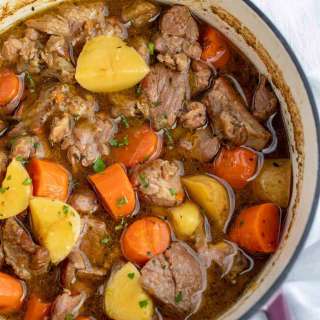
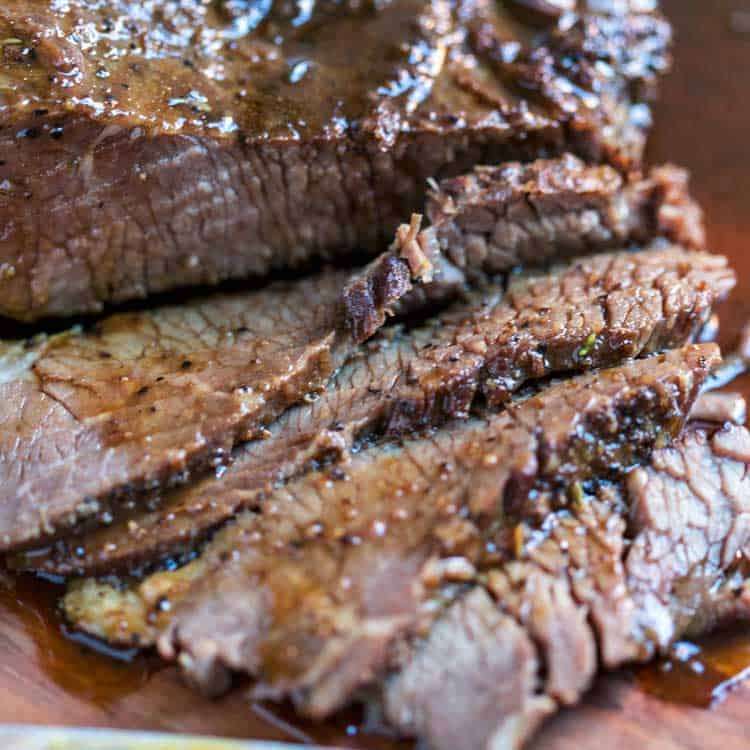
This Braised Beef Brisket recipe begins by seasoning the trimmed flat cut brisket with a dry rub of kosher salt, black pepper, and celery salt, allowing it to rest refrigerated for several hours or overnight. Then the brisket is seared on all sides in bacon fat to develop a browned crust, adding layers of flavor.
Coarsely chopped onions, carrots, and celery are cooked in the same pan until softened and browned, then deglazed with red wine and cooked down. Garlic cloves, thyme, and bay leaves are added, and beef broth is poured to partially submerge the brisket which is placed back into the pan. The dish braises uncovered in a 275°F oven for about 3 to 3.5 hours until the meat becomes fork tender and flavorful.
This preparation produces a rich, savory beef entree with tender texture and aromatic herb and vegetable undertones. It is suitable for serving as a main course, often accompanied by sides that soak up the braising liquid.
Alternate braising liquids such as pomegranate or Concord grape juice can be used for a non-alcoholic variation without compromising tenderness. Trimming excess fat before cooking helps control richness. The recipe is adapted from Bon Appétit's red-wine-braised brisket.
Ingredients
- 8 lb beef brisket See Note 1, flat cut
Dry Rub
- 3 tbsp kosher salt
- 1 tbsp black pepper
- 1 tbsp celery salt
Assembly
- 1/4 cup bacon fat
- 2 onion large, coarsely chopped, white
- 6 carrot peeled, coarsely chopped, large
- 6 celery coarsely chopped, stalks
- 2 cups red wine See Note 2, Burgundy
- 12 cloves garlic
- 2 tsp thyme dried
- 8 bay leaves dried
- 8 cups beef broth
Instructions
- Season trimmed brisket with kosher salt, ground pepper and celery salt, pressing to adhere on all sides. Wrap tightly in plastic wrap and refrigerate on a baking tray (to catch any drips) 3 hours, or best overnight.
- Bring brisket to room temperature. Place a rack in lower third of oven and preheat to 275°F.
- On the stove top heat bacon fat on High in a large roasting pan set over 2 burners. Sear brisket on all sides until browned, 7–10 minutes. Transfer to a platter to rest.
- Reduce heat to medium and add the vegetables to pan. Cook until browned and just soft, about 15 minutes. Add the wine or juice, bring to a boil, and cook until almost evaporated, 10 minutes. Add the garlic, thyme and bay leaves. Pour broth to come halfway up side of pan, and bring to a boil. Using a spoon or spatula, move vegetables to the sides of the pan and place the seared brisket in center. Braise uncovered in oven until meat is tender, 3 to 3.5 hours. You're looking for fork tender brisket.
- Transfer brisket to a tray, cover with foil and keep warm. Remove and discard the fat from surface of braising liquid (optional). Strain braising liquid into large measuring cup and transfer cooked vegetables to serving bowl. Cover to keep warm. Cook braising liquid over high heat until reduced by half, about 15 minutes (or thicken with 2 tablespoons cornstarch and 1/4 cup water mixed).
- Transfer brisket to a cutting board and slice against the grain. Arrange on platter and pour reduced braising liquid over and serve immediately with vegetables.
Notes
- Trim excess fat from the brisket for a leaner cut; a flat brisket around 6.5 lbs after trimming was used here.
- Red wine can be substituted with pomegranate or Concord grape juice for a non-alcoholic version.
- Allow the brisket to rest after seasoning to enhance flavor absorption.
- The braising time is about 3 to 3.5 hours until fork tender; check doneness accordingly.
Nutrition Information
Show DetailsNutrition Facts
Serving: 8servings
Amount Per Serving
Calories 881 kcal
% Daily Value*
| Calories | 881kcal | 44% |
| Carbohydrates | 11g | 4% |
| Protein | 98g | 196% |
| Fat | 41g | 63% |
| Saturated Fat | 14g | 70% |
| Cholesterol | 288mg | 96% |
| Sodium | 4797mg | 200% |
| Potassium | 1993mg | 42% |
| Fiber | 2g | 8% |
| Sugar | 4g | 8% |
| Vitamin A | 7785IU | 156% |
| Vitamin C | 7.2mg | 8% |
| Calcium | 93mg | 9% |
| Iron | 10.2mg | 57% |
* Percent Daily Values are based on a 2,000 calorie diet.
User Reviews
Overall Rating
5
You'll Also Love