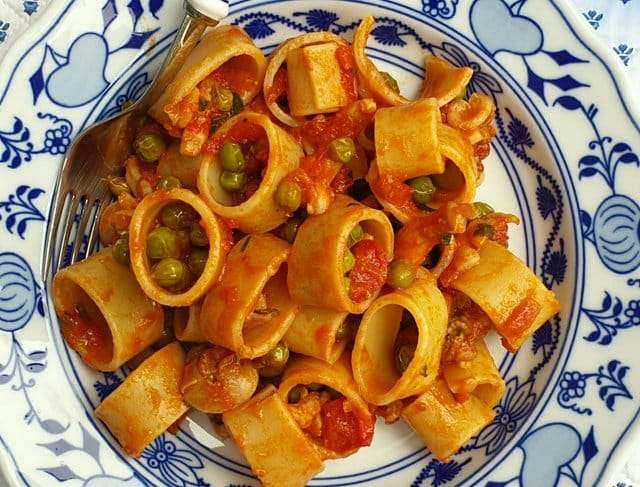
Calamarata Pasta with Stewed Cuttlefish and Peas
User Reviews
5
-
Prep Time
30 mins
-
Cook Time
1 hr
-
Total Time
1 hr 30 mins
-
Servings
4
-
Calories
720 kcal
-
Course
Main Course
-
Cuisine
Italian
Calamarata Pasta with Stewed Cuttlefish and Peas
Description
Calamarata Pasta with Stewed Cuttlefish and Peas uses cuttlefish cleaned and cut into small pieces stewed with onions, cherry tomatoes, and peas in a tomato passata base. White wine adds acidity to the sauce, while vegetable stock keeps the mix moist and flavorful. The large, ring-shaped calamarata pasta accommodates the robust sauce and seafood.
The cuttlefish is carefully prepared to remove innards and membrane, ensuring a tender texture after cooking. The stew is gently cooked to meld flavors and soften the cuttlefish without overcooking. Chopped fresh parsley and extra virgin olive oil brighten the final dish.
Serving this with bread, potatoes, rice, or polenta offers flexibility, as these sides can soak up the sauce and complement the seafood. This dish highlights fresh seafood preparations with a light tomato stew and spring peas for a balanced texture and flavor profile.
Ingredients
- 400 g Calamarata Pasta (14oz) or other large pasta tubes
- 700 g cuttlefish (24oz) I used baby cuttlefish
- 250 g peas 9oz) or frozen (weight after shelled, fresh
- 12 cherry tomato washed and cut in half
- 400 g tomato passata (14oz) Use half if serving as a main course
- 1-2 onion peeled and chopped, white
- ½ glass white wine
- 1 handful parsley chopped, fresh
- 1 cup vegetable stock (homemade or ready made)
- 3-4 tablespoon extra virgin olive oil
- salt for pasta and to taste
Instructions
- If your cuttlefish are fresh, you can ask your fishmonger to clean them. If not you will need to clean them. Cut below the eyes to remove the tentacles and gently pull the head out along with the guts, taking care not to burst the ink sack. Reserve the ink sac for another recipe or just discard it.
- Rinse in cold water to wash away any sand or spilled ink. Pull out the beak and discard, and pull the outer membrane from the body (you may need to aid your grip with a tea towel). You’ll be left with a bright, brilliant white tube and the tentacles. Cut everything into small pieces.
- Even frozen cuttlefish may have to have the head, membrane and beak removed.
- Peel and chop the onion. Clean the tomatoes and cut them in half. Wash and chop the parsley. Shell the peas if using fresh ones. Heat the vegetable broth.
- Heat the olive oil in a deep pan or skillet. I used my Dutch oven. Add the onion, to the oil and soften it. Then add the cuttlefish and a ladle of broth. When the liquid has reduced, add the white wine. When all the alcohol has evaporated and you no longer smell the wine, add the tomatoes and peas (if using fresh).
- Let the flavors blend together without adding more liquid, stirring over a low heat for about 10 minutes. Then add the passata and the peas (if using frozen). Add salt as needed and continue cooking until the cuttlefish becomes tender (about 20 minutes depending on the size). Add more broth if the sauce dries out.
- In the meantime put a pot of water on to boil for the pasta. Add salt once it starts to boil and bring to the boil again.
- Cook the pasta al dente according to the instructions on the packet. When the pasta is ready, drain it and add to the sauce. (I transferred the sauce from my Dutch oven to a deep skillet before doing this). Mix everything together well, sprinkle with fresh parsley and cook for another minute.
- Serve immediately with more fresh parsley if required.
For sauce without tomatoes.
- Instead of tomatoes you can use more broth to cook the cuttlefish and peas. Then add a little pasta cooking water to the sauce before adding the drained pasta.
Notes
- This dish can be served with bread, potatoes, rice, or polenta as alternative bases to pasta.
Nutrition Information
Show DetailsNutrition Facts
Serving: 4Serving
Amount Per Serving
Calories 720 kcal
% Daily Value*
| Calories | 720kcal | 36% |
| Carbohydrates | 100g | 33% |
| Protein | 47g | 94% |
| Fat | 14g | 22% |
| Saturated Fat | 2g | 10% |
| Polyunsaturated Fat | 2g | 12% |
| Monounsaturated Fat | 8g | 40% |
| Cholesterol | 196mg | 65% |
| Sodium | 933mg | 39% |
| Potassium | 1602mg | 34% |
| Fiber | 10g | 40% |
| Sugar | 14g | 28% |
| Vitamin A | 2104IU | 42% |
| Vitamin C | 60mg | 67% |
| Calcium | 227mg | 23% |
| Iron | 15mg | 83% |
* Percent Daily Values are based on a 2,000 calorie diet.
User Reviews
Overall Rating
5
You'll Also Love