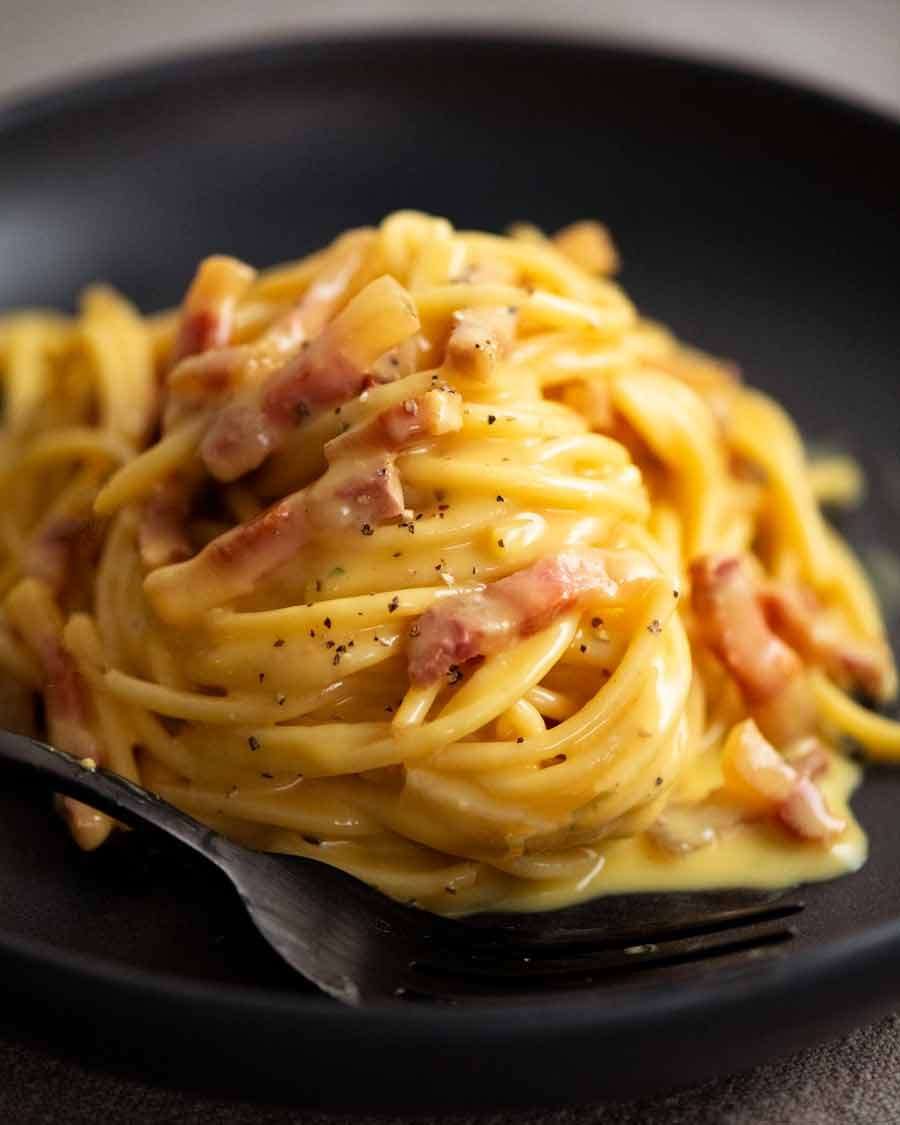
Carbonara (real)
User Reviews
5
-
Prep Time
5 mins
-
Cook Time
15 mins
-
Servings
4
-
Course
Main Course
-
Cuisine
Italian
Carbonara (real)
Description
The Carbonara (real) recipe uses guanciale, an Italian cured pork, cut into batons and cooked until golden to release flavorful fat. Eggs and yolks whisked with grated parmigiano reggiano and black pepper create the sauce base. Spaghetti is cooked in salted water with part of the cooking water reserved to help emulsify the sauce.
After cooking, the hot pasta is tossed in the guanciale fat, then the pasta is combined with the egg and cheese mixture off the heat. Adding reserved pasta water gradually while stirring vigorously creates a silky coating that adheres to the noodles. Garlic is optional but adds an extra layer of flavor when included.
The dish is typically served immediately to enjoy the creamy texture before the sauce sets. Leftovers can be stored for up to three days but are best fresh to avoid drying out. Substitutions like pancetta or block bacon and parmesan for parmigiano reggiano are acceptable, though guanciale and parmigiano reggiano remain traditional ingredients.
Fine shredding of the cheese is essential for proper melting and a smooth sauce. Avoid using pre-grated cheese as it does not melt well. Large eggs are recommended for consistent sauce texture, and resting notes suggest not adding cream to maintain authenticity.
Ingredients
- 175g/6 oz Guanciale weight after skin removed (Note 1, or pancetta or block bacon
- 2 egg Note 2, large
- 2 egg Note 2, yolk
- 100g/3.5 oz parmigiano reggiano , finely shredded (or pecorino romano, sub parmesan, Note 3)
- 1/4 tsp black pepper
- 400g/14 oz spaghetti
- 1 tbsp kosher salt for cooking pasta, cooking salt
- 1/2 cup pasta cooking water
- 1 garlic finely minced (optional, Note 4, clove
Garnish (optional):
- parsley , finely chopped
- parmigiano reggiano
Instructions
- Guanciale - Cut into 0.5cm / 1/5" thick slices then into batons.
- Carbonara sauce - Place eggs and yolks in a large bowl. Whisk to combine. Then stir in the parmesan and pepper.
- Cook pasta - Bring 4 litres (4 quarts) of water to the boil with the salt. Add pasta and cook per the packet directions.
- Reserve pasta water - Just before draining, scoop out 1 cup of pasta cooking water, then drain the pasta.
- Cook guanciale - While the pasta is cooking, place guanciale in a non stick pan over medium high heat. Cook for 4 to 5 minutes until golden. No oil needed - as the guanciale heats up, the fat will melt so it fries in its own fat. If using garlic, add it in the last minute.
- Pasta in pan - Tip the hot pasta into the pan and toss to coat in guanciale fat.
- Mix pasta in sauce - Transfer the pasta and any residual fat in the pan into the bowl with the egg. Add 1/2 cup (125 ml) pasta cooking water. Stir vigorously using the handle of a wooden spoon for 1 minute and watch as the sauce transforms from watery to creamy and clings to the pasta strands!
- Serve - Transfer into warm bowls. Serve immediately, garnished with a little extra parmigiana reggiano if desired, and a pinch of black pepper and finely chopped parsley.
Notes
- Use bacon as a substitute for guanciale and parmesan instead of parmigiano reggiano for a budget-friendly but still flavorful version.
- Guanciale is cured pork with stronger flavor and more fat than pancetta or bacon; use streaky bacon or pancetta if unavailable.
- Large eggs (55-60g) ensure the right sauce consistency; leftover egg whites can be saved for other uses.
- Freshly finely shred the parmesan or pecorino for better melting; avoid pre-grated cheese.
- Garlic is optional and not traditional but adds an extra flavor layer if desired.
- Best served fresh, but leftovers keep up to 3 days; avoid reheating excessively to maintain sauce texture.
User Reviews
Overall Rating
5
You'll Also Love