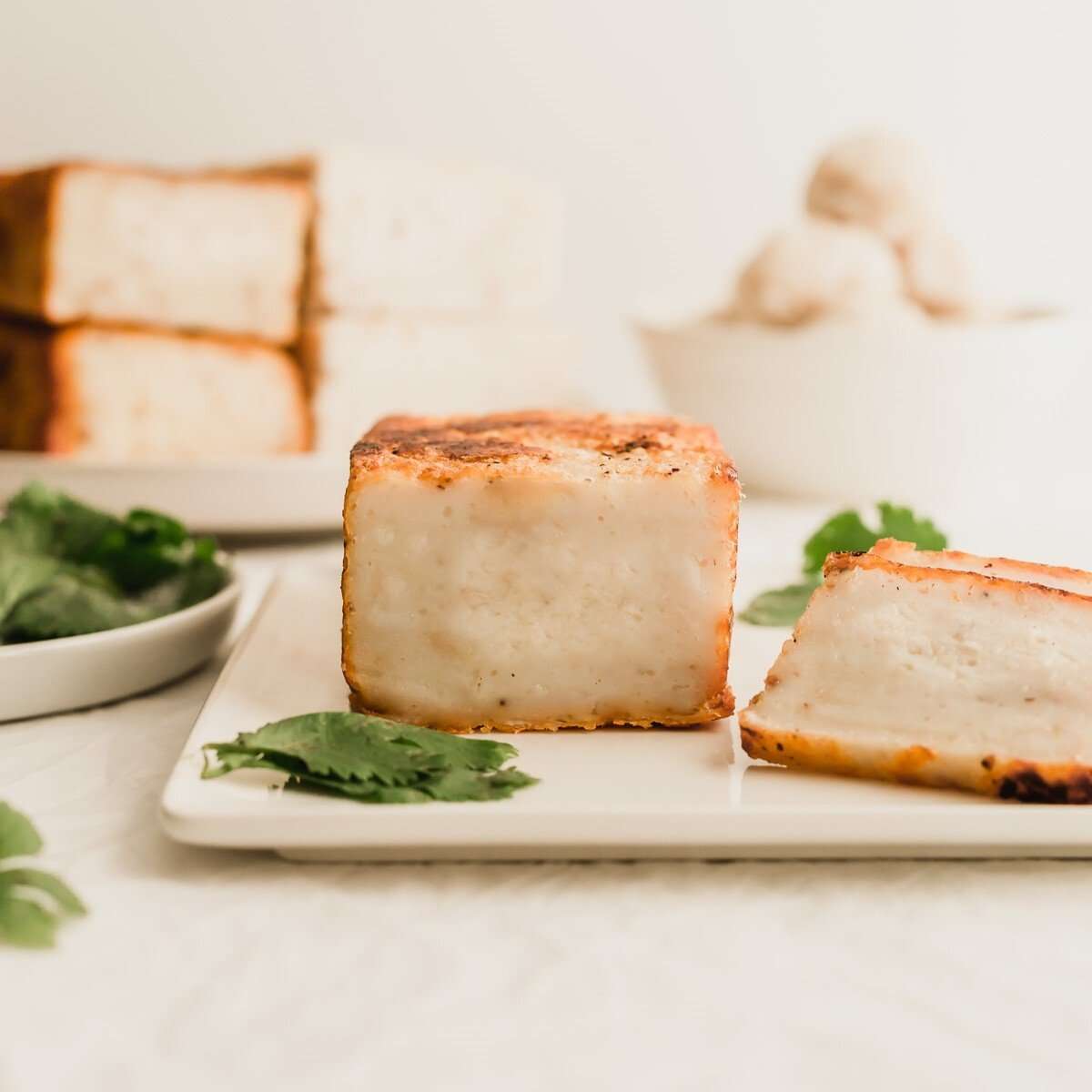
Chinese Fish Cakes/Fish Balls From Homemade Fish Paste (魚餅/魚丸/魚漿)
User Reviews
5
-
Prep Time
45 mins
-
Cook Time
20 mins
-
Additional Time
30 mins
-
Total Time
1 hr 35 mins
-
Servings
20
-
Calories
72 kcal
-
Course
Side Dish, Main Course
Chinese Fish Cakes/Fish Balls From Homemade Fish Paste (魚餅/魚丸/魚漿)
Description
Starting with cleaned, deboned snapper, the fish is first chopped or pulsed, then vigorously beaten with egg whites, salt, pepper, sand ginger powder, and cold water to create a sticky paste. Tapioca starch is gradually incorporated while continuing to beat, which contributes to the elastic texture. The entire process requires persistent mixing to achieve the right consistency.
The fish paste is spread in a lined pan if making fish cakes, or shaped into balls for fish balls before cooking. This method produces a dense, slightly chewy texture favored in Chinese cuisine. The seasoning with black pepper and sand ginger powder adds subtle warmth and depth.
This preparation allows use of whole fish fillets transformed into a versatile base for various traditional fish-based dishes. The handling ensures a smooth uniform paste capable of holding shape during cooking.
Ingredients
- 1000 g snapper cleaned and deboned, fresh fish (鮮魚
- 66 ml egg appx 2 large egg whites, white (蛋清
- 10 g Himalayan salt 2 tsp, 鹽
- ½ teaspoon black pepper Chinese name 黑胡椒
- ½ teaspoon sand ginger powder 沙薑粉
- 150 ml water or 170g ice-cold water for thinner fish paste, ice-cold (冰水
- 120 g tapioca starch 菱粉
Instructions
Make the fish paste:
- If the fish is large, cut into smaller chunks.
- Add the fish to a food processor and pulse to break it into smaller pieces.
- Transfer the fish to a stand mixer bowl, fitted with a paddle attachment.
- Add egg whites, salt, and black pepper and begin beating on low speed.
- Gradually pour the cold water in increments.
- Continue to beat the fish into a paste for 10 minutes or more until it turns into a sticky paste.
- Add in the tapioca starch in a few batches and continue with the process until all the starch is incorporated. (When adding the starch, it will disperse into the air, so use a large kitchen towel to cover around the bowl to prevent the starch from flying.)
- Continue to beat the fish for 5 more minutes until the paste becomes very sticky.
For fish cakes:
- Prepare a small, shallow pan (I used an 8” x 10” x 1” pan) by lining it with parchment paper.
- Transfer the fish paste to the prepared pan. Spread and compact the fish paste so there are no air pockets.
- Tip: use a spatula dipped in cold water to smooth out the fish paste.
- Chill the fish paste in the fridge for 30 minutes.
Steam:
- Steam the fish paste on high heat for 4 minutes, then reduce the heat to medium
- high for about 12-15 minutes, or until fully cooked.
- Once the fish cake has completely cooled down, cut it into 6 portions, about 2½” x 5” in size.
Pan-fry the fish cakes (optional):
- Heat up a frying pan with a little vegetable oil and pan fry the fish cakes until golden in color.
- Slice into thin slices and serve as desired.
For fish balls:
- Prepare a bowl of ice cold water. Add a little salt (½ tsp) to the water.
- Take a handful of fish paste in your hand, with your thumb and index fingers forming a circle (O).
- Squeeze the paste through the hole, forming a sphere.
- Use a spoon to scoop the ball and drop the fish ball into the bowl of cold water.
- Repeat with the remainder of the fish paste.
- In a pot of tepid water, add in the fish balls and the ice water it was sitting in.
- Turn on the heat and cook over low heat, until the fish balls float.
- Transfer the cooked fish balls to a basin of ice cold water to halt the cooking process.
- Drain and serve as desired.
Nutrition Information
Show DetailsNutrition Facts
Serving: 20Serving
Amount Per Serving
Calories 72 kcal
% Daily Value*
| Calories | 72kcal | 4% |
| Carbohydrates | 5g | 2% |
| Protein | 11g | 22% |
| Fat | 1g | 2% |
| Saturated Fat | 0.1g | 1% |
| Polyunsaturated Fat | 0.2g | 1% |
| Monounsaturated Fat | 0.1g | 1% |
| Cholesterol | 19mg | 6% |
| Sodium | 232mg | 10% |
| Potassium | 216mg | 5% |
| Fiber | 0.01g | 0% |
| Sugar | 0.02g | 0% |
| Vitamin A | 53IU | 1% |
| Vitamin C | 1mg | 1% |
| Calcium | 17mg | 2% |
| Iron | 0.2mg | 1% |
* Percent Daily Values are based on a 2,000 calorie diet.
User Reviews
Overall Rating
5
You'll Also Love