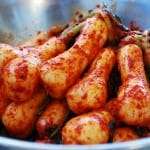
Chonggak Kimchi (Ponytail Radish Kimchi)
User Reviews
5
-
Servings
12
-
Cuisine
Vegetarian
Chonggak Kimchi (Ponytail Radish Kimchi)
Description
Chonggak Kimchi (Ponytail Radish Kimchi) uses whole young radishes with their leaves, which are layered with coarse sea salt to draw out moisture and initiate softening. After a few hours and repeated turning, the radishes become flexible but retain some crispness. The seasoned paste combines sweet rice paste dissolved in water, Korean red chili pepper flakes (gochugaru), salted shrimp (saeujeot), anchovy fish sauce (myeolchiaekjeot), garlic, and grated ginger, giving a spicy, savory depth.
The seasoned paste is gently mixed by hand into the salted radishes, ensuring thorough coating. This kimchi is left to ferment in an airtight container, developing its characteristic sharp, spicy, and tangy profile while preserving the texture of the radish. The radish skins and leaves remain intact, contributing to its unique mouthfeel and appearance.
This type of kimchi pairs well as a side dish with Korean meals, adding a spicy and tangy crunch that contrasts well with rice and grilled meats. It is traditionally stored in sealed containers to control fermentation. The preparation emphasizes careful cleaning and salting to balance texture and fermentation control.
Ingredients
- 4 to 5 pounds radish chonggak mu, 총각무, small to medium young, with leaves
- 1/2 cup sea salt Korean coarse, use less if using finer salt
Seasoning
- 4 tablespoons sweet rice paste 1 tablespoon sweet rice powder simmered in 1/2 cup water
- 1/2 cup gochugaru Korean red chili pepper flakes
- 2 tablespoons salted shrimp saeujeot
- 4 tablespoons myeolchiaekjeot fish sauce made with anchovies
- 2 tablespoons garlic minced
- 1 teaspoon ginger grated
- 1/2 gallon airtight container or jar.
Instructions
- Wash the radishes a couple of times to remove excess dirt. You will wash them again after salting. Cut off the root end of each radish. Trim off the darkish skin on the top end that is connected to the stem. Scratch off the stubborn impurities with a small knife. Do NOT peel the skin. Remove any bad leafy stems.
- In a large bowl, place a few radishes and generously sprinkle with some salt. Add another layer of radishes and sprinkle with salt. Repeat as necessary until all the radishes and salt have been used. Let sit for 2 to 4 hours until the radishes become slightly flexible. Flip them over 2 to 3 times while salting.
- Meanwhile, make the glutinous rice paste and cool. Mix all the seasoning ingredients well. Set it aside for a while for the red pepper flakes to dissolve a little and become pasty.
- Rinse the radishes in cold water 2 times, and drain.
- Place the radishes back in the large bowl. Add the seasoning. Mix everything well by hand (use kitchen gloves), until the radishes and stems are evenly coated with the seasoning. The radishes will be a little dry at this point, but they will release water during the fermentation process.
- Store in an airtight container or jar. Before closing the lid, press the radishes down hard with your hand to pack them. Leave it out at room temperature for two days before storing them in the fridge. Kimchi will be ready in a few days in the fridge but takes about two weeks to fully develop the flavors. It maintains great flavor and texture for several weeks.
User Reviews
Overall Rating
5
You'll Also Love