Chorizo & Kale Risotto
User Reviews
5
Chorizo & Kale Risotto
Description
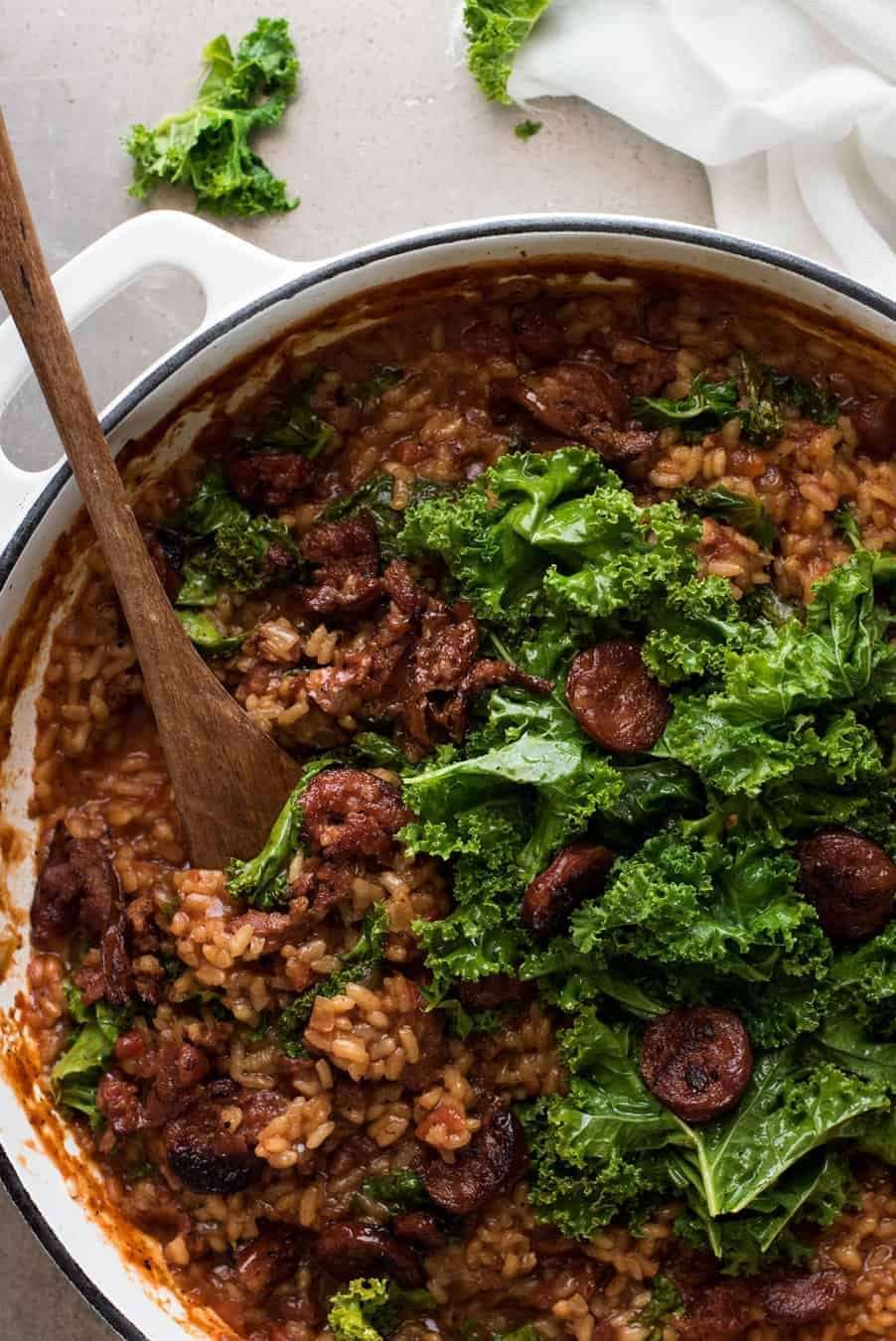
Chorizo & Kale Risotto uses arborio rice slowly cooked in a warm chicken broth blended with tomato paste and passata, which imparts a subtle tomato base to the dish. The chorizo is browned and then combined with sautéed onion and garlic, which builds a flavorful foundation. The risotto is brought together by gradually adding the stock, allowing the rice grains to remain tender but with a slight bite, characteristic of well-made risotto. Kale is incorporated near the end, contributing a textural contrast and mild earthy flavor that complements the spiced sausage.
The overall result is a creamy, richly colored risotto with the distinct flavors of chorizo and tomato, balanced by the fresh bite of kale. The dish requires patience in adding warm stock gradually, which ensures even cooking and creaminess in the rice. It can stand alone as a filling meal. The optional Parmesan adds a nutty finish when sprinkled on top.
Tomato passata forms the base of the stock, giving the risotto its tomato flavor. Removing tough kale stalks before adding the leaves helps maintain a tender texture throughout. The recipe suggests keeping the stock warm to support better absorption and prevent mushy rice. Leftover risotto firms up and can be used for dishes like arancini or fritters, extending its use beyond the initial serving.
Ingredients
Stock
- 3 cups chicken broth salt reduced, or chicken stock
- 2 tbsp tomato paste
- 2 cups tomato passata (Note 1)
Risotto
- 1/2 tbsp olive oil
- 350g (12oz) chorizo , some sliced and the remainder finely chopped (Note 7)
- 1 onion , finely chopped (brown, white or yellow)
- 2 garlic minced, cloves
- 1 1/2 cups arborio rice (risotto rice), uncooked (Note 2)
- 1/2 cup white wine (sub with chicken broth or water)
To Finish
- 5 cups kale leaves , removed from stalk, torn into bite size pieces (packed) (Note 3)
- 2 - 4 butter quantity not specified
- Parmesan Cheese optional, freshly grated
Instructions
- Whisk together Stock ingredients in a small saucepan over medium low heat. Once heated, turn down to low and keep warm. (Note 4)
- Heat oil in a pot or large skillet over high heat. Add chorizo and cook until golden brown. Remove into a bowl and set aside.
- There should be some red oil in the skillet from the chorizo. If not, add a bit of oil.
- Turn heat down to medium. Cook onion and garlic for 5 minutes until translucent.
- Add rice and stir to coat grains in oil until translucent.
- Add wine, turn up the heat to medium high and simmer, stirring, until most of the wine has evaporated.
- Turn heat down to medium low and add 1 cup of stock. Stir leisurely until mostly absorbed into the rice, then add another cup of stock. Continue 1 cup at a time until the risotto is just cooked - squeeze a grain, it should still be firm but cooked through - about 15 minutes. Make the risotto as saucy (or not) as you want - liquid will absorb in the next step so lean towards saucier than what you want.
- When the risotto is done (Note 5), remove it from the stove.
- Add butter (the more the better!) and stir energetically - this will activate the starch and make it creamy. Stir chorizo in then partially stir kale through the risotto. Plonk the lid on and let it rest for 3 minutes (kale will wilt in this step).
- Adjust salt and pepper to taste. Serve immediately! (Note 6)
Notes
- Keep the stock warm while cooking to maintain even temperature and creaminess in the risotto.
- Prepare kale by stripping leaves from the stalks and tearing them into bite-sized pieces for a tender texture.
- Use raw chorizo that requires cooking, rather than cured chorizo like salami.
- Tomato passata can be substituted with pureed canned tomatoes or a combination of tomato paste, crushed tomatoes, and water.
- Leftover risotto thickens as it cools and can be repurposed for dishes such as arancini balls or fritters.
Nutrition Information
Show DetailsNutrition Facts
Serving: 4-5
Amount Per Serving
Calories 668 kcal
% Daily Value*
| Serving | 397g | |
| Calories | 668cal | 33% |
* Percent Daily Values are based on a 2,000 calorie diet.
User Reviews
Overall Rating
5
You'll Also Love