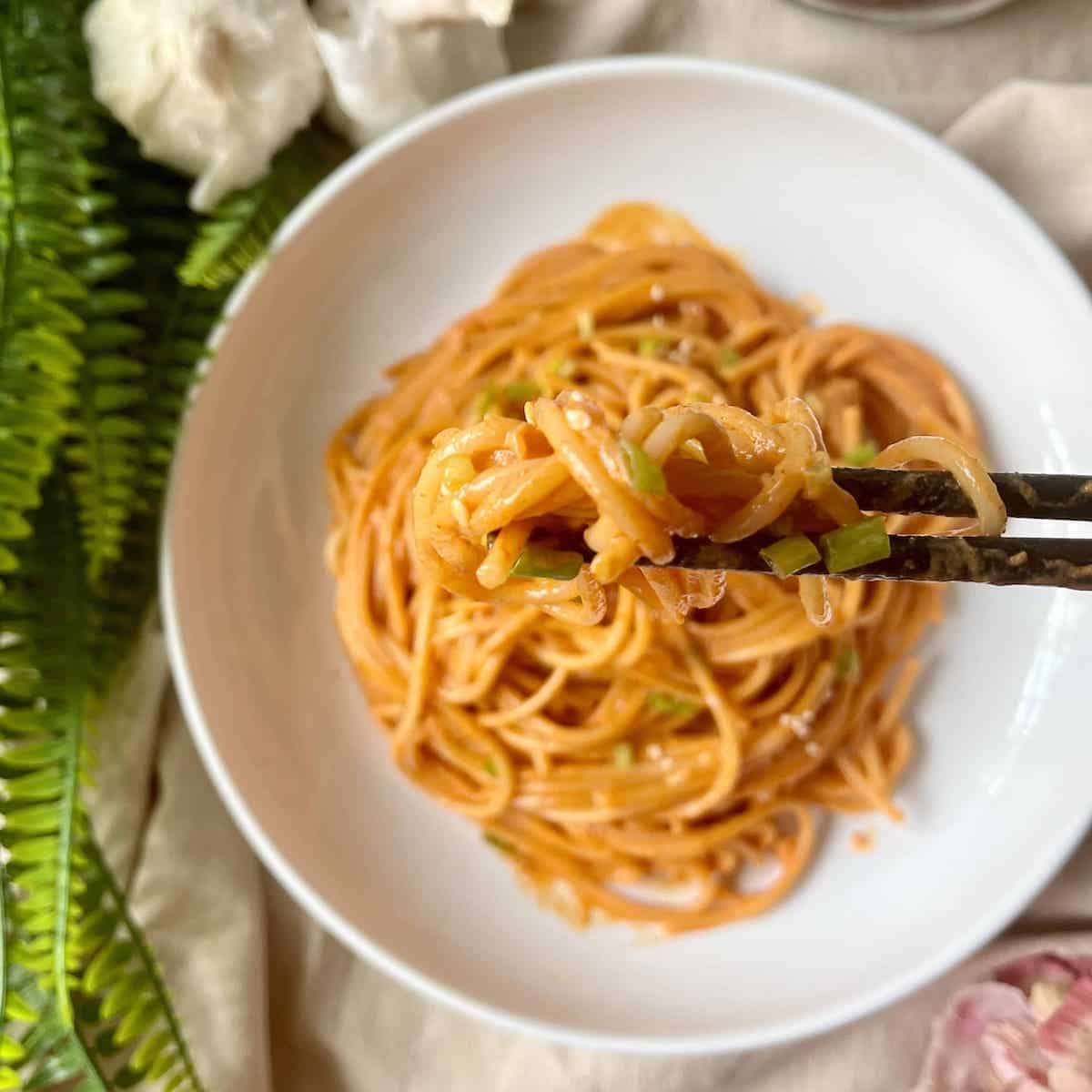
Creamy Korean Pasta
User Reviews
5
-
Prep Time
3 mins
-
Cook Time
12 mins
-
Servings
2 people
-
Calories
515 kcal
-
Course
Main Course
Creamy Korean Pasta
Description
This pasta recipe starts with cooking spaghetti slightly less than usual so it doesn't become mushy when simmered later in sauce. The sauce is prepared by melting butter and sautéing minced garlic, onion, and red chili until softened and fragrant. Gochujang paste is then incorporated, blending for a vibrant and spicy Korean flavor base.
Heavy cream is added to enrich the sauce, along with reserved salty pasta water which helps loosen the mixture and integrate seasoning. Optional seafood stock powder boosts umami while balancing flavors. The final sauce is creamy with a subtle heat and complexity from the garlic and chili.
The pasta is mixed with this sauce, absorbing the spicy cream, yielding a dish that is rich, slightly spicy, and satisfying. Variations include adding ingredients such as cherry tomatoes, SPAM, or bacon for additional flavor and texture. This adaptable recipe offers a fusion of Italian pasta and Korean seasoning.
Ingredients
- 3.5 oz spaghetti Substitute: other types of pasta. You can use 4 oz of spaghetti if you are not adding any side dishes, dried
- water For cooking the pasta. Save 1 Cup after cooking for the sauce
- salt For cooking the pasta. Save 1 Cup after cooking for the sauce
For the sauce
- 2 cloves garlic peel and mince. You can still make this dish without the aromatics, but it won't be as fragrant. Add a bit more of the chicken or seafood stock powder to make up for the lack!
- ¼ onion preferebaly red, peel and mince. Substitute: shallot
- 2 Tablespoons butter unsalted
- 1 red chili pepper minced, omit if you don't like spice
- 1 Tablespoon gochujang paste You can use 2 if you like it spicier or add some gochugaru flakes, Korean
- ½ Cup heavy cream
- ½ Cup pasta water from cooking the pasta
- ½ teaspoon seafood stock powder Optional. If you omit it, you may need to season with salt and a bit of sugar, or chicken stock powder
Instructions
Cooking the Pasta
- Cook your pasta as per normal, but for 2-3 minutes less than you usually do. (You want it undercooked so that it will still be al dente after simmering in the creamy sauce later.)
- Once done, drain but save 1 Cup of the pasta water to add to the sauce later.
Making the Sauce
- Whilst the pasta is cooking, melt the butter in a pan on medium heat. Next, stir in the onions, garlic and (if using) sliced chilies till soft and fragrant. Note: remember that the water used to boil pasta should be well-salted: as salty as the sea!
- Once the onions are translucent and aromatic, add in the gochujang and stir till well-mixed.Note: Be careful not to let the garlic burn. If necessary, turn the fire down to low.
- Pour in the cream and stir well.
- Pour in the pasta water and, if using, the seafood or chicken stock powder. Note: I find this combination salty enough, as pasta water is pretty salty already. However, do taste to see if you feel there's a need to season further. You can use light soy sauce instead of salt to season, if you wish.If not spicy enough for you, add in more gochujang, gochugaru powder or sliced chilies.
- Add in the pasta, stir and simmer till the pasta is cooked through.Optional garnish: toasted sesame seeds, small pieces of seaweed, sliced green onions or a sprinkle of gochugaru chili powder.
- Serve and enjoy!
Notes
- You can add cherry tomatoes, SPAM, or bacon to vary the dish as desired.
Nutrition Information
Show DetailsNutrition Facts
Serving: 2people
Amount Per Serving
Calories 515 kcal
% Daily Value*
| Calories | 515kcal | 26% |
| Carbohydrates | 45g | 15% |
| Protein | 9g | 18% |
| Fat | 34g | 52% |
| Saturated Fat | 21g | 105% |
| Polyunsaturated Fat | 2g | 12% |
| Monounsaturated Fat | 8g | 40% |
| Trans Fat | 0.5g | 25% |
| Cholesterol | 97mg | 32% |
| Sodium | 148mg | 6% |
| Potassium | 306mg | 7% |
| Fiber | 2g | 8% |
| Sugar | 6g | 12% |
| Vitamin A | 1455IU | 29% |
| Vitamin C | 36mg | 40% |
| Calcium | 69mg | 7% |
| Iron | 1mg | 6% |
* Percent Daily Values are based on a 2,000 calorie diet.
User Reviews
Overall Rating
5
You'll Also Love