Duck de Marietta (The Best Slow Roast Duck)
User Reviews
4.9
-
Prep Time
10 mins
-
Cook Time
7 hrs
-
Total Time
7 hrs 10 mins
-
Servings
4
-
Course
Main Course
Duck de Marietta (The Best Slow Roast Duck)
Description
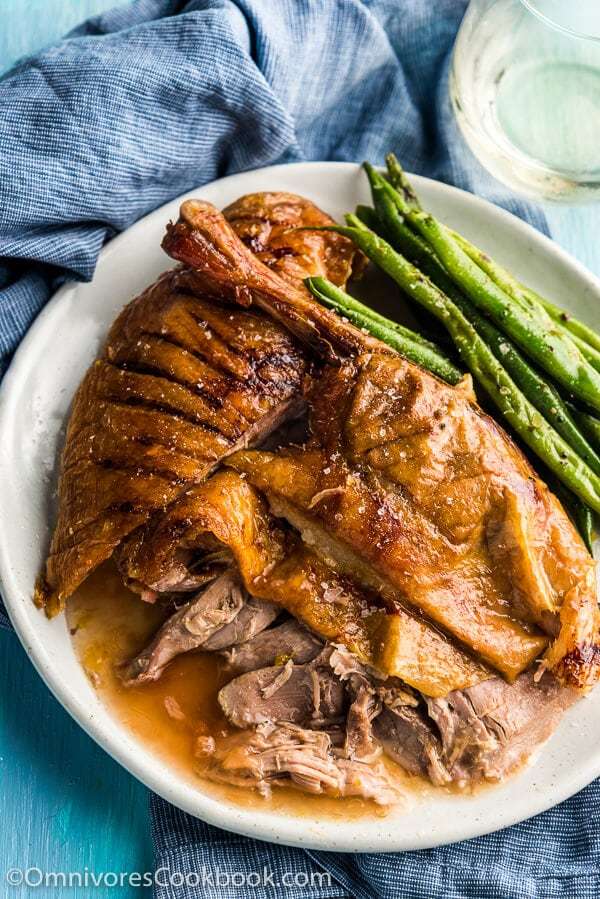
Duck de Marietta (The Best Slow Roast Duck) features a whole duck roasted slowly at a low temperature of 120°C (250°F). The cavity is stuffed with a combination of citrus fruit peels from blood orange, lemon, and mandarin to infuse a subtle citrus aromatic essence into the meat. Scoring the duck breast skin into 1 cm intervals allows the fat to melt out gradually, resulting in a crispy skin without tearing through the meat. The low and slow roasting approach preserves the juiciness of the duck while rendering out excess fat.
The sauce accompanying Duck de Marietta is created by simmering white wine and fruit jam until reduced and thickened with potato starch. This sauce provides a sweet and lightly fruity contrast to the rich, savory duck. The duck neck and giblets removed during preparation are saved to flavor the sauce or stock, maximizing the use of the bird.
This roast duck is an excellent choice for an impressive but gentle cooking method that yields tender, flavorful meat with crisp skin enhanced by the bright citrus filling. It suits special dinners where a slow roast can be prepared ahead and served with the jam and wine sauce for added richness and balance in flavor.
Ingredients
Duck
- 1 duck I used D'Artagnan Rohan Duck, whole, 2.5 kg / 5 to 6 pounds
- 5 to 6 citrus fruit blood orange, lemon, and/or mandarin, peels removed, mixed
- salt sea salt
Sauce (*see footnote)
- 4 tablespoons jam blueberry, apricot, etc, of your choice
- 1 cup white wine
- 2 to 4 tablespoons potato starch (or cornstarch)
Instructions
- Adjust oven rack to the lower third. Preheat oven to 120 C (250 degrees F). Line a baking pan with aluminium foil (for easy cleanup) and top with a V-rack.
- Prepare a plate. Transfer the giblets from the duck to the plate. Use a pair of poultry shears to remove the duck neck and trim the neck skin. Do not trim any skin from the bottom of the duck, because it will keep the meat moist during roasting. Save the duck neck for making sauce or stock. Save the giblets for cooking or making stock.
- Place duck on a working surface or a cutting board. Stuff citrus inside of the duck, using as many fruits as you can. Use a few toothpicks to seal the bottom of the duck, to secure the fruits inside.
- Use a sharp paring knife to score the duck breast, about 1 cm (⅓ inch) apart. This will help the duck render fat faster and create a crispy skin. If you’re not familiar with this process, I suggest you start slow. The thickness of duck skin is not consistent. You need to avoid slicing through the meat, which will cause the duck to lose moisture. Gently press the knife. You might need to slice a few times to get the cut just right. (*see footnote 1)
- Rub both sides of the duck with plenty of sea salt. Place duck on the V-rack, breast side up.
- Bake until the skin turns golden brown, 6 to 7 hours (depending on the thickness of the duck skin). You do not need to flip the duck or monitor the process.
- (Optional) When most of the duck fat has rendered and the skin has become thin (usually 6 hours to 6.5 hours), turn up the heat of the oven to 260 degrees C (500 F) to brown the duck for another 5 to 10 minutes. This method works better when you choose a duck breed with thinner skin (or a duck that was air-chill processed). The skin will crisp up nicely and the meat will remain more juicy.
- Remove the duck from the oven and let rest for 15 minutes. Do NOT cover the duck with foil. This step further crisps up the skin. The stuffing will keep the duck meat hot.
- Transfer the duck onto a large cutting board. Carefully remove the citrus fruits (they will be very hot!) from the duck with a fork or a pair of tongs, and discard them.
- To carve the duck beautifully, you can refer to this video. Alternatively, you can simply pull the meat apart by hand.
- Transfer the rendered duck fat into a small bowl. When it has cooled off, cover with plastic wrap and store it in the fridge. Save for later use.
Option 1 - Fruity sauce
- While resting the duck, cook the fruit sauce.
- Dissolve potato starch in a few tablespoons of the white wine.
- Heat the rest of the white wine in a small saucepan until warm. Add jam of your choice. Stir and mix so that the jam incorporates with the wine. When the liquid comes to a simmer, taste it and adjust the flavor by adding more wine or jam. Remove the pan from the stove.
- Stir the potato starch slurry again to let it fully dissolve in the wine. Slowly pour it into the sauce, stirring at the same time. Add enough slurry to get the sauce to the desired thickness.
- Pour a few spoonfuls of the sauce onto a serving plate. Place the carved the duck onto the sauce. Serve warm with extra sauce on the side.
Option 2 - Peking duck
- Cook duck pancakes (or use store-bought ones). Steam to heat them up while resting the duck.
- Serve duck and pancakes with hoisin sauce, sliced green onion, and sliced cucumber.
Storage
- If you’re not serving the duck right away, wrap the meat in aluminum foil and let it cool down to room temperature. Move it to a ziplock bag, press out as much air as possible, and store it in the fridge for up to 2 days or in the freezer for up to a month.
- To reheat, place the duck, skin side up, on a roasting pan. Transfer into the oven and preheat to 260 degrees C (500 F). Bake until the duck heats up and the skin turns crispy, 10 to 15 minutes.
(Optional) Giblets
- Cut duck giblets (liver, heart, and gizzard) into even-sized chunks and combine with a spoonful of Chinese distilled liquor (白酒, bai jiu), vodka, or Shaoxing wine in a small bowl. Add a teaspoon of cornstarch and season with salt. Mix well. Marinate for 5 minutes.
- Heat oil in a skillet. Gently cook the giblets over medium low heat until cooked through and the surface browned.
- Season with black pepper and serve warm.
Notes
- Scoring the duck breast skin carefully helps the fat to render without cutting into the meat or damaging the skin's appearance.
- Stuffing the duck cavity tightly with citrus fruit infuses gentle aromatics and helps keep the meat moist during the long roast.
- Save the neck and giblets for making a flavorful stock or to enhance the accompanying sauce.
- This recipe avoids puncturing the meat with forks or sharp knives to keep the skin intact and the presentation clean.
User Reviews
Overall Rating
4.9
You'll Also Love