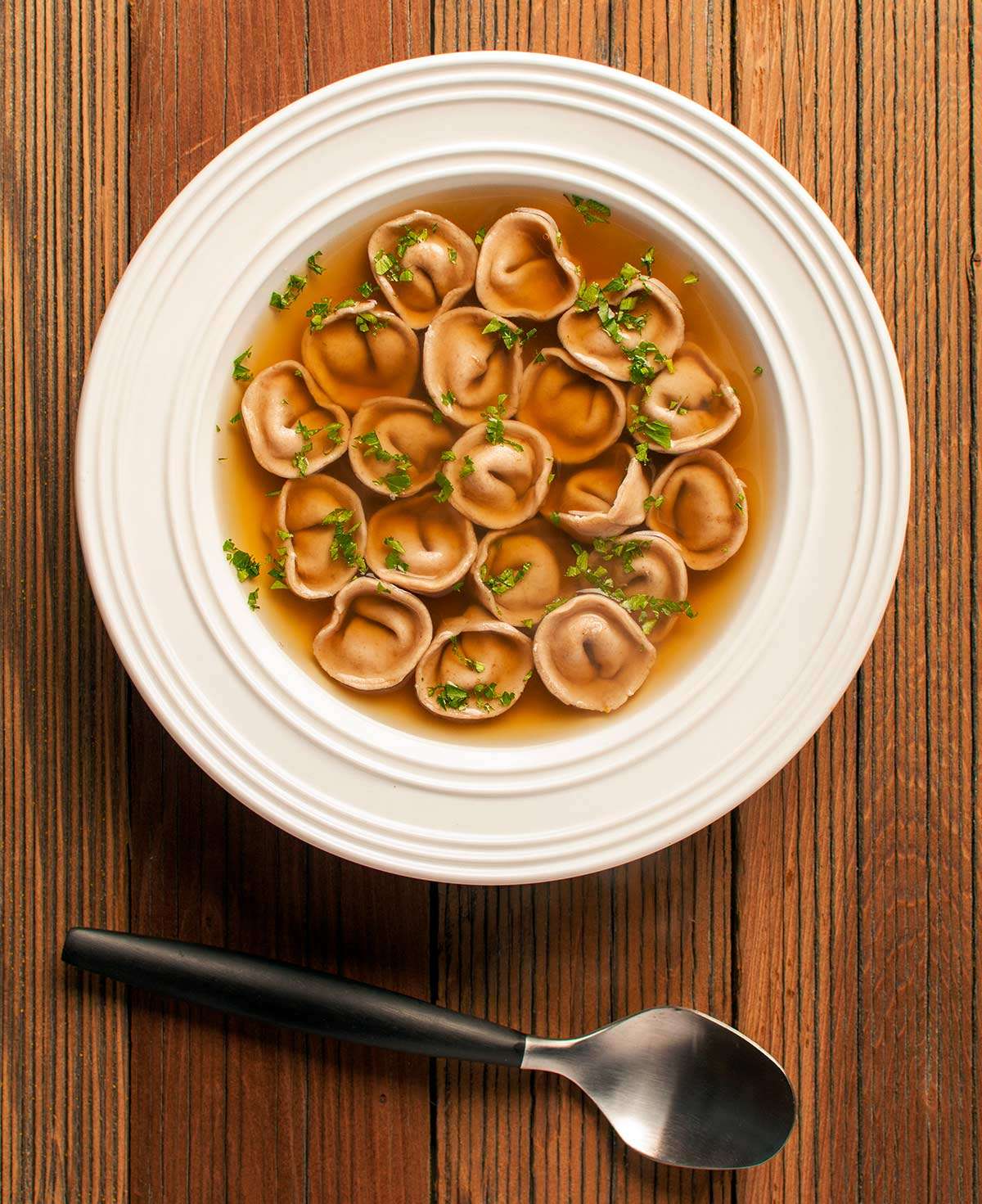
Duck Stock
User Reviews
5
Duck Stock
Description
Duck Stock begins with roasting chopped duck carcasses and optional duck feet for a deep, caramelized flavor. The roasted bones are then combined in a large pot with cold water, aromatic vegetables such as chopped onion, celery, carrot, and optionally fennel bulb. Herbs including rosemary sprigs, thyme, bay leaves, and cracked black peppercorns are added along with optional juniper berries for aromatic complexity.
The mixture is brought to a boil briefly, then carefully reduced to a bare simmer with the lid slightly ajar. This slow cooking process extracts gelatin and flavor from the bones and feet, resulting in a stock with good body and a rich duck flavor. Skimming off impurities while cooking helps keep the broth clear. The final yield is about 5 quarts of stock.
This stock can serve as a flavorful base for soups, sauces, or braised dishes where a pronounced duck flavor is desired. For ducks with strong odors, such as sea ducks, removing skin and fat helps avoid off flavors in the stock.
Ingredients
- 3 to 5 pounds duck carcass include wingtips, neck, and hearts if possible, or goose carcass
- salt
- 1 onion chopped
- 2 celery chopped, stalks
- 2 carrot chopped
- 1 fennel bulb optional, chopped
- 20 duck feet optional, or goose feet or pig's foot, up to 30 pieces
- 1 rosemary large sprig
- 2 teaspoons thyme dried
- 3 bay leaf
- 1 tablespoon black peppercorn cracked
- 1 tablespoon juniper berries optional, crushed
Instructions
- Chop the carcasses and various duck bits -- except for the feet, if using and salt them well. Arrange in a large roasting pan in one layer if possible; leave out the feet. Roast in a 400°F oven until well browned.
- If you have duck feet, chop them with a cleaver or heavy knife to break the skin and expose the joints and bones. There is collagen in the feet that will seep into the water and give the finished broth more body. Put the duck feet into the pot you are making the stock in. If you're using a pig's foot, just put it into the pot.
- When the duck bits are browned, put into the large stockpot and cover with cold water leaving about 2 to 3 inches of room at the top of the pot. If the roasting pan has a lot of fat in it, drain it off. Add some more water to the roasting pan and scrape up any browned bits with a wooden spoon. Add this to the stockpot.
- Cover the pot and bring it to a boil, but as soon as it hits a boil, drop the heat to a bare simmer and move the pot lid slightly ajar. Let this cook very, very gently -- more steaming than simmering -- for as long as you can handle. I let it go overnight.
- When you are ready to add the vegetables, toss them all in and stir to combine. Note that this is the only time you stir this stock. Let them simmer gently for 2 hours.
- Turn off the heat and strain the stock. I do it this way: I set up a big container for the strained stock, like a big Tupperware tub. Over this I set a strainer, and in the strainer I lay a piece of regular paper towel. Now, using a ladle, ladle out your stock so it strains through the paper towel. Doing it this way keeps the stock clear.
- Your broth is ready now. Salt it to taste, adding a little at a time. You can further concentrate flavors by simmering the strained stock for as long as you'd like. Check every 15 minutes or so.
- Pour into Mason jars and refrigerate for up to 2 weeks, or freeze for up to 9 months. If you freeze, leave at least 1 1/2 inches of headspace in the jars or they will crack. You can also pressure can your stock at 10 psi for 25 minutes (follow your canner's directions for this).
Notes
- Remove as much fat and skin as possible from strong-smelling ducks to prevent off flavors.
- Store leftovers well refrigerated or frozen for future use in soups or sauces.
- Breaking down the duck feet exposes joints and bones, releasing collagen for a richer stock.
- Roast bones until well browned to enhance flavor and color of the stock.
Nutrition Information
Show DetailsNutrition Facts
Serving: 20servings
Amount Per Serving
Calories 13 kcal
% Daily Value*
| Calories | 13kcal | 1% |
| Carbohydrates | 3g | 1% |
| Protein | 1g | 2% |
| Fat | 1g | 2% |
| Saturated Fat | 1g | 5% |
| Sodium | 14mg | 1% |
| Potassium | 93mg | 2% |
| Fiber | 1g | 4% |
| Sugar | 1g | 2% |
| Vitamin A | 1059IU | 21% |
| Vitamin C | 2mg | 2% |
| Calcium | 15mg | 2% |
| Iron | 1mg | 6% |
* Percent Daily Values are based on a 2,000 calorie diet.
User Reviews
Overall Rating
5
You'll Also Love