Easy Bibimbap with Gochujang Sauce
User Reviews
4.8
-
Prep Time
15 mins
-
Cook Time
30 mins
-
Total Time
45 mins
-
Servings
2 (Servings)
-
Calories
519 kcal
-
Course
Main Course
Easy Bibimbap with Gochujang Sauce
Description
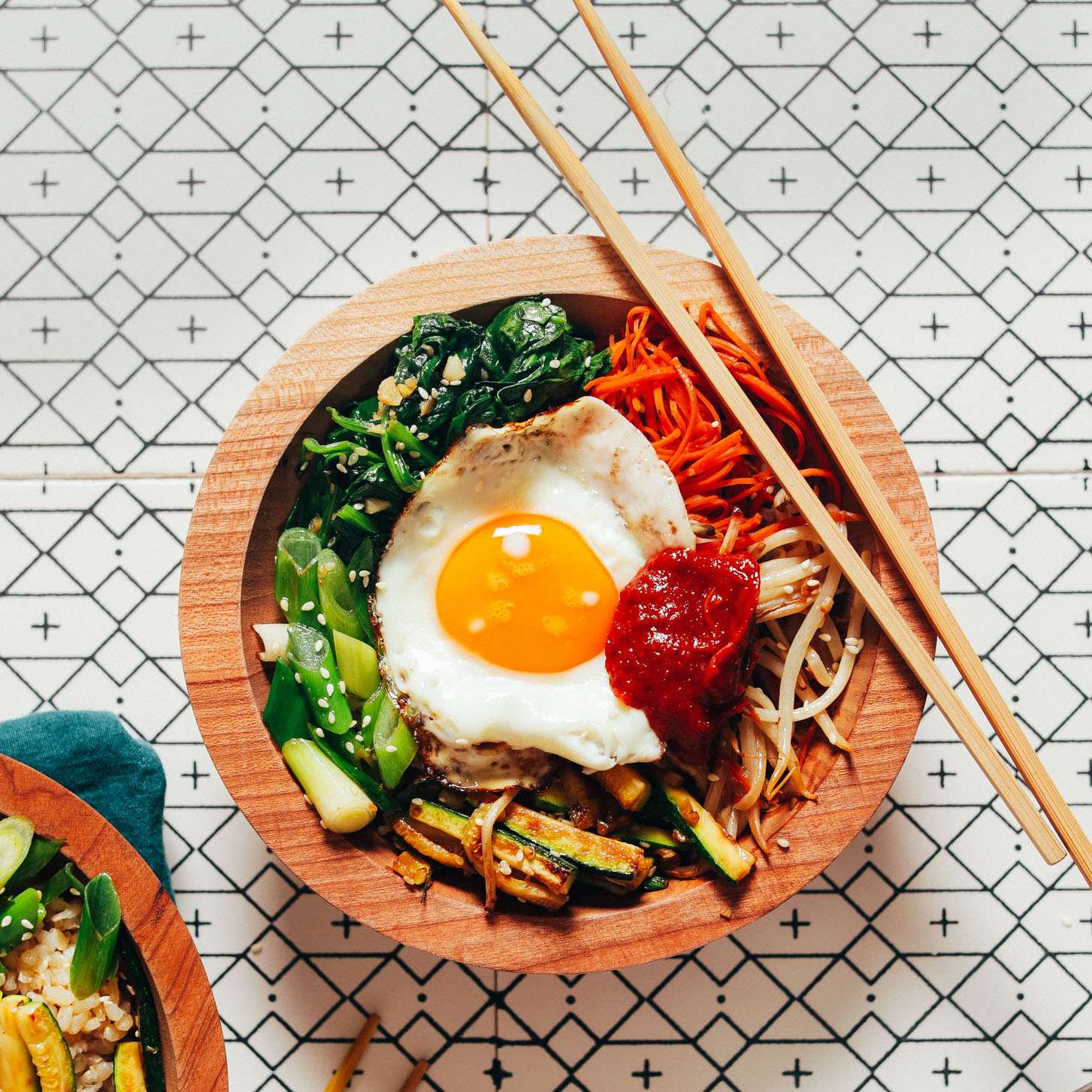
Easy Bibimbap with Gochujang Sauce layers steamed brown rice with sautéed shredded carrot, zucchini, spinach, and bean sprouts, seasoned with garlic, coconut aminos, and sesame oil. The rice is cooked with care, with optional soaking to reduce cooking time and improve texture. Vegetables are stir-fried in batches until slightly browned, enhancing their flavor and retaining some bite.
The dish is topped with a fried egg that adds richness and softness, contrasting with the vegetables. A homemade or store-bought spicy and slightly sweet gochujang sauce is spooned over, providing vibrant flavor and heat. Optional kimchi adds fermented tanginess, and toasted sesame seeds contribute a subtle crunch.
Traditionally served in bowls, bibimbap can be enjoyed as a well-rounded meal with balanced components—grains, vegetables, protein, and sauce. Variations include omitting eggs for vegan options or substituting cauliflower rice for grain-free preferences. A Korean stone bowl or heating the rice in sesame oil can create a crispy rice crust for added texture.
This recipe adapts from reliable Korean sources and offers a flexible, flavorful way to enjoy bibimbap at home.
Ingredients
RICE
- 3/4 cup brown rice soaking for 12-24 hours to speed cooking is optional, short-grain or white rice, rinsed
- 1 ½ cups water (if rice was soaked, reduce water by about 1/4 cup (60 ml) as recipe is written)
- 1 pinch salt sea salt
VEGGIES + EGG
- 2-3 Tbsp sesame oil toasted for more flavor, untoasted works, too, divided
- 3 cups mixed vegetables such as finely shredded carrot, thinly sliced zucchini, or spinach, packed
- 1 heaping cup bean sprout if you can’t find, sub more mixed vegetables
- 2 talks green onion sliced on an angle
- 2 cloves garlic minced
- 2 Tbsp coconut aminos or sub tamari to taste, or sea salt, divided
- 2 large egg we recommend organic, pasture-raised, and as ethically sourced as possible, such as Vital Farms
FOR SERVING
- 2-4 Tbsp gochujang sauce or sub store-bought - look for vegan or gluten-free as needed, such as Wholly Gochujang, Korean
- kimchi (optional)
- sesame seeds optional, toasted or raw
Instructions
- Optional: If soaking rice, rinse, drain, and add to a mixing bowl and cover with cool water. Soak for 12 hours or overnight. For a quicker soak, cover in hot water for 1 hour. Then rinse and drain.
- To a medium saucepan, add cooking water (if you soaked your rice, start with 1 ¼ cups water as recipe is written), rinsed rice, and salt. Heat over high heat and bring to a boil, reduce heat to simmer, and cover. Cook for 15-20 minutes or until water is absorbed and rice is tender and fluffy. Soaked rice generally takes less time to cook. Unsoaked rice can take up to 30 minutes or more. Keep covered and set aside.
- In the meantime, prepare Gochujang sauce. Skip if using store-bought.
- While the rice finishes cooking, heat a large skillet over medium heat (stainless steel or cast iron are best). Once hot, add 1 tsp of sesame oil or enough to just coat the pan.
- Once the oil is hot, add vegetables one type at a time and cook in batches until lightly browned (1-2 minutes), seasoning each with a little minced garlic and a dash of coconut aminos, tamari, or sea salt. Cooking in batches allows you to arrange vegetables separately over the rice for visual effect. We cooked the zucchini first, then carrots, green onion, bean sprouts, and spinach. Add more oil to the pan as needed between vegetables.
- Arrange cooked vegetables in individual piles on a serving plate and cover gently to keep warm until serving.
- To cook eggs (if vegan, see notes for options!), heat the same pan over medium heat. Once hot, add a little more oil (sesame or otherwise), and carefully crack eggs. For sunny-side up (our preference), cover briefly with a lid to steam for 1 minute, then remove lid and continue cooking until whites are cooked but yolks are still runny. Turn off heat and set aside (uncovered).
- To serve, divide desired amount of rice between serving bowls (see notes for traditional dolsot recommendations and crispy rice hacks!) and top with portions of cooked veggies and egg.
- Serve with 1-2 Tbsp Gochujang, kimchi (optional), and a dash of sesame seeds (optional). Bibimbap means “mixed rice,” so once your egg and Gochujang sauce are added, use a spoon or your chopsticks to stir everything together and mix the flavors. Then enjoy!
- This dish is best fresh, but leftovers can be stored in the refrigerator up to 2 days and be reheated on the stovetop over medium heat as a stir fry. Not freezer-friendly.
Notes
- Soaking rice reduces cooking time but is optional; soaked rice cooks more quickly and less water is needed.
- Sesame oil's nutty flavor enhances the dish; toasted oil is preferred but untoasted works as well.
- For vegan versions, omit eggs and substitute with crispy baked or scrambled tofu alternatives.
- Cauliflower rice can replace grains for a grain-free bibimbap option.
- Using a Korean stone bowl or stir-frying rice in sesame oil can create a crispy rice texture traditionally found in bibimbap.
- Nutrition info is estimated without optional ingredients and averaged vegetable quantities.
- Recipe adapted from Maangchi and inspired by Korean restaurant meals.
Nutrition Information
Show DetailsNutrition Facts
Serving: 2(Servings)
Amount Per Serving
Calories 519 kcal
% Daily Value*
| Serving | 1Serving | |
| Calories | 519 | 26% |
| Carbohydrates | 73.2g | 24% |
| Protein | 14.9g | 30% |
| Fat | 22g | 34% |
| Saturated Fat | 3.8g | 19% |
| Sodium | 528mg | 22% |
| Potassium | 668mg | 14% |
| Fiber | 8.9g | 36% |
| Sugar | 12.5g | 25% |
* Percent Daily Values are based on a 2,000 calorie diet.
User Reviews
Overall Rating
4.8
You'll Also Love