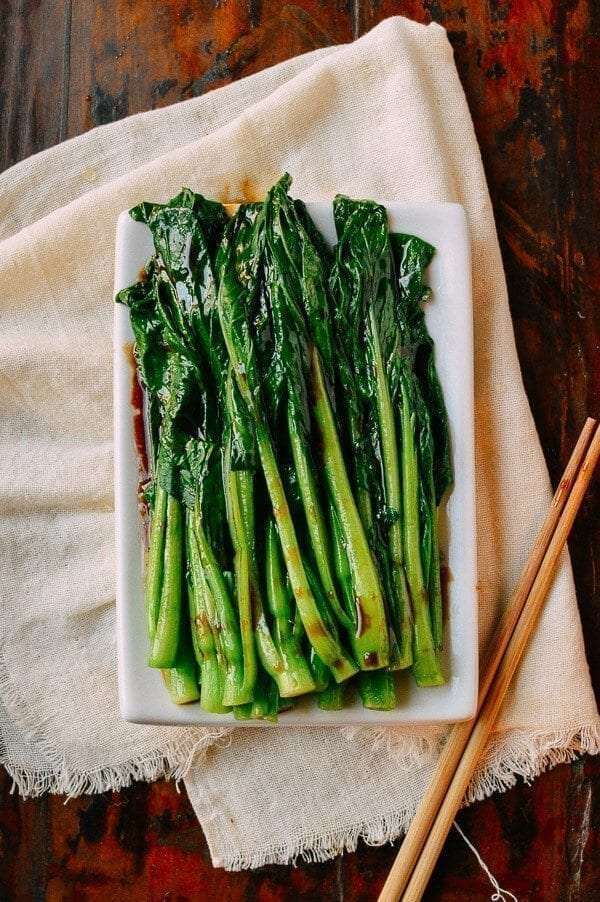
Easy Chinese Yu Choy Sum Recipe
User Reviews
4.9
Easy Chinese Yu Choy Sum Recipe
Description
Yu Choy Sum is thoroughly washed to remove grit and sand before cooking. The vegetable is blanched briefly in boiling water with a touch of oil, which enhances its color and softens the stems just enough without losing natural crunch. The blanching time can be adjusted depending on stem thickness or preferred tenderness.
The sauce is prepared separately by gently heating oyster sauce, light soy sauce, sesame oil, and white pepper to meld flavors. This sauce is then combined with the drained vegetable, coating the stems and leaves with a glossy, savory glaze that highlights the greens' freshness.
This dish uses minimal ingredients but delivers a balance of textures and umami flavors characteristic of Cantonese vegetable preparations. It complements rice or stir-fries without overpowering them.
Ingredients
- 1 lb yu choy (450g)
- 2 tablespoons neutral cooking oil divided, generic cooking oil
- 1 tablespoon oyster sauce (or vegetarian oyster sauce)
- 1 tablespoon soy sauce light
- 1/2 teaspoon sesame oil
- 1/8 teaspoon ground white pepper
Instructions
- First, wash your yu choy. We recommend that yu choy and all leafy green vegetables be washed three times to rid the leaves and stems of hidden dirt and sand. Once the veggies are cleaned and draining in a colander, bring a large pot of water to a boil.
- While that’s happening, heat 1 tablespoon of oil in a small saucepan over low heat for 30 seconds. Stir in the oyster sauce, soy sauce, sesame oil, and white pepper. Bring the mixture to a simmer, then immediately turn off the heat and set aside.
- Once the water is boiled, add 1 tablespoon of oil to the boiling water. Add in the yu choy and stir gently. The yu choy will turn dark green in color. The blanching process takes only 30 seconds, but if your yu choy has thick stems, or if you like your vegetables to be more tender, you may want to cook them a little longer—up to a minute or so. Feel free to fish out a piece to taste (like you'd do when cooking pasta) if you're unsure.
- Once they are ready, use a pair of tongs or chopsticks to remove them from the pot and arrange on a dish lengthwise. After you have plated the hot vegetables, some water may have drained off onto your platter. Be sure to carefully pour this off, or your sauce may be watery.
- If the veggies are long, feel free to take kitchen scissors and cut them in half. But you can also leave them as is. Pour the warm sauce over the veggies and serve!
Nutrition Information
Show DetailsNutrition Facts
Serving: 4Serving
Amount Per Serving
Calories 98 kcal
% Daily Value*
| Calories | 98kcal | 5% |
| Carbohydrates | 5g | 2% |
| Protein | 3g | 6% |
| Fat | 8g | 12% |
| Saturated Fat | 1g | 5% |
| Sodium | 401mg | 17% |
| Potassium | 10mg | 0% |
| Sugar | 1g | 2% |
| Vitamin A | 11340IU | 227% |
| Vitamin C | 144mg | 160% |
| Calcium | 267mg | 27% |
| Iron | 2mg | 11% |
* Percent Daily Values are based on a 2,000 calorie diet.
User Reviews
Overall Rating
4.9
You'll Also Love