Easy Lemon Bars
User Reviews
5
Easy Lemon Bars
Description
The Easy Lemon Bars recipe begins by preparing a buttery shortbread crust composed of all-purpose flour, corn starch, powdered sugar, cold unsalted butter, and vanilla extract. This mixture is pressed into a baking dish to create a firm base that bakes to a lightly golden, crisp texture. The crust holds a thin edge to contain the filling without spillover. Once cooled, the lemon filling—comprising fresh lemon juice and zest, eggs, granulated sugar, flour, and vanilla—is whisked and poured over the crust before baking again to set.
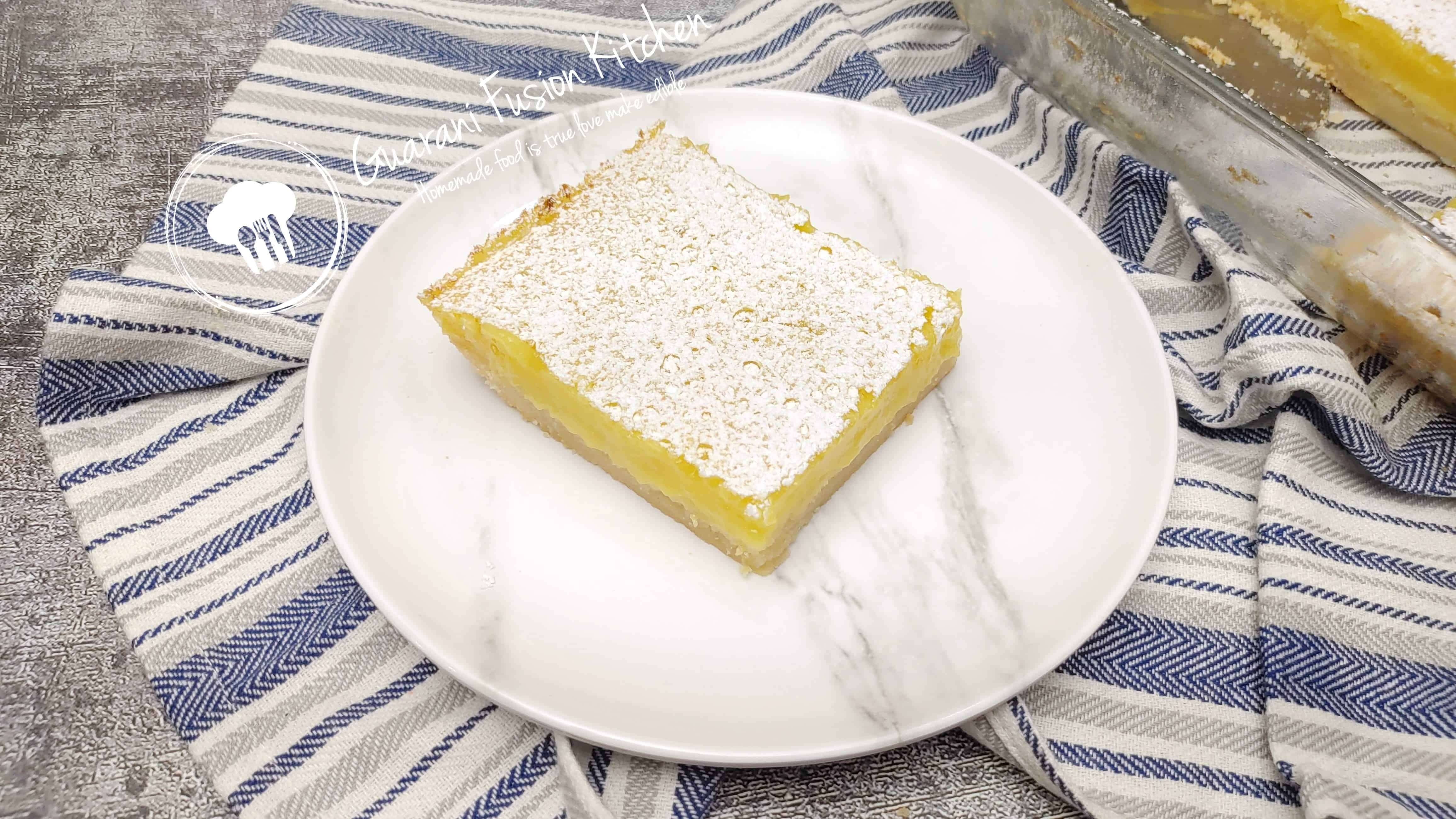
The final bars deliver a contrast between the crunchy, buttery crust and a smooth, tart lemon custard topping, dusted with powdered sugar for added sweetness and visual appeal. The use of fresh lemon zest and juice ensures a fresh citrus flavor, while the inclusion of a small amount of flour stabilizes the filling. Baking time controls the custard’s texture, aiming for a firm but tender bite.
They can be served immediately or chilled, and are suitable for make-ahead preparation. Tips include storing in airtight containers in the refrigerator for up to five days, with powdered sugar added just before serving to prevent melting. The dessert also freezes well if wrapped properly, with thawing in the fridge recommended. Variations suggest using other citrus juices for different flavors or alternative flours for crust modifications.
Ingredients
For the Crust:
- 134 g all-purpose flour spooned into measuring cup and leveled-off, 1¾ cup
- 31 g corn starch ¼ cup
- ⅛ g salt
- 130 g powdered sugar plus more to decorate finished bars, also known as confectioners' sugar
- 2 sticks (1 cup) cold unsalted butter, cut into ½-inch pieces
- 1 teaspoon vanilla extract pure
For the Lemon Filling:
- 6 egg room temperature, large
- 400 g granulated sugar 2 cups
- 2 tablespoons lemon be sure to zest the lemons before juicing, zest
- 1 cup lemon juice from 5 to 6 lemons, freshly squeezed
- 83 g all-purpose flour ⅔ cup
- 3 teaspoons vanilla extract pure or scrapings of a vanilla bean
Instructions
- For the Crust: Preheat the oven to 350 degrees F. Grease a 9-by-13-inch baking dish with nonstick cooking spray and line with parchment paper, leaving at least 2 inches of excess on either side to help unmold the bars later.
- In the bowl of a food processor fitted with the metal blade attachment, place the flour, corn starch, salt, and powdered sugar and pulse a few times to combine. Add the butter and vanilla and pulse until the mixture resembles a coarse meal, about 10 to 15 seconds.
- Sprinkle the crust mixture into the prepared baking dish and carefully press into an even layer with your hands or the bottom of a measuring cup, building up a thin ¾-inch edge around the sides (this will help keep the filling from spilling beneath the crust). Refrigerate for 30 minutes or freeze for 15 minutes. Bake the crust until lightly golden, 15 to 20 minutes. Cool completely.
- For the Filling: In a large bowl, whisk together the eggs, sugar, lemon juice, lemon zest, vanilla, and flour until well combined and no lumps of flour remain.
- Give the lemon mixture a quick stir, and then pour the filling into the cooled crust. Gently transfer to the oven and bake until the center of the custard sets, about 30 to 35 minutes. Cool to room temperature, then chill for at least 2 hours before slicing and serving.
- To serve, use the parchment paper overhang to transfer the baked lemon bar onto a cutting board and carefully loosen the parchment from the edges of the crust. Using a sharp knife, cut into squares. Dust with powdered sugar using a fine sieve.
Notes
- Store lemon bars in an airtight container refrigerated for up to 5 days to maintain freshness.
- Add powdered sugar just before serving to prevent it from melting into the bars.
- To reheat, warm bars gently in the oven at 350°F for 5-7 minutes, avoiding overheating.
- Bars can be frozen for up to 3 months; wrap tightly in plastic wrap and foil before freezing.
- Thaw frozen bars in the refrigerator overnight; avoid thawing at room temperature to maintain texture.
- Use a Microplane zester to zest lemons carefully without including bitter white pith.
- Other citrus juices like orange or lime can substitute for lemon juice for flavor variations.
- If you lack a food processor, combine crust ingredients by hand gently to avoid overworking dough.
- Almond flour can replace corn starch in crust for an almond shortbread variation.
User Reviews
Overall Rating
5
You'll Also Love