Easy Mbejú
User Reviews
5
-
Prep Time
15 mins
-
Cook Time
8 mins
-
Total Time
2 hrs
-
Servings
8
-
Calories
947 kcal
-
Course
Side Dish
-
Cuisine
Paraguayan
Easy Mbejú
Description
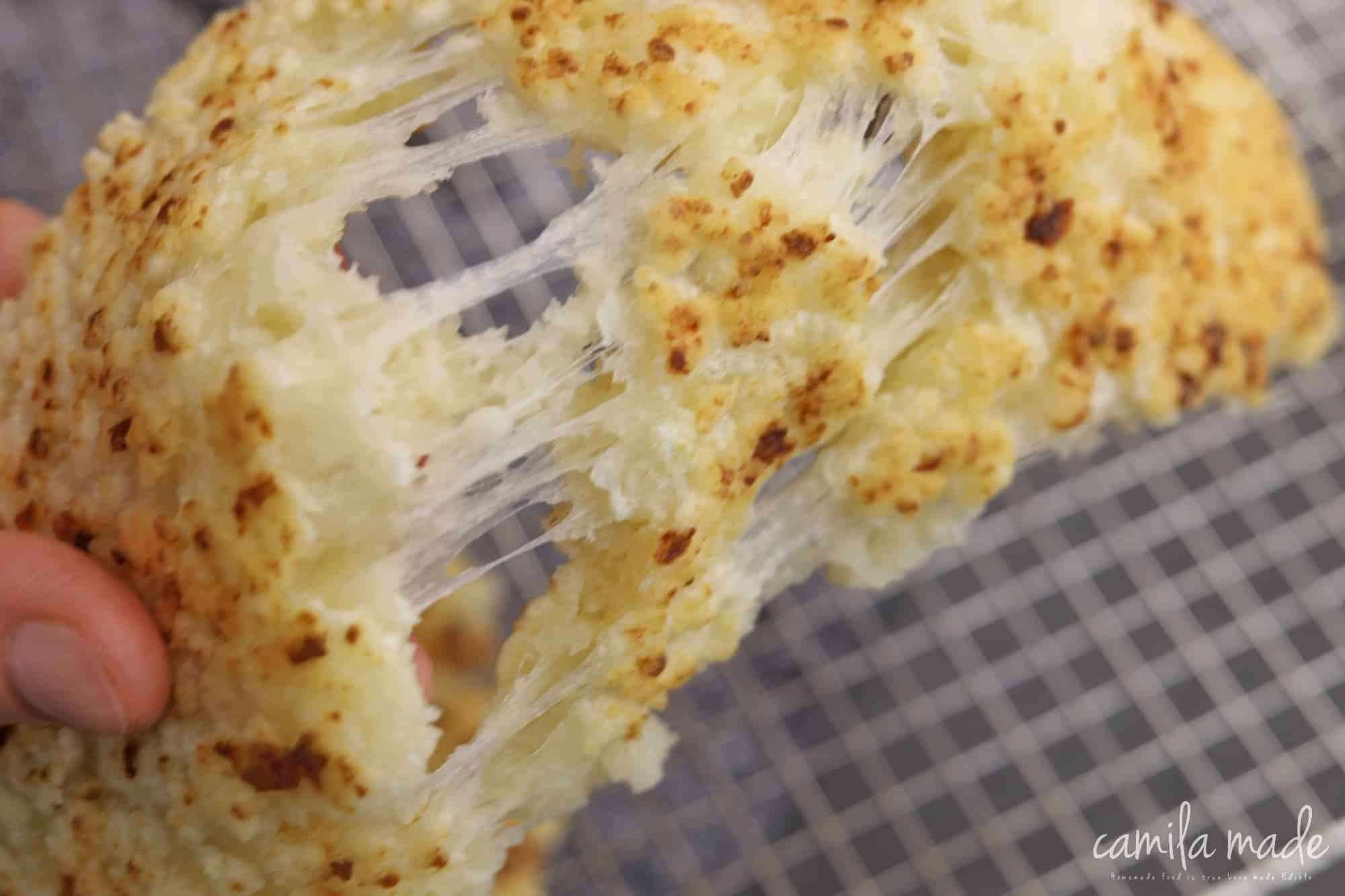
Easy Mbejú showcases a simple mixture of tapioca starch (yuca starch), butter, panela cheese, and buttermilk shaped into patties and cooked on a skillet. The dough is crumbly yet moistened, spread evenly in a hot buttered pan, and gently pressed to form cohesive rounds. Cooking results in a golden crust with a soft but firm interior that is rich from the butter and flavorful from the salty, melty cheese. Kosher salt enhances the overall taste.
The texture is slightly chewy and pliable while crisping at the edges, making Mbejú a distinctive starch-based bread-like cake. It is straightforward to prepare and well-suited for breakfast or as a snack paired with savory or sweet toppings.
Mbejú is traditionally served fresh from the skillet to enjoy its crispness; however, it can be stored for a few days at room temperature in airtight containers though the texture softens. Reheating, either in an oven or microwave, restores warmth and freshness. The dough can be refrigerated before cooking and also frozen after cooking for convenience. Proper thawing and reheating methods maintain its texture and flavor.
The recipe suggests alternative cheeses such as Queso de Freir, Queso Fresco, or mozzarella based on availability and preference. Butter color and quantity influence the cake’s richness. The dough requires careful moisture control to achieve the characteristic crumbly yet spreadable consistency.
Ingredients
- 1 kg tapioca starch
- 250 g unsalted butter at room temperature or melted and cooled, 2 sticks plus 2 tablespoons, or salted butter or lard
- 600 g panela cheese you can also use Queso de Freir, Queso Fresco, Mexican shredded cheese, Monterey jack, Mozzarella, or any semi-soft cheese you prefer, crumbled up or shredded, crumbled
- 500 ml buttermilk as needed, or milk or water
- 15 g kosher salt adjust to taste, 3 teaspoons
Instructions
- In a 2-cup liquid measuring cup, combine the milk and kosher salt. Stir until the salt is completely dissolved. Set aside.
- In a large bowl, combine the yuca starch, salt, cheese, and softened butter. Using your hand, mix until the ingredients form a crumbly texture.
- Gradually add milk, a little at a time, while mixing continuously until the mixture resembles a coarse crumble with only a few larger pieces. The mixture should be moist but still crumbly. You may not need to use all the milk. Make sure the dough remains loose and not fully combined.
- Heat 1 tablespoon of unsalted butter in a 9-inch frying pan over medium heat. Swirl the melted butter around the pan until it starts to turn golden brown.
- Evenly sprinkle about 2 cups of the crumble mixture into the pan and spread it with the back of a spoon, ensuring it covers the bottom of the pan entirely. The layer should be neither too thick nor too thin.
- Using a spoon, gently spread the mixture evenly, pressing only the edges to flatten them. Cook for 4-5 minutes until the bottom is crispy and golden brown and releases easily from the pan. Move the pan occasionally to ensure even cooking and prevent burning.
- Carefully flip the Mbejú and cook for another 4 to 5 minutes on the other side, or until crispy and golden brown. Transfer the cooked Mbejú to a plate or sheet pan and cover with a clean kitchen towel to keep warm.
- Repeat the process with the remaining crumble mixture, adding more unsalted butter to the pan as needed, until all the Mbejú is cooked.
Notes
- Mbejú is best eaten fresh but can be stored at room temperature for up to 5 days; it will lose crispness over time.
- To reheat, wrap in foil and warm in a 350°F oven, or microwave briefly to avoid toughness.
- The dough can be refrigerated for up to 5 days before cooking; let it come to room temperature before using.
- Cooked mbejú can be frozen up to 1 month, wrapped individually and thawed overnight before reheating.
- Use cheeses like panela, Queso Fresco, Monterey Jack, or mozzarella for variations in flavor and texture.
- Butter or lard can be used; ensuring the pan and butter are hot enough before cooking helps achieve a golden crust.
User Reviews
Overall Rating
5
You'll Also Love