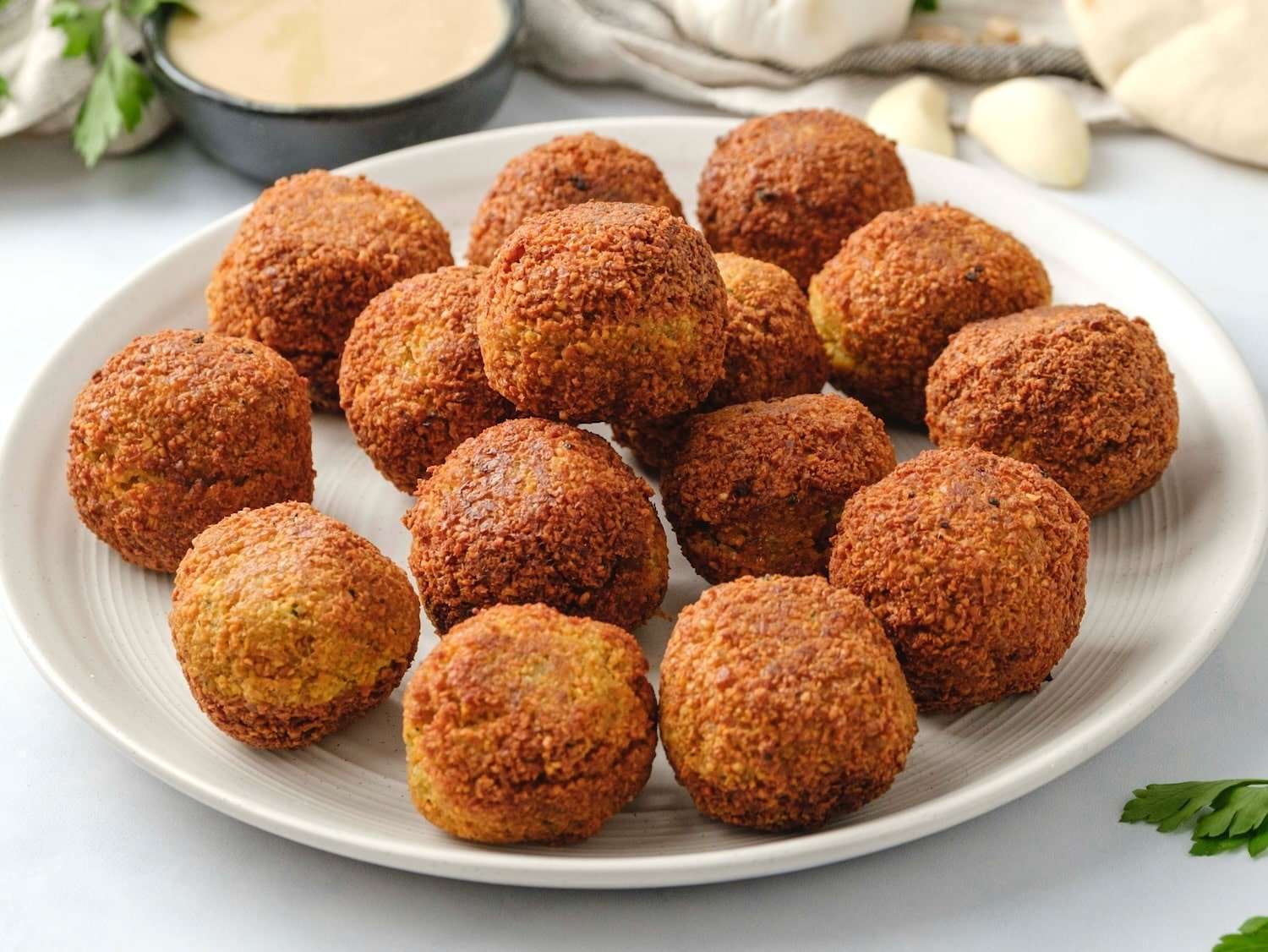
Falafel
User Reviews
4.9
-
Prep Time
15 mins
-
Cook Time
40 mins
-
Resting Time
12 hrs
-
Total Time
12 hrs 55 mins
-
Servings
6 servings
-
Calories
409 kcal
-
Course
Main Course
-
Cuisine
Middle Eastern
Falafel
Description
This falafel recipe uses dried chickpeas soaked overnight with baking soda to soften. The soaked chickpeas, combined with onion, garlic, parsley, spices like cumin and coriander, and flour form a mixture processed to a coarse meal rather than a paste, ensuring the falafel's characteristic texture. Baking powder can be added optionally to lighten the interior.
Fried in vegetable oil, the falafel develops a crispy crust enveloping a tender, lightly spiced interior. The balance of spices, fresh herbs, and garlic shapes its distinctive flavor. Variations include using fava beans instead of chickpeas or mixing both, and adding sesame seeds, dill, or other herbs for regional styles.
Falafel serves well as a snack, appetizer, or sandwich filling in pita bread with accompaniments like tahini or salad. It can be frozen before or after cooking, though adjustments to flour may be needed to maintain texture. Baking falafel is possible but may produce a drier result than frying. Proper soaking and processing are key to achieving the ideal falafel texture, avoiding hardness or excessive crunchiness.
Ingredients
- 1 pound chickpeas you must start with dry, do NOT substitute canned, they will not work!, also known as garbanzo beans, dry
- 1/2 teaspoon baking soda
- 1 onion small, roughly chopped
- 1/4 cup parsley chopped, fresh
- 3-5 cloves garlic prefer roasted garlic cloves
- 1 1/2 tablespoon flour or chickpea flour
- 1 3/4 teaspoon salt
- 2 teaspoon cumin
- 1 teaspoon ground coriander
- 1/4 teaspoon black pepper
- 1/4 teaspoon cayenne pepper
- Pinch of ground cardamom
- 1 teaspoon baking powder (optional - makes the falafel more fluffy)
- vegetable oil avocado oil, grapeseed oil, sunflower oil, canola oil, and peanut oil all work well (I prefer avocado oil, for frying
Instructions
- One day ahead: Pour the chickpeas into a large bowl and cover them by about 3 inches of cold water. Add 1/2 tsp of baking soda to the water and stir; this will help soften the chickpeas. Cover the bowl and let them soak overnight in a cool, dark place or chill in the refrigerator. The chickpeas should soak at least 12 hours and up to 24 hours, until tender (change soaking water for fresh water after 12 hours).
- They will double in size as they soak – you will have between 4 and 5 cups of beans after soaking.
- Drain and rinse the chickpeas well. Pour them into your food processor along with the chopped onion, garlic cloves, parsley, flour or chickpea flour (use chickpea flour to make gluten free), salt, cumin, ground coriander, black pepper, cayenne pepper, and cardamom. Note: if you have a smaller food processor, you will want to divide the ingredients in half and process the mixture one batch at a time.
- Pulse all ingredients together until a rough, coarse meal forms. Scrape the sides of the processor periodically and push the mixture down the sides. Process until the mixture is somewhere between the texture of couscous and a paste. You want the mixture to hold together, and a more paste-like consistency will help with that... but don't over-process, you don't want it turning into hummus!
- Once the mixture reaches the desired consistency, pour it out into a bowl and use a fork to stir; this will make the texture more even throughout. Remove any large chickpea chunks that the processor missed.Cover the bowl with plastic wrap and refrigerate for 1-2 hours.Fill a skillet with oil to a depth of 1 ½ inches. Use cooking oil with a high smoke point (oil suggestions can be found in the ingredient list). Heat the oil slowly over medium heat. The ideal temperature to fry falafel is between 360 and 375 degrees F; the best way to monitor the temperature is to use a deep fry or candy thermometer. After making these a few times, you will start to get a feel for when the oil temperature is "right."Meanwhile, form falafel mixture into round balls or slider-shaped patties using wet hands or a falafel scoop. I usually use about 2 tbsp of mixture per falafel. You can make them smaller or larger depending on your personal preference. The balls will stick together loosely at first, but will bind nicely once they begin to fry.
- If the balls won't hold together, place the mixture back in the processor again and continue processing to make it more paste-like. Keep in mind that the balls will be delicate at first; if you can get them into the hot oil, they should bind together and stick. If they still won't hold together, you can try adding 2-3 tbsp of flour or chickpea flour to the mixture. If they still won't hold, add 1-2 eggs to the mix. This should fix any issues you are having.Before frying my first batch of falafel, I like to fry a test one in the center of the pan. If the oil is at the right temperature, it will take 2-3 minutes per side to brown (5-6 minutes total). If it browns faster than that, your oil is too hot and your falafels will not be fully cooked in the center. Cool the oil down slightly and try again.
- When the oil is at the right temperature, fry the falafels in batches of 5-6 at a time until golden brown on both sides. Once the falafels are fried, remove them from the oil using a slotted spoon. Let them drain on paper towels.
- Serve the falafels fresh and hot; they go best with a plate of hummus and topped with creamy tahini sauce. You can also stuff them into a pita.
- SESAME FALAFEL VARIATION: After forming the balls or patties, dip them in sesame seeds prior to frying. This will make the falafel coating crunchier and give it a slightly nutty flavor.
- HERB FALAFEL VARIATION (GREEN FALAFEL): Add ½ cup additional chopped green parsley, or cilantro, or a mixture of the two prior to blending.
- TURMERIC FALAFEL (YELLOW FALAFEL): Add ¾ tsp turmeric to the food processor prior to blending.
- HOW TO MAKE A FALAFEL PITA: Making a falafel pita is actually really simple. The two main ingredients are pita bread and falafel. Cut the pita bread in half to form two “pockets.” Each pocket is a serving size. Stuff the pocket with falafel, as well as any add-ons you fancy.Here are some traditional add-ons that can be added to your pita: tahini sauce, shredded lettuce, diced or sliced tomatoes, Israeli salad, onions, dill pickles, hummus, tabouli.Here are some less traditional add-ons that are also tasty: sprouts, cucumber slices, roasted peppers, roasted eggplant slices, sunflower seeds, french fries, feta cheese, yogurt, tzatziki.
Notes
- Soak dried chickpeas overnight with baking soda to soften them thoroughly before processing.
- The mixture should be coarse, not pureed, to achieve the classic falafel texture with a crispy exterior and tender interior.
- Baking powder can be added after refrigeration to make falafel fluffier, though it is optional.
- Frying at the proper temperature minimizes oil absorption, keeping falafel light.
- Falafel mixture can be frozen before shaping or formed balls can be frozen and fried from frozen; some flour may be needed for binding after freezing.
- Baking falafel is possible but often results in drier texture compared to frying.
- Using fresher chickpeas and sufficient soaking time helps prevent overly hard or crunchy falafel.
- Alternative Egyptian falafel uses soaked fava beans, peeled before processing with added herbs and spices.
Nutrition Information
Show DetailsNutrition Facts
Serving: 6servings
Amount Per Serving
Calories 409 kcal
% Daily Value*
| Calories | 409kcal | 20% |
| Carbohydrates | 50g | 17% |
| Protein | 15g | 30% |
| Fat | 17g | 26% |
| Saturated Fat | 1g | 5% |
| Sodium | 700mg | 29% |
| Potassium | 720mg | 15% |
| Fiber | 13g | 52% |
| Sugar | 8g | 16% |
| Vitamin A | 300IU | 6% |
| Vitamin C | 8.7mg | 10% |
| Calcium | 96mg | 10% |
| Iron | 5.5mg | 31% |
* Percent Daily Values are based on a 2,000 calorie diet.
User Reviews
Overall Rating
4.9
You'll Also Love