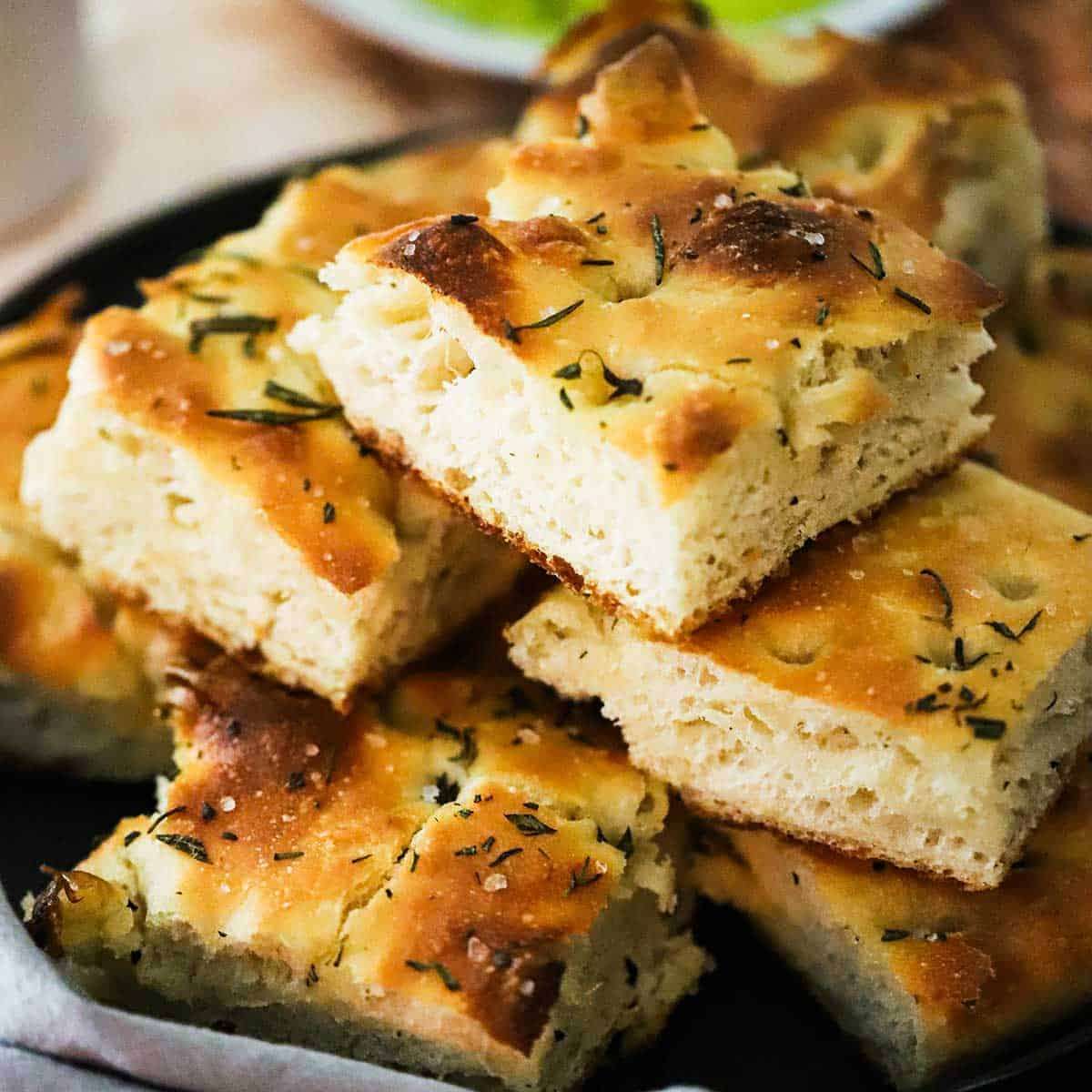
Focaccia with Rosemary and Olive Oil
User Reviews
5
Focaccia with Rosemary and Olive Oil
Description
Focaccia with Rosemary and Olive Oil uses bread flour, providing structure and chewiness, mixed with water and divided sugar for fermentation. Yeast is proofed separately then incorporated into the wet dough. Kosher salt is added later, and olive oil enriches the dough while contributing moisture and flavor. The dough's high hydration makes it sticky, which is expected.
The dough is kneaded using a stand mixer and develops the gluten structure needed for aeration and texture. Fresh rosemary is mixed in or used as a topping, offering an herbal note. Olive oil is both mixed in and drizzled on top before baking, helping create a tender crumb and a flavorful crust.
This focaccia pairs well with meals like soups and salads, or can be used for sandwiches. It is best served warm or at room temperature. To keep the crust crisp, avoid airtight containers and instead wrap loosely to allow some airflow. The dough can be prepared up to the point of refrigeration for up to 12 hours, giving flexibility in timing.
Ingredients
- 6¼ cups bread flour 1 lb 9 oz
- 2½ cups water room temperature (70 - 74°F), 600 ml
- 3 teaspoon sugar divided
- ½ cup water 95 - 103°F, 120 ml, warm
- 2¼ teaspoon active dry yeast 1 package, ¼ oz
- 1 tbsp + 1½ tsp kosher salt
- ½ cup olive oil plus more, as needed
- 2 tablespoon rosemary fresh, roughly chopped
- 1 tablespoon salt coarse, plus more for garnishing, sea salt
Instructions
- Attach the dough attachment to your stand mixer. In the bowl, beat together (on LOW) the flour, room-temperature water, and 1½ teaspoon sugar until a rough, shaggy dough forms, about 3 minutes. Remove the dough attachment, set it aside (you'll be using it again, soon), and cover the bowl with a kitchen towel and let stand while you prepare the yeast mixture.
- In a small bowl, add the warm water. Whisk in the yeast and the remaining 1½ teaspoon of sugar. Let stand until foamy, about 8 - 10 minutes.
- Take the towel from the mixer. Re-attach the dough attachment. With the mixer on LOW, add the yeast mixture a little at a time until it's all been added. Stop the mixer, remove the attachment (keep it handy, though), and massage the liquid from the yeast mixture into the dough. Don't worry if it doesn't get 100% incorporated. The dough will be very wet.
- Re-attach the dough attachment and sprinkle in the Kosher salt (1 tablespoon plus 1½ tsp). Turn the mixer on MEDIUM speed and beat until the dough is elastic, sticky, and pulls away from the sides of the bowl, about 5 minutes.
- Add 3 tablespoon of olive oil to a large bowl. Swish the oil around to coat the sides. Lightly oil your hands, and scrape the dough from the mixer bowl into the oiled bowl. Loosely cover with plastic wrap and place in a warm, non-drafty area until doubled in size, about 2½ hours.
- Add another couple of tablespoons of olive oil to an 18"x13" rimmed baking pan.
- Take the plastic off of the dough and gently use your hands to deflate the dough. Scrape the dough onto the oiled pan. Use your fingers to stretch the dough toward the edges of the pan. Most likely, the dough will want to pull back to the center. If so, cover with a couple of pieces of plastic wrap and allow the dough to rest for 10 minutes. Remove the plastic and try again. If the dough doesn't completely reach the corners, this is fine. Cover with plastic wrap and place the pan in the refrigerator for 2 hours, or overnight.
- Remove the pan from the refrigerator and place it back in the warm, non-drafty area for 1 hour.
- Preheat your oven to 450°F.
- Remove the plastic. Dip your fingers in a little bowl of olive oil, and then press your fingertips firmly into the dough to make deep dimples all over the dough.
- Sprinkle on the chopped rosemary and sea salt.
- Place in the oven. After 10 minutes, drizzle 2 more tablespoons of olive oil all over the surface, and then rotate the pan 180°. Bake for another 10 minutes, or until the top is golden brown.
- Place the pan on a baking rack and let cool for at least 10 minutes. Brush the surface of the focaccia with a little more olive oil. Cut into slices and serve warm or at room temperature.
Notes
- If bread flour is unavailable, all-purpose flour can be used, yielding a slightly less chewy texture.
- The dough is intentionally very sticky; oiling hands and fingers with olive oil helps manage handling.
- The baked bread should be stored loosely wrapped to preserve crisp edges and avoid sogginess.
- The dough can be made in advance and refrigerated, covered, for up to 12 hours before baking.
Nutrition Information
Show DetailsNutrition Facts
Serving: 8Serving
Amount Per Serving
Calories 490 kcal
% Daily Value*
| Calories | 490kcal | 25% |
| Carbohydrates | 74g | 25% |
| Protein | 13g | 26% |
| Fat | 15g | 23% |
| Saturated Fat | 2g | 10% |
| Sodium | 1596mg | 67% |
| Potassium | 135mg | 3% |
| Fiber | 3g | 12% |
| Sugar | 2g | 4% |
| Vitamin A | 18IU | 0% |
| Vitamin C | 1mg | 1% |
| Calcium | 25mg | 3% |
| Iron | 1mg | 6% |
* Percent Daily Values are based on a 2,000 calorie diet.
User Reviews
Overall Rating
5
You'll Also Love