Frog Legs Recipe
User Reviews
5
-
Prep Time
5 mins
-
Cook Time
10 mins
-
Additional Time
1 hr
-
Total Time
1 hr 15 mins
-
Servings
6 frog legs
-
Calories
208 kcal
-
Course
Main Course, Appetizer
-
Cuisine
Italian
Frog Legs Recipe
Description
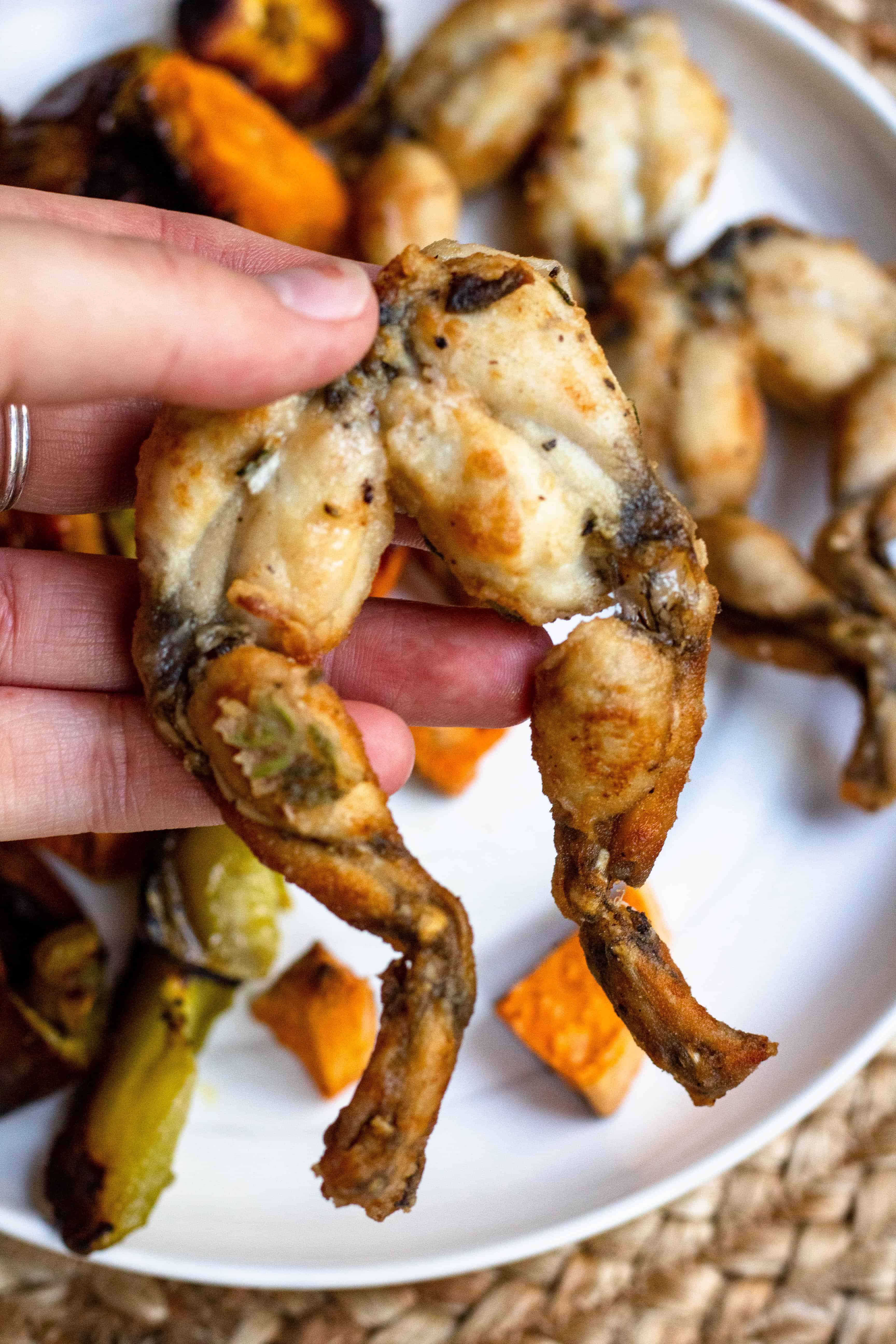
The recipe involves marinating frog legs in a mixture of lime juice, garlic, red wine vinegar, thyme, salt, and pepper for at least an hour, infusing the meat with bright, herbal notes. After marination, the legs are lightly coated in flour and fried in hot vegetable oil until golden brown, yielding a crispy exterior and tender interior reminiscent of dark chicken meat.
Vegetables including yam cubes, plantain rounds, and green pepper strips are roasted at 425°F after tossing with olive oil and seasoning, becoming soft and flavorful to serve alongside. The plantain, similar in appearance to a banana but starchy in flavor, provides a slightly sweet contrast.
This dish combines tender, crispy fried frog legs with the hearty, roasted vegetables for a balanced meal. The recipe includes tips for obtaining frog legs, recommended quantities per person, and guidelines for cooking and oil temperature to achieve optimal results.
The frog legs cook quickly and can be tested for doneness by internal appearance (similar to cooked dark chicken meat) or temperature (145°F). Adjust heat if frying causes outside to burn before inside cooks through.
Ingredients
Vegetable Ingredients
- 1 yam
- 1 plantain
- 1 green pepper
- 2 tbsp olive oil
- kosher salt to taste
- black pepper fresh ground, to taste
Frog Leg Ingredients
- 6 frog legs
- ¼ cup lime juice
- ½ tsp salt or more to taste
- ½ tsp black pepper
- 1 tsp garlic
- 1 tbsp red wine vinegar
- 2 tsp thyme
- ½ cup flour
- vegetable oil for frying
Instructions
Vegetable Instructions
- Preheat the oven to 425 degrees Fahrenheit.
- Peel the yam and plantain. Cut the yam into cubes, the plantain into rounds, and the pepper into strips and place on a cookie sheet. Drizzle with olive oil as well as some kosher salt and pepper.
- Roast for about 20-30 minutes (or more to preference), until the veggies are soft and cooked.
Frog Legs Instructions
- In a small bowl, whisk together lime juice, salt, pepper, garlic, vinegar, and thyme. Pour into a large plastic bag, then place the frog legs in the bag as well. Allow the frog legs to marinate in the fridge for at least an hour.
- When the frog legs are done marinating, remove them from the bag.
- Pour the flour into a shallow bowl. Dip each frog leg in the flour, giving it a light coating.
- Heat the vegetable oil so that when you put the frog legs in, they begin to bubble after about 1-2 seconds. Place the floured frog legs in the oil and heat until they turn golden brown, about 3-5 minutes.
- The internal temperature of cooked frog legs is about 145. You can also check doneness by sight, as the cooked meat will look similar to the cooked dark meat of chicken.
- Serve with vegetables and your favorite dipping sauce. Enjoy!
Notes
- Purchase frog legs at a butcher, noting they usually come in pairs still attached.
- For appetizers, plan on 2 sets of frog legs per person; larger quantities are needed for full meals.
- Check doneness by cutting into a leg; meat should resemble cooked dark chicken meat or reach 145°F internally.
- Test frying oil temperature with one frog leg; the oil should bubble immediately for proper heat.
- If the legs brown too quickly but remain undercooked inside, reduce heat and wait before continuing frying.
- Plantains used should be green-skinned for a firmer, starchier texture; peeling instructions are available via video tutorials.
- The vegetable side can be omitted if desired, but adds complementary flavor and texture.
Nutrition Information
Show DetailsNutrition Facts
Serving: 6frog legs
Amount Per Serving
Calories 208 kcal
% Daily Value*
| Serving | 1serving | |
| Calories | 208kcal | 10% |
| Carbohydrates | 39g | 13% |
| Protein | 3g | 6% |
| Fat | 5g | 8% |
| Saturated Fat | 1g | 5% |
| Polyunsaturated Fat | 1g | 6% |
| Monounsaturated Fat | 3g | 15% |
| Cholesterol | 1mg | 0% |
| Sodium | 203mg | 8% |
| Potassium | 790mg | 17% |
| Fiber | 4g | 16% |
| Sugar | 6g | 12% |
| Vitamin A | 544IU | 11% |
| Vitamin C | 38mg | 42% |
| Calcium | 23mg | 2% |
| Iron | 1mg | 6% |
* Percent Daily Values are based on a 2,000 calorie diet.
User Reviews
Overall Rating
5
You'll Also Love