Gluten-Free Flatbread (1 Bowl, 20 Minutes!)
User Reviews
4.9
Gluten-Free Flatbread (1 Bowl, 20 Minutes!)
Description
The Gluten-Free Flatbread combines dairy-free coconut milk with a blend of coconut flour, oat flour, and potato starch to achieve a dough that balances moisture and structure. Apple cider vinegar reacts with baking powder to help the dough rise slightly, producing a light texture. Flavor seasonings include garlic powder and dried oregano for a subtle savory note. The dough rests before shaping, allowing flours to hydrate fully and the leavening to activate.
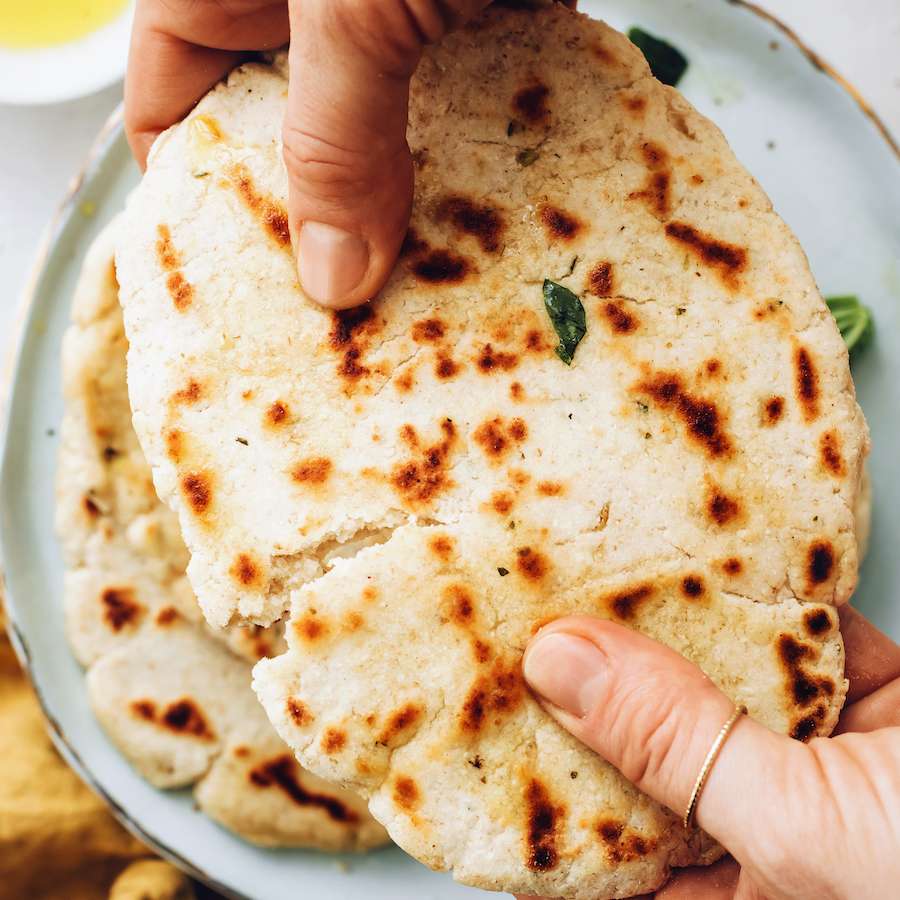
Once rested, small portions of the dough are rolled out thinly between parchment paper to form flatbreads of about 1/8 inch thickness or more for a fluffier result. These flatbreads cook quickly on a heated pan, producing a soft, pliable bread ideal for wraps, sandwiches, or dipping.
The recipe notes provide possible substitutions such as almond flour for coconut flour, with adjustments, and sorghum flour as an alternative to oat flour for oat-free needs. The preparation is adapted to avoid gluten and can be made dairy-free, focusing on simple ingredients and quick preparation in one bowl.
Ingredients
- 1 cup coconut milk adds fat and moisture, but the flavor is not prominent // we haven’t tested other dairy-free milks here, light (canned), plus more as needed
- 1 Tbsp olive oil (if oil-free, omit or try subbing tahini)
- 1 tsp apple cider vinegar
- 2 tsp baking powder
- 1/2 heaping tsp salt sea salt
- 3/4 tsp garlic powder
- 3/4 tsp oregano dried
- 1/2 cup coconut flour
- 3/4 cup oat flour ground from gluten-free oats
- 3/4 cup potato starch (NOT flour // potato starch is pretty key here for fluffy texture, so we recommend against subbing it out)
FOR ROLLING optional
- 1/4 cup all-purpose flour gluten-free
Instructions
- In a medium mixing bowl add light coconut milk, olive oil, and apple cider vinegar and whisk to combine.
- Add baking powder, sea salt, garlic powder, and dried oregano and whisk to combine. The mixture will likely fluff up and foam from the reaction of the baking powder and apple cider vinegar. This is normal and good!
- Next, add coconut flour, oat flour, and potato starch and stir with a wooden spoon to combine. Let rest 5 minutes uncovered.
- At this point you should have a dough that is malleable and very slightly tacky but doesn’t stick to your hands. The dough should start pulling away from the sides of the bowl when the right amount of moisture is achieved, and it shouldn’t be crumbly at all. Add a bit more of each flour until you reach the right consistency.
- Scoop out 1 ball of dough (~3 Tbsp in size) and place between two pieces of parchment paper. Use a rolling pin to roll into a thin oval shape slightly larger than 1/8-inch thick. For fluffier, thicker flatbread roll to slightly less than 1/4-inch thick and cook slightly longer. NOTE: If sticking or too tacky, add a light dusting of GF flour to the dough while rolling out (optional - shouldn't be necessary).
- Heat a skillet (cast iron is best, or non-stick) over medium/medium-high heat. Once hot, spray or drizzle with a little oil. Then use hands to carefully transfer the dough to the pan. If it cracks at all, just carefully and quickly patch back together with your hands (be careful not to touch the hot skillet).
- Cook for 2-3 minutes or until the underside is golden brown. Bubbles may form while it’s cooking — that’s normal and good. Flip carefully and cook for another 2-3 minutes. Lower heat as needed to ensure it doesn’t burn. You’ll know it’s done when both sides are golden brown.
- Repeat this process until all dough is used (~6 large or 10-12 mini flatbreads as the original recipe is written).
- Store leftovers covered in the refrigerator or at room temperature for up to 2-3 days. To freeze, place cooked, cooled flatbread in a freezer-safe container or bag (adding parchment paper between each flatbread will prevent sticking) and freeze for up to 1 month. As with most bread, best when fresh.
- To serve, either heat from frozen in a toaster oven, thaw overnight and then heat in a skillet, or microwave from frozen until warm.
Notes
- Almond flour can substitute coconut flour but will require more flour and produce a doughier texture with less flavor.
- If avoiding oats, sorghum flour can replace oat flour to maintain the recipe's texture.
- Nutritional calculations exclude optional ingredients and should be considered approximations.
Nutrition Information
Show DetailsNutrition Facts
Serving: 6(Large Flatbread)
Amount Per Serving
Calories 194 kcal
% Daily Value*
| Serving | 1large flatbread | |
| Calories | 194 | 10% |
| Carbohydrates | 30.3g | 10% |
| Protein | 2.7g | 5% |
| Fat | 6.9g | 11% |
| Saturated Fat | 4.1g | 21% |
| Polyunsaturated Fat | 0.5g | 3% |
| Monounsaturated Fat | 1.8g | 9% |
| Trans Fat | 0g | 0% |
| Cholesterol | 0mg | 0% |
| Sodium | 196mg | 8% |
| Potassium | 103mg | 2% |
| Fiber | 4.4g | 18% |
| Sugar | 1.5g | 3% |
| Vitamin A | 2.1IU | 0% |
| Vitamin C | 0mg | 0% |
| Calcium | 101mg | 10% |
| Iron | 0.8mg | 4% |
* Percent Daily Values are based on a 2,000 calorie diet.
User Reviews
Overall Rating
4.9
You'll Also Love