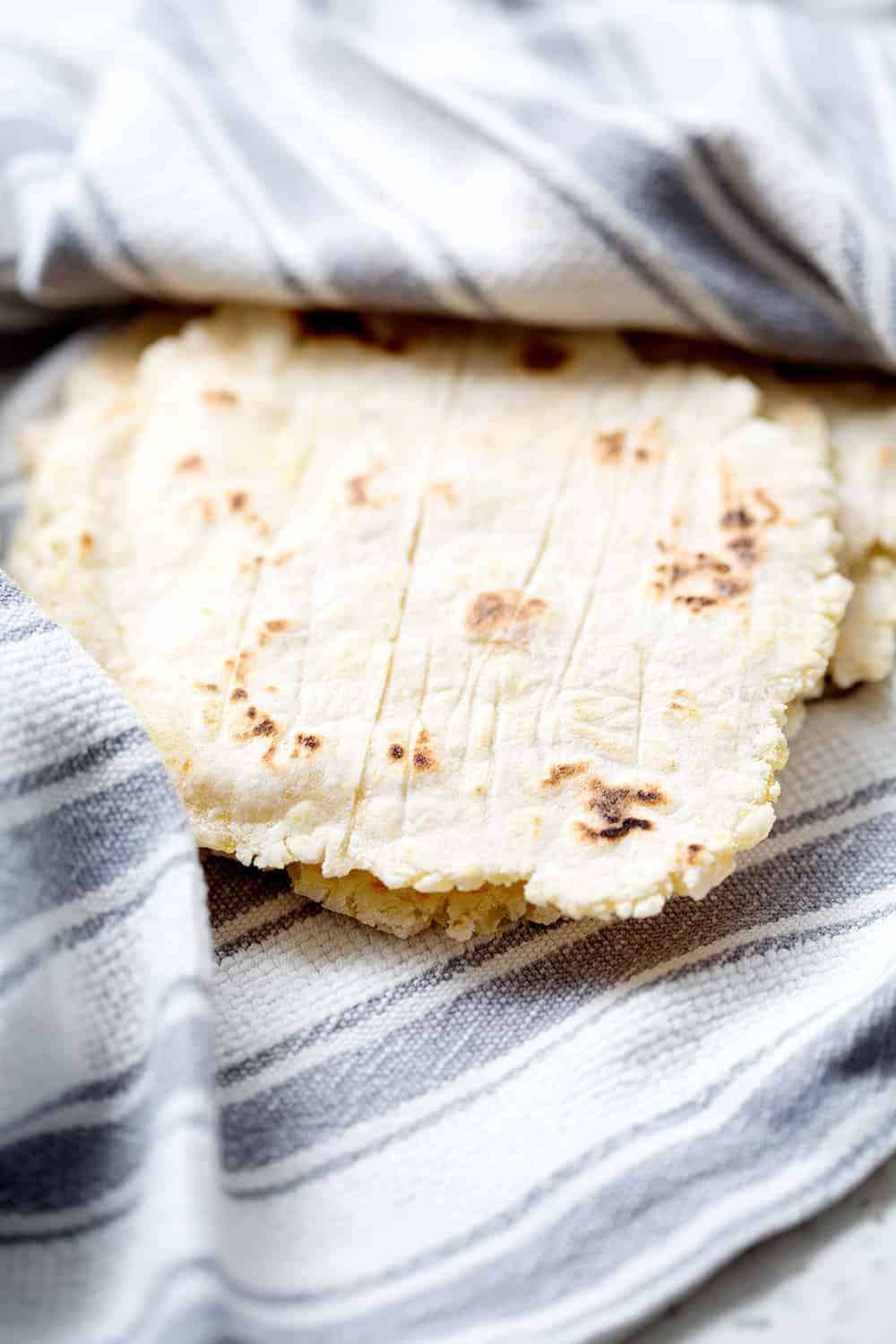
Gluten Free Flatbread
User Reviews
5
-
Prep Time
10 mins
-
Cook Time
15 mins
-
Total Time
25 mins
-
Servings
6
-
Calories
119 kcal
-
Course
Side Dish
-
Cuisine
Mediterranean
Gluten Free Flatbread
Description
The recipe blends arrowroot and cassava flours with salt and precooked, mashed acorn squash. The mixture is crumbly at first, similar to working butter into flour, before olive oil and warm water are added gradually to create a dough that holds together but remains less elastic than wheat dough.
Divided into six balls, each is rolled between folded parchment paper to about 1/8 inch thickness, thicker than traditional tortillas. Cooking occurs in a smooth, preferably non-stick or ceramic-coated cast iron pan, which may be lightly oiled to prevent sticking. The result is a flatbread that is slightly chewy and mild in flavor, adaptable as a tortilla or flatbread in meals.
The dough requires careful addition of water to avoid stickiness, and storage tips advise refrigeration up to a day, reheating briefly to soften. Rolling with parchment paper facilitates handling delicate dough before cooking.
Ingredients
- 1/2 cup arrowroot flour
- 1/2 cup cassava flour
- 1/2 teaspoon salt
- 1/2 cup acorn squash may substitute kabocha or butternut but don’t include rind, precooked, mashed
- 2 tablespoons extra virgin olive oil
- 2 tablespoons water may need more or less, warm
Instructions
- Combine all the dry ingredients in a medium sized mixing bowl.
- Add the squash to the bowl.
- Using a fork or pastry blender, work the squash into the flour mixture until the squash is combined into flour and crumbly. This step is very similar to working butter into flour.
- Next add the olive oil and stir to combine.
- Feel the dough and see if you need any additional liquid. If the dough is really dry and doesn’t stick together, add the water one tablespoon at a time.
- At this point, the dough should stick together but not to your hands. If you’re used to working with wheat flour, this dough will feel a little dry to you. That’s fine. It doesn’t have the same elasticity of wheat flour.
- Divide the dough into six balls and then set aside.
- Take a long sheet of parchment paper and fold it in half.
- Place one ball of dough in between the parchment.
- Using a rolling pin, roll the dough out until it’s about 1/8 inch thick. It should be slightly thicker than a tortilla.
- Repeat with each of the balls of dough.
- Using a frying pan, cook each piece of flatbread for about 1 minute on each, over medium heat. You just want to brown and heat the dough through so the pan should be dry and doesn’t need any oil. Also, if you start to see bubbles in the dough, it’s time to flip.
- Once the flatbread is done cooking, place it on a wire cooling rack until you’re finished, and then serve.
Notes
- Use parchment paper and a rolling pin to roll out delicate dough evenly and prevent sticking.
- Add warm water gradually until dough holds together without becoming sticky, as gluten is absent.
- Cook flatbreads in a smooth, well-seasoned pan; lightly oil if pan surface is not non-stick to avoid sticking.
- These flatbreads are thicker and chewier than tortillas and can be doubled in quantity for leftovers.
- Store cooked flatbreads in the refrigerator for up to 24 hours; reheat briefly to restore softness.
Nutrition Information
Show DetailsNutrition Facts
Serving: 6Serving
Amount Per Serving
Calories 119 kcal
% Daily Value*
| Serving | 1g | |
| Calories | 119kcal | 6% |
| Carbohydrates | 19g | 6% |
| Protein | 1g | 2% |
| Fat | 5g | 8% |
| Saturated Fat | 1g | 5% |
| Sodium | 195mg | 8% |
| Potassium | 40mg | 1% |
| Fiber | 1g | 4% |
| Sugar | 1g | 2% |
| Vitamin A | 45IU | 1% |
| Vitamin C | 1.8mg | 2% |
| Calcium | 23mg | 2% |
| Iron | 0.7mg | 4% |
* Percent Daily Values are based on a 2,000 calorie diet.
User Reviews
Overall Rating
5
You'll Also Love