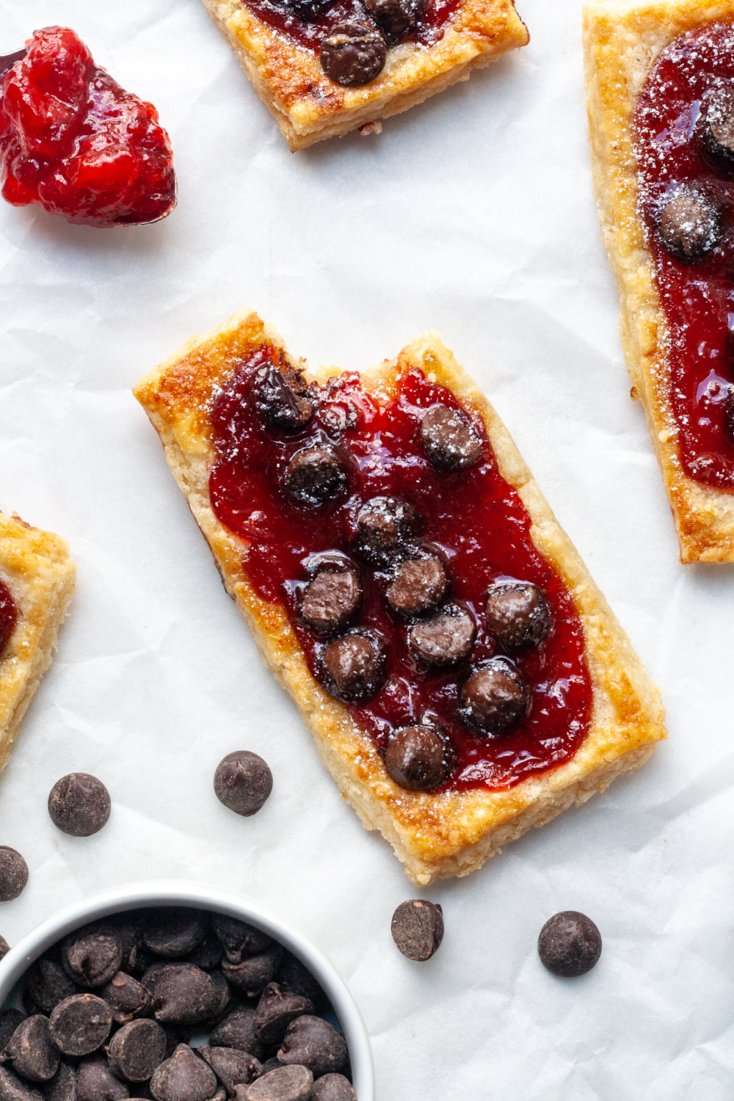
Gluten Free Puff Pastry
User Reviews
5
Gluten Free Puff Pastry
Description
Gluten Free Puff Pastry dough is made by pulsing cold butter cubes, gluten free 1-to-1 flour, and salt until crumbly, then adding cold water slowly to form a crumbly dough. This dough is rolled out, folded multiple times, and refrigerated to develop layers. After chilling, the dough is rolled out again and cut into shapes before adding fillings like jam or chocolate chips. Baking at 375°F produces pastries with a tender crumb and flaky texture similar to traditional puff pastry despite the lack of gluten.
The recipe recommends using a specific gluten free flour blend (King Arthur Flour 1-to-1) and very cold ingredients to prevent the fat from melting early. Folding and chilling multiple times build the laminated structure that gives puff pastry its characteristic flakiness. Filling options allow for flexibility in flavor.
These pastries can be a delicate treat served for breakfast, dessert, or snacks. The dough’s cold handling and ice water use help create layers in the absence of gluten, giving a reliable puff pastry substitute.
If the dough breaks while rolling, allowing it to warm at room temperature briefly makes it more pliable. The recipe yields about four pastries of medium size, with various sweet and savory uses possible.
Ingredients
Puff Pastry Dough
- 10 tbsp butter cut into small cubes, cold
- 1 cup all-purpose flour gluten free 1 to 1
- ¼ tsp salt
- ¼ cup water see note, cold
Egg Wash
- 1 egg whisked
Filling
- ½ cup jam or jelly
- ⅓ cup dark chocolate chips
Instructions
- First, add cubes of cold butter, gluten free flour and salt to a food processor. Pulse 4 to 5 times until crumbly.
- Then add in cold water. Pulse another 4 to 5 times or until mixture is very crumbly.
- Lightly flour countertop and rolling pin. Pour crumbles of dough onto floured surface. Use hands to form one big ball of dough.
- Use rolling pin to roll dough out to a rectangle that is ¼ to ½ inch thick. Fold the dough in half. Then fold it in half again.
- Wrap dough and refrigerate for 2 hours.
- Remove dough from fridge. Preheat oven to 375 degrees Fahrenheit. Line a baking sheet with parchment paper.
- Allow dough to sit at room temperature for about 20 minutes. Roll out dough on floured surface with floured rolling pin. If dough breaks, allow it to sit at room temperature for another 10 minutes or so.
- Roll dough out to a large rectangle. Slice into desired shapes (I did smaller rectangles). Place on parchment lined pan.
- Add desired filling/toppings. Leave about ½ inch along the edges for the egg wash.
- To make egg wash, whisk egg in a small bowl. Brush onto edges of your little pastries. If desired, sprinkle a little granulated sugar on edges of pastries.
- Bake for 16 to 18 minutes, depending on how large your shapes are. Bake until edges are golden crispy.
- Finally, remove from oven. Allow pastries to cool for 10 minutes before serving.
Notes
- Use very cold butter and water (water may be chilled with ice cubes) to keep dough crumbly and workable.
- King Arthur Flour 1-to-1 gluten free flour is recommended for best texture; other gluten free flours like almond or coconut are not suitable.
- If dough cracks while rolling, let it rest at room temperature for 10 minutes to ease rolling.
- After folding and chilling, roll dough carefully and add filling before baking.
- Recipe yields about four pastries approximately 6 inches long and 2 inches wide.
- Variety of sweet and savory fillings can be used with this dough.
Nutrition Information
Show DetailsNutrition Facts
Serving: 4small pastries
Amount Per Serving
Calories 405 kcal
% Daily Value*
| Calories | 405kcal | 20% |
| Carbohydrates | 32g | 11% |
| Protein | 3g | 6% |
| Fat | 29g | 45% |
| Saturated Fat | 18g | 90% |
| Polyunsaturated Fat | 1g | 6% |
| Monounsaturated Fat | 8g | 40% |
| Trans Fat | 1g | 50% |
| Cholesterol | 96mg | 32% |
| Sodium | 403mg | 17% |
| Potassium | 46mg | 1% |
| Fiber | 1g | 4% |
| Sugar | 1g | 2% |
| Vitamin A | 904IU | 18% |
| Calcium | 16mg | 2% |
| Iron | 1mg | 6% |
* Percent Daily Values are based on a 2,000 calorie diet.
User Reviews
Overall Rating
5
You'll Also Love