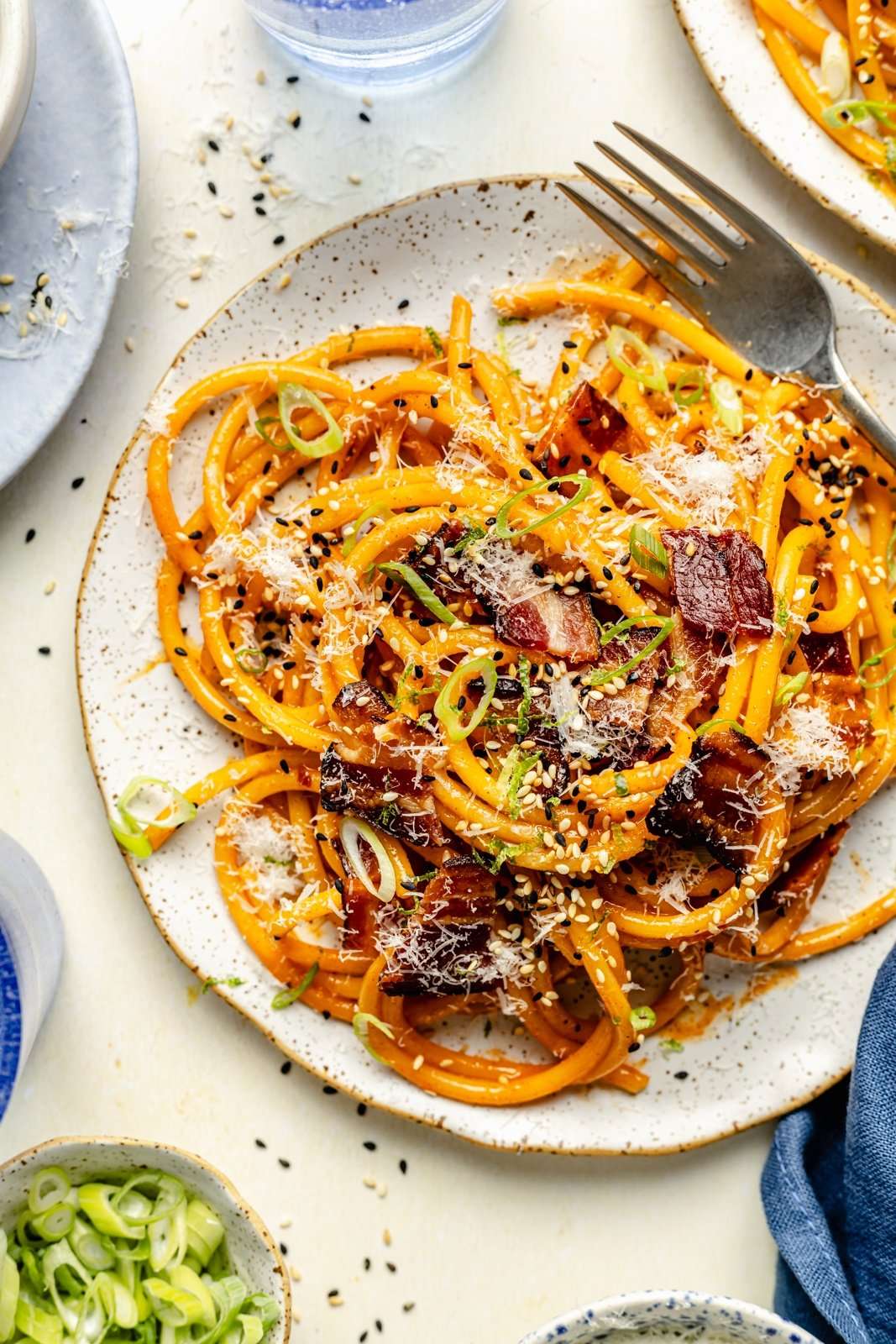
Gochujang Carbonara
User Reviews
5
Gochujang Carbonara
Description
Gochujang Carbonara brings together Italian and Korean flavors by incorporating gochujang, a spicy fermented chili paste, into a classic carbonara base. Thick-cut bacon is cooked until golden and crisp, providing a rich and hearty backbone. The sauce is prepared by whisking eggs with grated pecorino or parmesan cheese, gochujang, kosher salt, garlic powder, and freshly ground black pepper, creating a creamy and spicy coating for the pasta. Pasta types like fettuccine or shell-shaped varieties work well, boiled until al dente and then combined with the sauce and reserved pasta water to achieve a smooth texture.
The dish balances smoky bacon with the umami and mild heat of gochujang, offering a unique twist on traditional carbonara. The preparation allows adjustment of spiciness by varying the amount of gochujang, making it customizable to personal taste. Bacon can be cooked either on the stovetop or in the oven for convenience. This recipe suits home cooks comfortable with making pasta and combining elements from different cuisines.
For gluten-free adaptations, substituting the pasta with a gluten-free variant is straightforward. The recipe yields a rich and creamy meal that serves well as a satisfying dinner or upscale lunch option.
Ingredients
- For the pasta:
- 10 ounces Bacon thick-cut
- ¾ cup Pecorino Romano cheese or parmesan cheese, grated, 3 ounces, plus more to garnish
- 2 egg large, at room temperature
- 2 to 3 tablespoons gochujang adjust spiciness to preference
- 1 teaspoon kosher salt plus more to taste
- ½ teaspoon garlic powder
- black pepper freshly ground
- 12 ounces pasta examples: fettuccine, conchiglie, shellbows
- 1 cup water reserved pasta water
- For garnish:
- 2 scallion thinly sliced
- sesame seeds toasted, black and white
- lemon zest, optional for brightness
Instructions
- Cook the bacon: Add bacon to a large skillet or pan and place over medium heat, cook bacon on both sides until golden brown. If the pan starts to smoke at any point, simply lower the heat. I always cook my bacon on medium to medium low heat. Once bacon is done, transfer to a cutting board and blot with a paper towel to absorb excess grease, then coarsely chop and set aside.
- Alternatively cook the bacon in the oven: Carefully place bacon in a single layer on a baking sheet lined with parchment paper. Place bacon into a COLD oven, shut the door and preheat the oven to 425 degrees F. Bake until bacon has reached your desired level of crispiness, 15 to 25 minutes.
- While the bacon cooks, make the sauce and pasta: In a medium bowl, whisk together the parmesan, eggs, Gochujang, salt, garlic powder and lots of freshly ground black pepper until well-combined. Set aside.
- Cook the pasta: Bring a large pot of salted water to a boil over high heat. Add pasta and boil until al dente, according to the package directions. Reserve 1 cup of pasta water, then remove from heat and drain. Add pasta back to the pot, immediately add the egg and cheese mixture, and use tongs to quickly and thoroughly coat the pasta with the mixture. The warmth of the pasta will transform the eggs into a creamy sauce; it should not be curdled or chunky. Stream in ½ cup pasta water and toss again to coat the noodles so they are glossy and creamy. Add more pasta water, as necessary, to create a creamier sauce. Taste and season with more salt, as needed.
- Serve: Divide pasta between bowls or plates. Top with bacon pieces and sprinkle each bowl with about 1 tablespoon of grated or shaved parmesan and scallions. If you’d like a little brightness, I suggest adding a little lemon (or lime!) zest on top. Finish it off with a sprinkle of sesame seeds and dig in! Serves 4-6.
Nutrition Information
Show DetailsNutrition Facts
Serving: 6servings
Amount Per Serving
Calories 499 kcal
% Daily Value*
| Serving | 1serving (based on 6) | |
| Calories | 499cal | 25% |
| Carbohydrates | 46.1g | 15% |
| Protein | 19.6g | 39% |
| Fat | 25.7g | 40% |
| Saturated Fat | 10g | 50% |
| Fiber | 2g | 8% |
| Sugar | 3.6g | 7% |
* Percent Daily Values are based on a 2,000 calorie diet.
User Reviews
Overall Rating
5
You'll Also Love