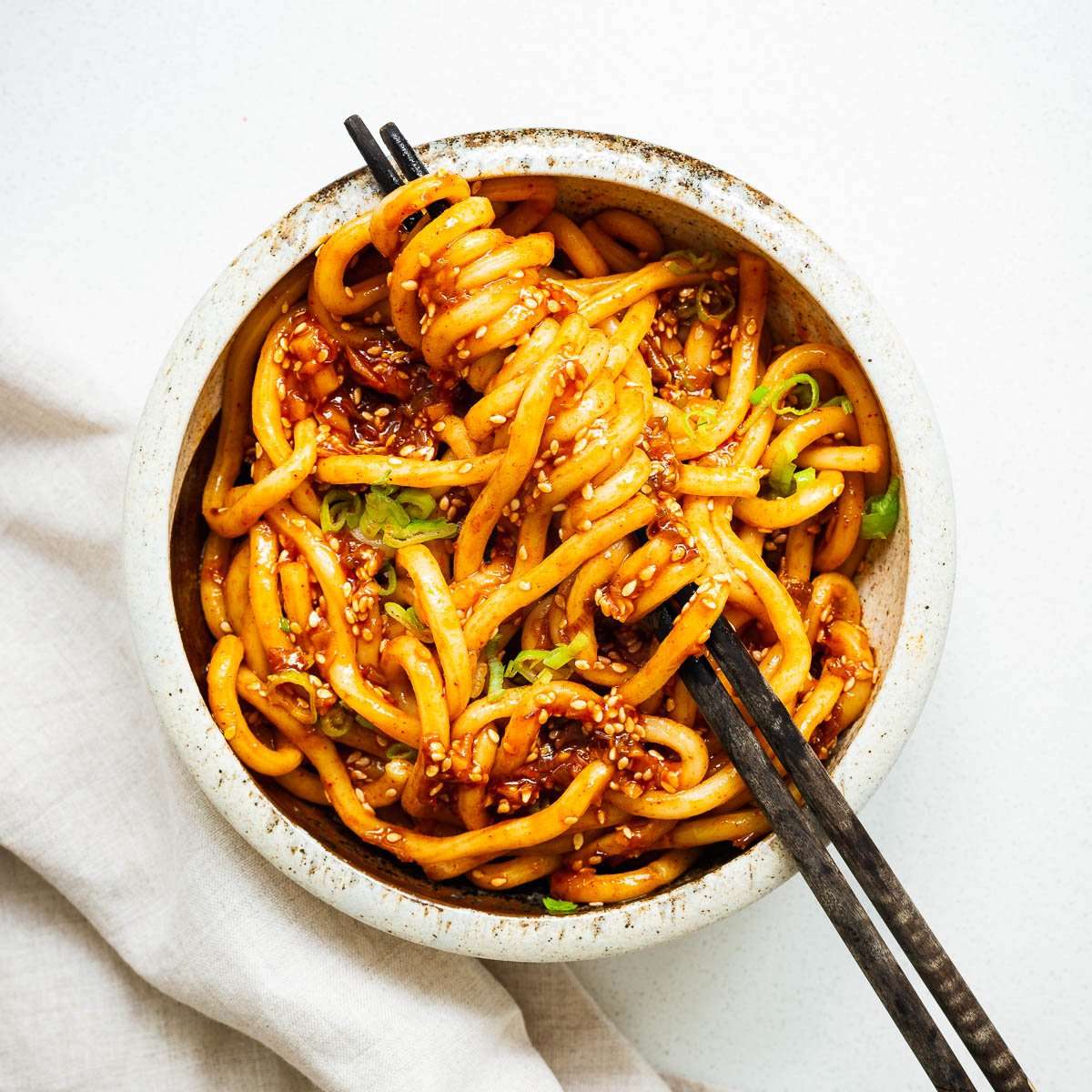
Gochujang Noodles (Spicy Korean Noodle Recipe)
User Reviews
5
-
Prep Time
5 mins
-
Cook Time
10 mins
-
Total Time
15 mins
-
Servings
2
-
Calories
538 kcal
-
Course
Main Course
-
Cuisine
Korean
Gochujang Noodles (Spicy Korean Noodle Recipe)
Description
Gochujang Noodles highlight fresh or instant udon noodles paired with a sauce made from gochujang paste, soy sauce, rice vinegar, sesame oil, and brown sugar. The sauce brings a combination of heat, umami, sweetness, and acidity. Cooking begins with stir-frying sliced green onions and garlic in oil to release their aromas. The cooked noodles are then integrated into the pan and coated evenly with the chili sauce, allowing the flavors to meld. Toasted sesame seeds finish the dish with a contrasting crunch and a subtle nutty flavor.
The noodles retain their thick, chewy texture, making them a satisfying vehicle for the spicy and slightly sweet sauce. Preparation involves boiling fresh or dried noodles followed by rinsing to halt cooking and remove excess starch. The recipe provides optional adjustments to increase spiciness using Korean pepper flakes (gochugaru) and guidance for using various Asian wheat noodles instead of udon.
The dish can be served as a standalone vegetarian meal or added to other Korean dishes. It holds well when refrigerated for a few days and reheated with added water to loosen the sauce. Leftovers also work well eaten at room temperature. This recipe is flexible for personal heat preference and noodle choice.
Use fresh or frozen udon noodles, boiling them briefly until tender but not mushy.Adjust chili paste and flakes according to spice tolerance.Store leftovers airtight for up to 4 days; reheat with splash of water for best texture.Optional add-ins include vegetables or proteins to bulk up the meal.
Ingredients
- 14 ounces udon noodles instant, fresh
- 1 tablespoon neutral cooking oil
- 3 green onion sliced (reserve some greens for garnish
- 2 cloves garlic minced
- 3 tablespoons sesame seeds toasted
Gochujang noodle sauce
- 2 tablespoons gochujang paste or more for a spicier sauce
- 2 tablespoons soy sauce
- 2 tablespoons water
- 2 tablespoons rice vinegar
- 1 tablespoon sesame oil toasted
- 1 tablespoon brown sugar
- 1 teaspoon gochugaru or red pepper flakes (optional, Korean chilli flakes
Instructions
- Place all the gochujang noodle sauce ingredients – except the optional chilli flakes – in a bowl and whisk to combine. Taste, and add an extra tablespoon of gochujang or a teaspoon of gochugaru if you want more heat. Set aside until needed.
- For fresh udon noodles: Boil water in a pot over high heat. Then cook the fresh udon noodle cakes in boiling water for 2 minutes. Remove the pot from the heat, and use chopsticks to wiggle into the noodles and gently separate them.
- For dried noodles: Cook the noodles according to package instructions stopping a minute short of the full cooking time.
- Drain the cooked noodles, and rinse with cool water.
- Place a wok or non-stick pan over medium-high heat and add the cooking oil. Once the oil is shimmering hot, add the green onions and stir-fry for a minute or two before you add the minced garlic. Cook for another minute until the garlic is fragrant.
- Add the gochujang sauce to the aromatics (be careful, it might sputter). Then cook the sauce to thicken for 3 minutes, stirring often.
- Add the cold noodles and cook for a minute to heat through. Then remove from the heat and stir through the toasted sesame seeds.
- Transfer the noodles to serving bowls and top with the reserved green onions and a sprinkle of chilli flakes if you want extra heat.
Notes
- Udon noodles can be pre-cooked, fresh, or frozen; cook times vary slightly but aim for tender, chewy texture.
- The level of spiciness depends on the gochujang paste used; adjust with additional chili flakes if desired.
- The noodles are best served warm but can also be enjoyed at room temperature.
- Leftover noodles keep well for up to 4 days refrigerated and reheat with a bit of water to loosen the sauce.
- Different Asian wheat noodles can be substituted, adjusting portion sizes accordingly.
Nutrition Information
Show DetailsNutrition Facts
Serving: 2Serving
Amount Per Serving
Calories 538 kcal
% Daily Value*
| Calories | 538kcal | 27% |
| Carbohydrates | 72g | 24% |
| Protein | 17g | 34% |
| Fat | 22g | 34% |
| Saturated Fat | 3g | 15% |
| Polyunsaturated Fat | 10g | 59% |
| Monounsaturated Fat | 7g | 35% |
| Trans Fat | 0.04g | 2% |
| Sodium | 2009mg | 84% |
| Potassium | 243mg | 5% |
| Fiber | 7g | 28% |
| Sugar | 16g | 32% |
| Vitamin A | 509IU | 10% |
| Vitamin C | 7mg | 8% |
| Calcium | 152mg | 15% |
| Iron | 3mg | 17% |
* Percent Daily Values are based on a 2,000 calorie diet.
User Reviews
Overall Rating
5
You'll Also Love