Golden Osmanthus Tea (Gui Hua Cha)
User Reviews
5
Golden Osmanthus Tea (Gui Hua Cha)
Description
Golden Osmanthus Tea (Gui Hua Cha) uses dried osmanthus blossoms steeped in water heated to around 185°F (85°C) to preserve delicate floral notes. The tea can be prepared plain or sweetened with natural sweeteners like osmanthus sugar, honey, or rock sugar. Additional variations blend the flowers with oolong or green tea leaves, producing different flavor profiles that combine floral and earthy tea characteristics.
Preparation involves rinsing the flowers with hot water to clean them, then steeping them for about 2-3 minutes. Steeping longer or using too many flowers can produce bitterness, which can be balanced with sweetness. Serving the tea with a few blossoms in the cup enhances visual appeal. The tea has a delicate aroma and light body, with sweetness varying by preparation method.
Golden Osmanthus Tea is enjoyed for its floral fragrance and mild flavor rather than strength or bitterness. It is important to store the dried flowers in airtight containers to prevent moisture spoilage and use within a year to maintain freshness. Overly concentrated brews should be sweetened to improve taste without discarding. The tea is part of Chinese tea traditions with cultural notes on warming properties and moderation.
Ingredients
Pure Osmanthus Tea (Plain)
- 1 teaspoon dried osmanthus flowers
- 1 Cup water Chinese people don't believe in making tea with boiling water. If you're not fanatical about tea making, you don't have to use a thermometer- just leave the boiling water to cool slightly before using it to make tea!, at 185F/85C
Pure Osmanthus Tea (Sweetened)
- 1 teaspoon dried osmanthus flowers
- 1 Cup water As above, at 185F/85C
- osmanthus sugar or honey or rock sugar, to taste
Osmanthus Oolong Tea
- 1 teaspoon dried osmanthus flowers
- 2 teaspoon oolong tea leaves dried
- 1 Cup water As above, at 185F/85C
Osmanthus Green Tea
- 1 teaspoon dried osmanthus flowers
- 2.5 teaspoon dried green tea leaves
- 1 Cup water As above, at 185F/85C
Instructions
Pure Osmanthus Tea (Plain)
- Bring water to the boil and let it cool. If you like to be exact, use a thermometer to make sure the water is 85C/ 185F before making tea
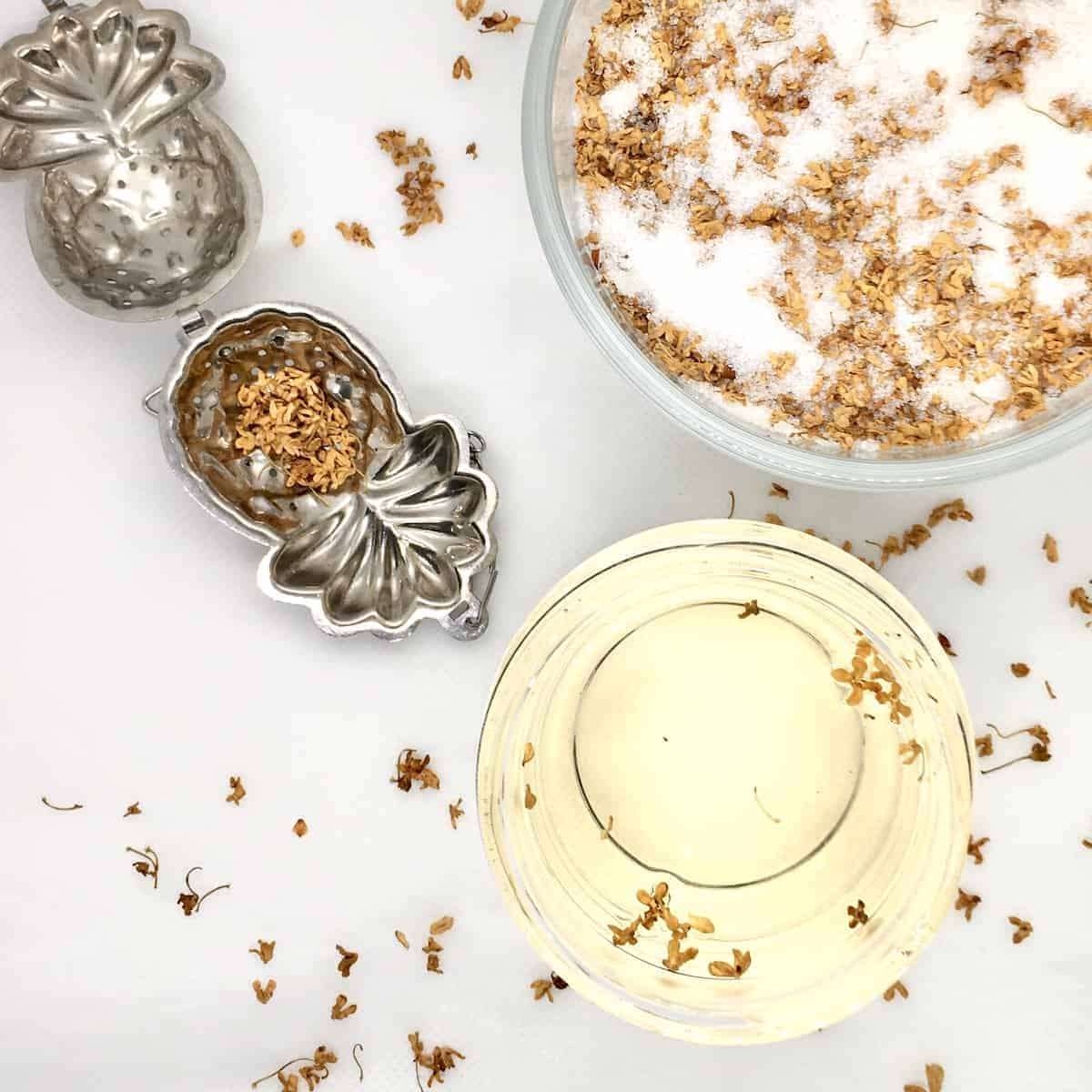
- Place the dried flowers in a tea strainer and run through with hot water (i.e. you're washing the tea "leaves" to get rid of any dirt any dust on it)
- Add 1C of 85/ 185F water to the dried flowers and leave to steep, to taste. (I usually leave it about 2-3 minutes) The longer you steep the flowers, the stronger the flavour and the more golden the colour.
- If you're a visual person, add a few osmanthus blossoms to the cup!
Pure Osmanthus tea (Sweetened)
- Repeat the above steps, but add some sweetener to taste, such as rock sugar or honey. You can also use natural sweeteners such as dried longans, wolfberries and red dates. Note that they're all warming, according to TCM, so taking too much is not advisable as it would put the body out of balance. (Too much heaty foods can lead to sore throats and acne.)
Osmanthus Oolong Tea
- Repeat the steps for Osmanthus Tea (Pure) but add the oolong tea leaves to the osmanthus flowers in the strainer.
Osmanthus Green Tea
- Repeat the steps for Osmanthus Tea (Pure) but add the green tea leaves to the osmanthus flowers in the strainer.
Notes
- Use water cooled to about 185°F (85°C) to avoid scorching the delicate osmanthus flowers.
- Rinse dried flowers briefly with hot water before steeping to remove dust or impurities.
- Steep the tea 2-3 minutes to balance flavor and avoid bitterness; add sweetener if needed to adjust taste.
- Store dried osmanthus flowers in airtight containers with dehumidifiers to prevent moisture and spoilage.
- Use dried flowers within one year for best flavor and aroma; discard if moist or moldy.
Nutrition Information
Show DetailsNutrition Facts
Serving: 1person
Amount Per Serving
Calories 58 kcal
% Daily Value*
| Calories | 58kcal | 3% |
| Carbohydrates | 11g | 4% |
| Protein | 4g | 8% |
| Sodium | 48mg | 2% |
| Potassium | 8mg | 0% |
| Calcium | 28mg | 3% |
* Percent Daily Values are based on a 2,000 calorie diet.
User Reviews
Overall Rating
5
You'll Also Love