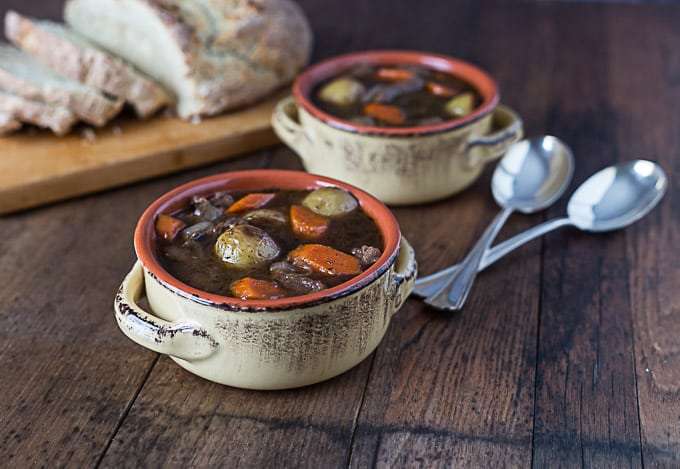
Guinness Beef Stew Recipe
User Reviews
5
-
Prep Time
30 mins
-
Cook Time
1 hr 30 mins
-
Total Time
2 hrs
-
Servings
6 servings
-
Calories
576 kcal
-
Course
Main Course
-
Cuisine
Irish
Guinness Beef Stew Recipe
Description
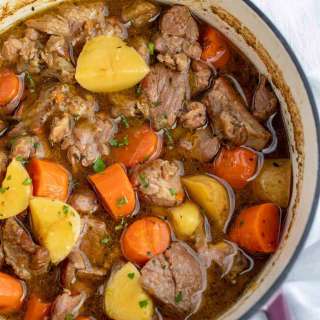
This stew starts by sautéing onions, garlic, and celery until translucent, then browning beef coated lightly with flour and seasoned with salt, thyme, and ground caraway. Adding Guinness and boiling briefly intensifies flavor and helps tenderize the meat. Beef broth, bay leaves, and brown sugar complete the stew base. It is covered and cooked slowly for 1½ hours.
Potatoes and carrots are browned separately to develop color and then added into the stew during the last half-hour of cooking to finish tenderizing. Removing the lid near the end permits the broth to reduce and thicken naturally. This slow braising method yields beef that is soft and vegetables that maintain shape.
Serving suggestions include Irish soda bread or mashed potatoes to complement the rich sauce. Variations include adding mushrooms, peas, or bacon bits, and using other root vegetables if desired. Flour or cornstarch can thicken the stew to preference.
The recipe accommodates alternative cooking methods such as oven baking, slow cooker, or pressure cooking with adjusted timings. Stored in the fridge, the stew remains good for up to 3 days, but freezing whole stew is not recommended due to potato texture changes. Instead, freeze without potatoes or freeze single portions separately and add freshly cooked potatoes when reheating.
Ingredients
- 1 ½ lbs. beef stew meat or chuck roast cut into 1" cubes
- 3 Tbsp. olive oil
- 14.5 oz. Guinness beer paleo diet: beef stock
- 1 cup beef broth
- 4 carrot peeled and sliced thin
- 8 potato small baby potatoes, cut in ½ or small cubed pieces, paleo diet: use another root vegetable
- 1 onion large, sliced thin
- 2 garlic minced, cloves
- 1 talk celery minced
- 2 bay leaf
- 1 tsp brown sugar
- 1 ½ tsp kosher salt paleo diet: sea salt
- 2 Tbsp flour paleo diet: cornstarch, reduce amount by half
- ½ Tbsp thyme dried
- ¼ tsp. caraway seeds ground
Instructions
- In a Dutch oven, on medium heat, sauté onions, garlic and celery in 2 tablespoons of olive oil until onions are translucent. Add the beef and sprinkle with flour.
- Add Kosher salt, thyme and caraway. Stir for about 3 minutes. Add the Guinness and bring to a boil. Allow to boil for about 2 minutes. Add beef broth, bay leaves and brown sugar. Turn heat down to medium low.
- Cover and cook for 1 ½ hours.
- In a non-stick skillet, using the remaining tablespoon of olive oil sauté potatoes and carrots, until potatoes are golden brown. Remove from skillet and set aside.
- After the stew has cooked for 1 hour, place potatoes and carrots in the stew pot and finish cooking. After 30 minutes remove the lid and simmer until it reduces. When the potatoes and beef are tender and then the stew is done.
- Serve with plenty of Irish soda bread or mashed potatoes.
Notes
- Other cooking methods include oven baking at 325°F for 2.5 hours, slow cooker cook for 8 hours on high, or pressure cooking for 25 minutes with natural release.
- Use waxy potatoes like red potatoes to hold their shape; russets may become mushy.
- Beef chuck roast or stew meat is recommended; short ribs or leg of lamb are options.
- Vegetables like carrots, celery, onions, and garlic add aromatic depth.
- Thicken stew with flour or cornstarch slurry as needed for desired consistency.
- Store leftover stew refrigerated up to 3 days; avoid freezing with potatoes to prevent mushiness.
Nutrition Information
Show DetailsNutrition Facts
Serving: 6servings
Amount Per Serving
Calories 576 kcal
% Daily Value*
| Calories | 576kcal | 29% |
| Carbohydrates | 44g | 15% |
| Protein | 28g | 56% |
| Fat | 30g | 46% |
| Saturated Fat | 9g | 45% |
| Cholesterol | 80mg | 27% |
| Sodium | 868mg | 36% |
| Potassium | 1648mg | 35% |
| Fiber | 8g | 32% |
| Sugar | 2g | 4% |
| Vitamin A | 6850IU | 137% |
| Vitamin C | 36.2mg | 40% |
| Calcium | 128mg | 13% |
| Iron | 11.9mg | 66% |
* Percent Daily Values are based on a 2,000 calorie diet.
User Reviews
Overall Rating
5
You'll Also Love