Hand Pulled Noodles (Easier Version)
User Reviews
5
-
Prep Time
1 min
-
Cook Time
20 mins
-
Total Time
21 mins
-
Servings
4
-
Calories
273 kcal
-
Course
Main Course
-
Cuisine
Chinese
Hand Pulled Noodles (Easier Version)
Description
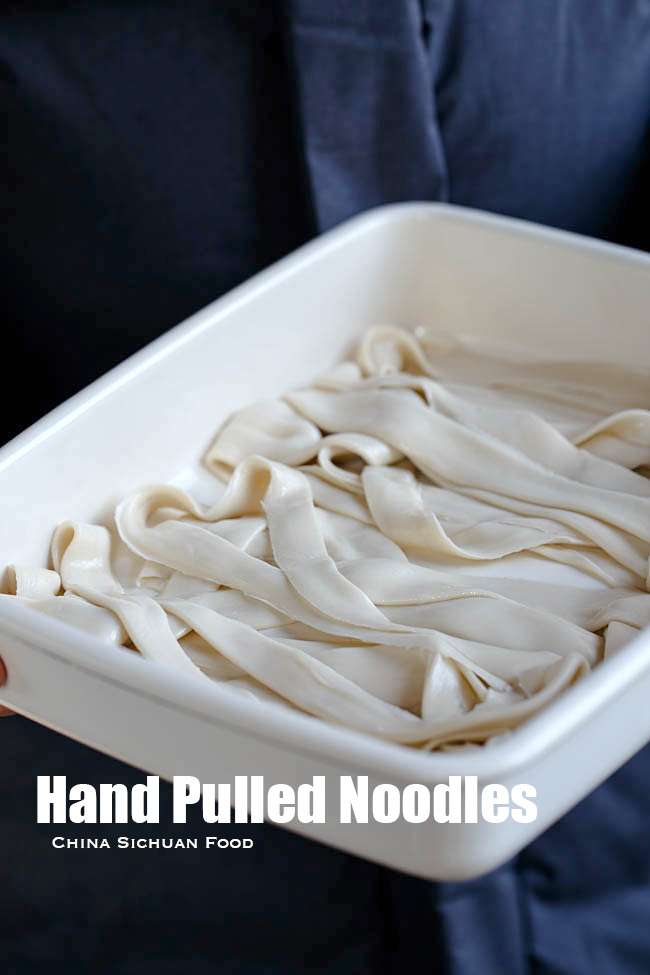
Hand Pulled Noodles are made from a simple dough of flour, salt, and water. Kneading develops elasticity, and resting the dough under a damp cloth allows gluten to relax, making it easier to handle. The dough is divided and rolled out into a large rectangle, then cut into 1cm-wide strips. These strips can be stretched by hand to form thinner noodles in the la mian style or shaped into flat noodles for other recipes. Resting the noodles before pulling helps achieve uniform thickness and makes stretching easier.
The texture of these noodles depends on the dough hydration: less water creates firmer, chewier noodles suited for stir-fries, while more water yields softer noodles better for soups. Using oil or flour to coat the dough and noodles prevents sticking and allows separate pieces to remain manageable throughout preparation and cooking. The noodles can be boiled, stir-fried, or incorporated into various dishes.
These hand-pulled noodles provide a versatile base for many meals, offering a tender yet chewy texture. Resting and careful handling throughout the process are key to achieving noodles that cook evenly and have a pleasant bite.
Adjust water amount based on flour type and desired texture; knead thoroughly and allow sufficient rest periods for best results.
Ingredients
- 300 g all-purpose flour ,you can use high gluten flour too, require more water and more resting time
- 2 g salt
- 155 ml water ,you can use 130ml to 170ml water, more information, see Note1
- oil for coating or flour for dusting
Instructions
- Mix salt with flour.
- Add water and knead for 5-6 minutes until the dough becomes quite smooth on surface If you feel this process is hard to finish one time, resting the dough for 15 minutes and then re-knead for 2-3 minutes.
- Cover with wet cloth (to avoid it drying out), cover and rest for 15 minutes.
To pull the noodles
Method 1: thin la mian method
- Roll out the dough to a large wrapper (rectangle if possible). Cut the wrapper to 1cm wide stripes. Dust flour and shape the long strips to around thick noodles. We will stretch the noodles before cooking. Cover the rest for 30 minutes to 1 hour until you can easily pull the noodles
- When the noodles are well rested, stretch the noodles slightly and we get long thin la main noodles.
Method 2: flat noodles
- Prepare a plate and brush some vegetable oil on surface. Cut the noodle dough into 6-8 portions (as equal as possible) Shape each one into a tongue or a rectangle and brush oil around. Cover with plastic wrapper and let the noodle rest for 1 hour.
- Take one portion out, press the center with a chopstick so we can separate the noodles later. Hold the two ends of the noodle strip and smash it against the operating board. You can slightly stretch it during the smashing process. But do not hurry; slow down so that you will not break it. At last separate the noodles along with the chop sticker trace.
how to cook the noodles
- Bring a large pot of water to a boiling and then add a small pinch of salt. Cook the noodles for 4-5 minutes over medium fire. You can make a hot oil noodle or vegetable soup noodle.
Notes
- Lower water content yields firmer dough needing longer rest but results in chewier noodles for stir-fries.
- Higher water content makes softer dough, easier to knead and pull, better for soups, but requires slow, careful stretching.
- Rest dough between kneading and noodle shaping to relax gluten and aid handling.
- Use oil or flour to coat dough and noodles to prevent sticking during shaping and cooking.
Nutrition Information
Show DetailsNutrition Facts
Serving: 4Serving
Amount Per Serving
Calories 273 kcal
% Daily Value*
| Calories | 273kcal | 14% |
| Carbohydrates | 57g | 19% |
| Protein | 7g | 14% |
| Sodium | 197mg | 8% |
| Potassium | 80mg | 2% |
| Fiber | 2g | 8% |
| Calcium | 11mg | 1% |
| Iron | 3.5mg | 19% |
* Percent Daily Values are based on a 2,000 calorie diet.
User Reviews
Overall Rating
5
You'll Also Love