Homemade Caramels
User Reviews
5
Homemade Caramels
Description
Homemade Caramels blend butter, granulated sugar, light corn syrup, evaporated milk, and vanilla extract into a slowly boiled candy mixture. The ingredients are combined in a heavy-bottom saucepan and heated over medium heat. The evaporated milk is added gradually over an extended period (approximately 12 to 15 minutes per can), maintaining a steady, gentle boil while stirring constantly to prevent curdling. This slow cooking allows the sugars to caramelize evenly and the candy to develop its characteristic color and flavor.
The key to successful caramels is reaching the firm ball stage of 240-245°F, which defines the final chewy texture. The recipe suggests testing the mixture by dropping a spoonful into ice water and checking that it forms a firm but pliable ball. This hands-on approach helps compensate for variations in candy thermometers and environmental factors such as altitude and humidity.
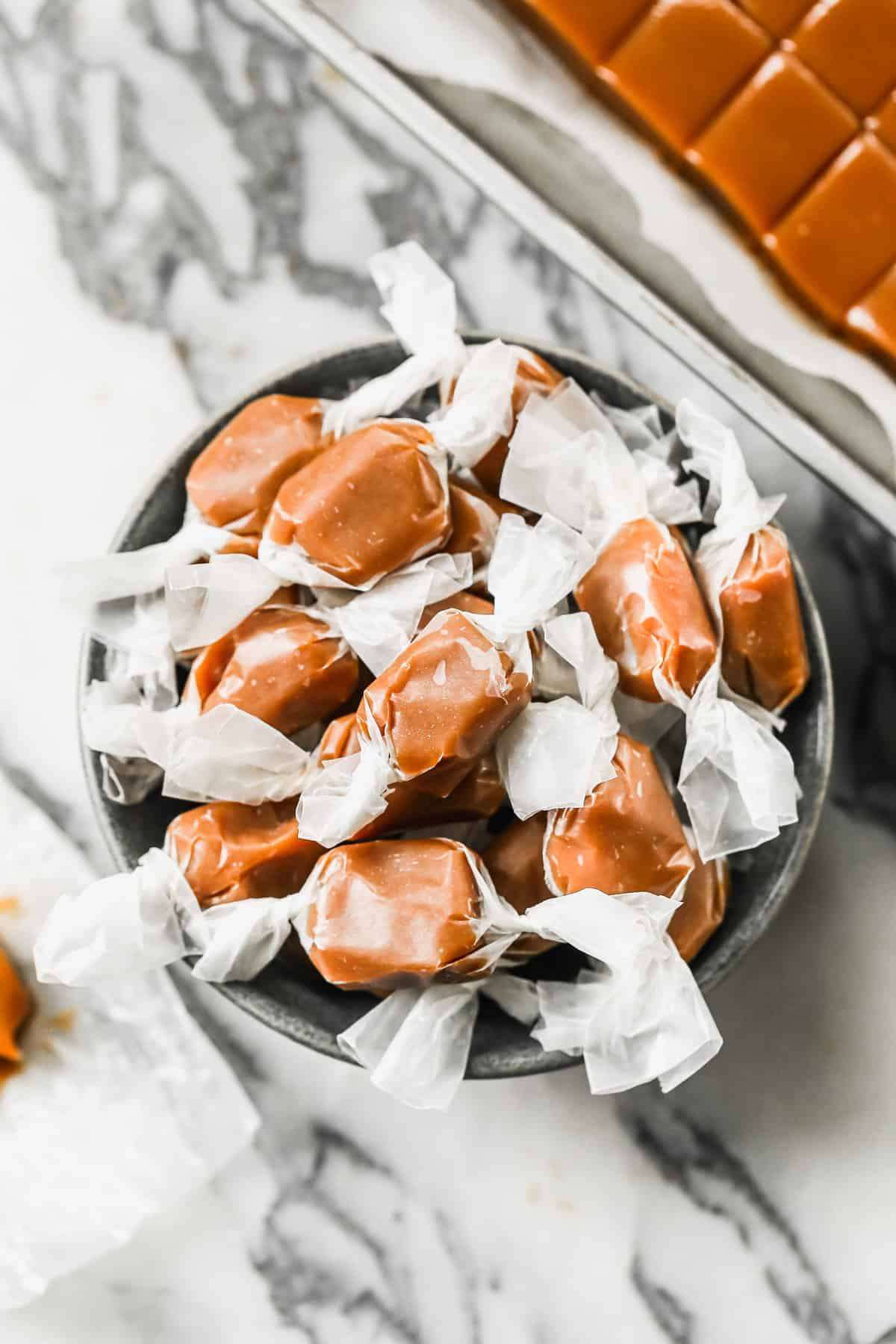
Once cooked to the ideal stage, the caramel is poured into a prepared pan lined with parchment paper or buttered to set. After cooling, the candies can be cut or broken into pieces. The resulting caramels are soft yet hold their shape, with a rich buttery taste balanced by sweetness and vanilla.
Storage in the refrigerator keeps them fresh for several weeks, and allowing them to come to room temperature prior to eating restores their softness. If the caramels end up too soft, reheating and cooking longer is recommended. Conversely, if too hard, the temperature was likely overshot, underscoring the value of the ice water test for controlling doneness.
Ingredients
- 1 cup butter (2 sticks)
- 4 cups granulated sugar
- 2 cups light corn syrup
- 24 ounces evaporated milk 2 cans
- 1 teaspoon vanilla extract
Instructions
- Line a 9x13'' pan or jelly roll pan with parchment paper. (If you don't have parchment paper you can generously butter the pan.) Either size pan will work--9x13'' will yield thicker caramels.
- Add 2 sticks butter, sugar, and karo syrup to a large heavy-bottom saucepan over medium heat. Stir over medium heat until mixture begins to boil, about 5-10 minutes.
- Gradually add the evaporated milk, one can at a time, taking about 12-15 minutes PER CAN to slowly add it, while stirring constantly. You want to make sure the mixture maintains a steady heat and constant boil (no drastic changes in temperature) otherwise your caramels can curdle.
- Stir the mixture constantly, scraping the sides occasionally until it reaches a firm ball stage (about 240-245 degrees F on a candy thermometer). It takes patience and time, but it's sooo worth it! (Also, I don't really trust or rely on a candy thermometer--I like to test it the old fashioned way. Drop a spoonful of hot caramel sauce into a cup of ice water and mold it with your fingers into a ball. When ready it will feel pretty firm and pliable, but still slightly sticky.)
- Once you reach 240-245 degrees F / or the firm ball stage, remove from heat. Stir in vanilla.
- Pour caramels into prepared pan. Refrigerate until cooled and hardened. (Best if you refrigerate them overnight, or for several hours. They will be easier to cut and wrap).
- The caramel will seem hard in the fridge after they're set, but they should be soft at room temperature. Cut caramel into small pieces and, if desired, wrap like a tootsie roll in wax paper.
Notes
- Evaporated milk can be replaced with heavy cream for a richer caramel.
- Use the ice water test by dropping hot caramel into cold water, then shaping it with fingers; it should form a firm but pliable ball.
- If caramels are too soft after setting, reheat the batch and cook longer to reach the proper consistency.
- Caramels that are too hard indicate overcooking; carefully monitoring temperature helps prevent this.
- Store caramels in the refrigerator covered to keep them fresh for several weeks; bring to room temperature before serving for softness.
Nutrition Information
Show DetailsNutrition Facts
Serving: 80caramels
Amount Per Serving
Calories 94 kcal
% Daily Value*
| Calories | 94kcal | 5% |
| Carbohydrates | 17g | 6% |
| Fat | 2g | 3% |
| Saturated Fat | 1g | 5% |
| Cholesterol | 8mg | 3% |
| Sodium | 34mg | 1% |
| Potassium | 26mg | 1% |
| Sugar | 17g | 34% |
| Vitamin A | 90IU | 2% |
| Vitamin C | 0.2mg | 0% |
| Calcium | 24mg | 2% |
* Percent Daily Values are based on a 2,000 calorie diet.
User Reviews
Overall Rating
5
You'll Also Love