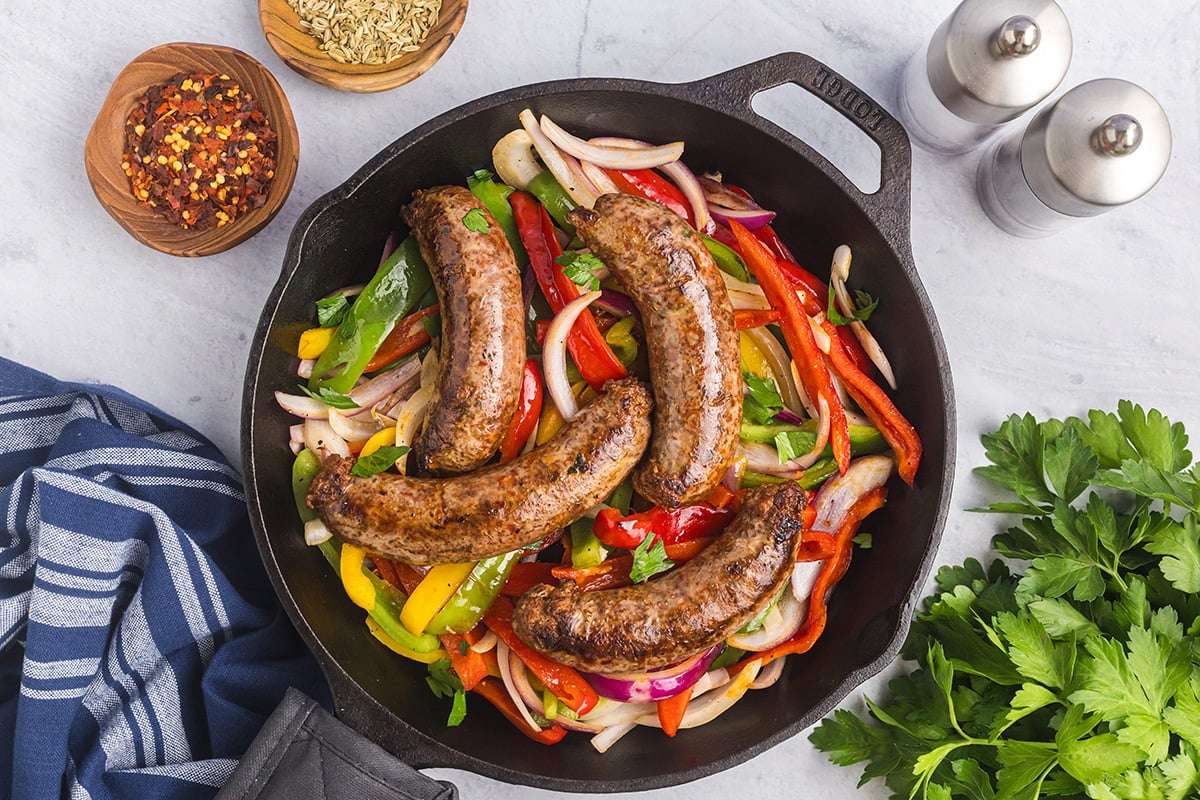
Homemade Italian Sausage Recipe
User Reviews
4.4
-
Prep Time
2 hrs
-
Total Time
6 hrs
-
Servings
15 links
-
Calories
470 kcal
-
Course
Main Course
-
Cuisine
Italian
Homemade Italian Sausage Recipe
Description
The Homemade Italian Sausage preparation begins by chilling the equipment to keep the meat cold and easy to process. The distinctive spice blend includes toasted fennel seeds, smoked paprika, cayenne pepper, kosher salt, white pepper, onion powder, sugar, crushed red pepper, and freshly minced garlic and parsley, which are mixed with cubed pork shoulder. This mixture is then chilled to allow the flavors to meld.
After chilling, the meat is ground and stuffed into natural hog casings, which are prepared by soaking in lukewarm water to make them pliable. The sausage can then be cooked fresh or allowed to cure at room temperature for several hours to let the wine and vinegar in the mix absorb into the meat, enhancing flavor and texture.
This recipe can be adapted by forming the meat into patties or balls if casings are not used. Adjusting the spice quantities can create milder or hotter sausages. The use of natural ingredients and traditional curing methods yields a classic Italian-style sausage suited for various dishes.
Note that chilling the equipment and meat is essential for ease of handling and to prevent the spices and meat from warming prematurely, which could affect texture and safety. The recipe notes also mention options for using curing powders if desired, but this version avoids additives.
Ingredients
- Hog casings natural
- 5 tablespoons fennel seed whole
- 5 tablespoons smoked paprika
- 3 tablespoons cayenne pepper
- 1 tablespoon kosher salt coarse
- 1 tablespoon ground white pepper
- 1 tablespoon onion powder
- 1 tablespoon sugar
- 3 teaspoons crushed red pepper
- 4-5 pounds pork shoulder boneless, fatty
- 1/4 cup Italian parsley minced, fresh
- 8 garlic finely minced, cloves
- 1/2 cup red wine
- 1/4 cup red wine vinegar
Instructions
- Start by putting a large metal or glass mixing bowl, meat grinder with coarse plate (or medium size dye) and sausage stuffer into the freezer to chill. I recommend at least 1 hour, but this can also done a day or so in advance too. Cold items will prevent the meat from sticking and be easier to work with.
- In a small saute pan, toast the fennel seeds over low heat until fragrant, approximately 3-4 minutes. Transfer them to a small mixing bowl and stir in the paprika, cayenne, salt, white pepper, onion powder, sugar and crushed red pepper flakes. Set aside.
- Cut the pork shoulder into 1-inch cubes and put it into the chilled metal or glass mixing bowl. Toss the pork cubes with the combined spices, garlic and parsley. Chill in the refrigerator for at least 30 minutes.
- While chilling, prepare the sausage casings (if you are using sausage casings). They look fragile and thin, but they are hearty and tough! Remove about 12-15 feet of sausage casings and place into a bowl of lukewarm water. Rinse well, drain water. Repeat until water is clear. Carefully run water through the inside of each casing. Cover casings with fresh water and set aside until ready to stuff.
- Remove the meat grinder and plate from the freezer. Assemble the grinder and use another large metal or glass mixing bowl to catch the ground meat.
- Working in batches, feed the pork cube and spice mixture through the meat grinder at a speed of 4.
- When finished grinding, mix the meat with the red wine and red wine vinegar using your hands, a meat mixer or the paddle attachment of a stand mixer. An electric hand mixer will not work for this purpose. Place the mixture back into the refrigerator for 20-30 minutes.
- If you are casing, assemble the stuffer. Thread one length of sausage casing onto the stuffing. Tie the end into a small knot. Run the ground meat mixture through the stuffer at a low speed. Make links about 4-5 inches long, stopping to twist the casing after each link to seperate them. Twist in opposing directions from link-to-link. Tie at knot at the end of the casing. It helps to have an additional person to hold the casing as it comes out and another operating the speed and feeding the stuffer. I like to stop the machine to twist off links.
- Optional: Traditional sausage making calls for curing the links. Be creative with how you chose to dry your meat. I would suggest doing this inside or in a garage instead of outdoors due to insects and other animals wanting to nibble on your hard work. As previously mentioned, I used my laundry drying rack and aluminum foil. Also place a towel underneath the drying rack to catch any drips. Allow to cure for 2-3 hours. If you see any air bubbles you can puncture them with a sterilized sewing needle, although they won't cause any problems if you leave them.
- Refrigerate for 24 hours before cooking or freezing. The meat will congeal and marry with herbs and spices.
- If you've tried this recipe, come back and let us know how you liked it in the comments or star ratings.
Notes
- For a finer spice texture, blend dried herbs and spices in a spice grinder before mixing.
- Adjust cayenne and crushed red pepper to suit your preferred spice level or omit for milder sausage.
- If not stuffing into casings, form the mixture into patties or balls, then allow to cure for 2–3 hours at room temperature before refrigerating overnight to allow flavors to absorb.
- The CDC recommends not leaving raw foods out for more than 2 hours, but chilled meat may safely hold temperature up to 3 hours during curing; refrigerate sooner if preferred.
- Consider adding curing powder if you want to preserve meat longer; use about 0.2 ounces per recipe, which will also give the sausage a rosier color.
Nutrition Information
Show DetailsNutrition Facts
Serving: 15links
Amount Per Serving
Calories 470 kcal
% Daily Value*
| Calories | 470kcal | 24% |
| Carbohydrates | 3g | 1% |
| Protein | 15g | 30% |
| Fat | 5g | 8% |
| Saturated Fat | 1g | 5% |
| Cholesterol | 49mg | 16% |
| Sodium | 532mg | 22% |
| Potassium | 370mg | 8% |
| Fiber | 1g | 4% |
| Vitamin A | 1695IU | 34% |
| Vitamin C | 2.6mg | 3% |
| Calcium | 30mg | 3% |
| Iron | 1.8mg | 10% |
* Percent Daily Values are based on a 2,000 calorie diet.
User Reviews
Overall Rating
4.4
You'll Also Love