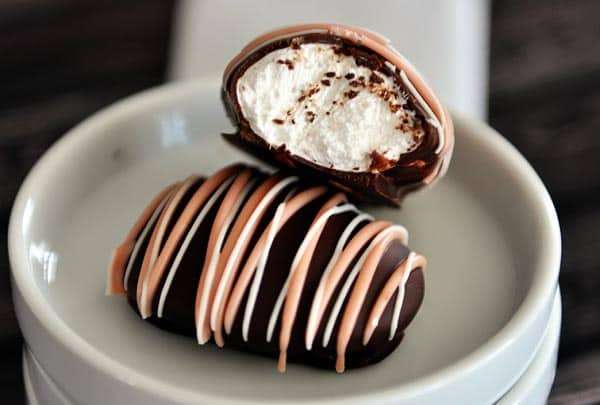
Homemade Marshmallow Easter Eggs
User Reviews
4.7
Homemade Marshmallow Easter Eggs
Description
Homemade Marshmallow Easter Eggs begin by preparing a gelatin mixture whipped with a hot sugar and corn syrup syrup to develop a light, airy marshmallow base. The marshmallow is shaped into egg molds created by pressing plastic Easter eggs into flour to form indentations on baking sheets; the flour prevents sticking and allows easy removal once set. After chilling to firm the marshmallows, each is dipped in melted chocolate, enhancing them with colorful sprinkles or drizzles to decorate. The process requires some patience for setting and dipping but results in a soft, sweet confection ideal for Easter celebrations.
The use of unflavored gelatin gives the marshmallows their spongy texture, and the corn syrup contributes to smoothness and stability. The flour used on the molds is barely noticeable once the eggs are cleaned, but substitutions like powdered sugar or cornstarch can be experimented with cautiously. Melting and tempering the chocolate properly facilitates a smooth coating, and high-quality chocolate improves the final flavor.
Using plastic eggs or other egg-shaped molds, flour dusting helps maintain shape during chilling. The recipe produces around 36 eggs using two large sheet pans, offering a festive homemade treat that differs in texture and flavor from store-bought marshmallow candies.
Ingredients
Marshmallows:
- ½ cup water cold
- 3 envelopes gelatin unflavored
- 1 ½ cups granulated sugar
- 1 cup light corn syrup
- ½ cup water
- ¼ teaspoon salt
- 1 tablespoon vanilla extract pure
Other:
- all-purpose flour lots of
- 2 cups chocolate chopped or good-quality chocolate chips for dipping
- Sprinkles or colored chocolate wafers for drizzling
Instructions
- To start, fill two large, rimmed baking sheets (11X17-inch) with flour, shaking to get a mostly even layer. Using a plastic Easter egg (you can also use a real egg or other egg-shape object for the mold), press lightly into the flour to make egg molds. Space the indentations about 1-2 inches apart. If the next indentation messes up the sides of the first indentation, don't stress. Simply press the egg shape lightly into each indentation that needs the edges fixed a bit. Using a 2-inch (in length) plastic egg, I make about 6 indentations across in 3 rows for a total of 18 indentations for each sheet pan. Set the sheet pans carefully aside.
- For the marshmallows, pour the cold water into the bowl of an electric stand mixer fitted with the whisk attachment (you can do this without a stand mixer, but you'll need to use an electric handheld mixer that won't burn out after 10 or so minutes of mixing) and sprinkle the gelatin over the top, letting it soften.
- While the gelatin softens, combine the sugar, corn syrup, water, and salt in a medium saucepan and heat over medium-low heat until the sugar dissolves. Clip a candy thermometer to the side of the pan and increase the heat to medium. Let the mixture come to a boil and continue cooking without stirring until the syrup reaches 240 degrees F on the thermometer.
- Turn the mixer to low speed and (carefully!) pour the hot syrup into the mixer in a slow and steady stream. Once it has all been added, turn the mixer to medium or high and let the mixer whip the mixture for 10-13 minutes, until the mixture is cooled and is thick and fluffy. You don't want it to mix quite as much as when making marshmallows that will be poured into a pan to later be cut into squares. The mixture should be slightly softer than that so that it molds to the egg indentations made in the flour. Mix in the vanilla extract.
- Grease two spoons with cooking spray and carefully scoop spoonfuls of the marshmallow mixture into the indentations in the flour (see the pictures below, if needed). Once all the egg molds are filled with marshmallow, let them sit for 10-15 minutes.
- Once slightly set, gently lift an edge of the marshmallow and carefully flip over so it is now sticky-side down in the flour. Don't press on it or push it into the flour, just let it gently sit on the top of the flour.
- Let the marshmallows set for 1-2 hours (or up to overnight - covered loosely with plastic wrap).
- Take each marshmallow egg and rub it briskly with the palms of your hands to remove any excess flour. It's ok if there is still a very light coating of flour on the egg - it won't be noticeable after the egg is covered in chocolate. All the excess flour can be poured right back into the flour bag/container.
- Melt the chocolate over low heat or in the microwave on 50% power in 1-minute increments until melted and smooth. To prevent blooming (the white streaks in chocolate after it has set), stir in a bit of reserved finely chopped chocolate into the hot, melted chocolate to lower the temperature just a bit.
- One by one, drop a marshmallow egg into the chocolate. Using a fork, cover the egg in chocolate. Lift the egg up onto the fork and tap the handle of the fork on the edge of the bowl to let the excess chocolate fall through the tines of the fork into the bowl. Gently scrape the bottom of the fork on the edge of the bowl and then transfer the egg to a parchment or wax paper lined baking sheet, using the edge of a butter knife to help slide the egg off the fork onto the parchment.
- Repeat with the remaining eggs. If using sprinkles, toss them lightly on the eggs while still wet with chocolate. Place the eggs in the refrigerator to let the chocolate set. After the chocolate has set, colored melting wafers or other chocolate can be drizzled over the eggs.
- Store in the refrigerator for up to a week.
Notes
- Flour dusting on molds prevents sticking and is barely noticeable after cleaning.
- Corn syrup adds smoothness, but substitutions need careful testing.
- High-quality chocolate improves coating flavor and texture.
- Use a stand mixer to whisk the gelatin mixture for best results.
- Practice tempering chocolate to achieve a smooth, shiny finish and avoid bloom.
Nutrition Information
Show DetailsNutrition Facts
Serving: 36marshmallow eggs
Amount Per Serving
Calories kcal
% Daily Value*
| Serving | 1 Egg | |
| Calories | 95kcal | 5% |
| Carbohydrates | 20g | 7% |
| Protein | 1g | 2% |
| Fat | 2g | 3% |
| Saturated Fat | 1g | 5% |
| Cholesterol | 2mg | 1% |
| Sodium | 26mg | 1% |
| Sugar | 19g | 38% |
* Percent Daily Values are based on a 2,000 calorie diet.
User Reviews
Overall Rating
4.7
You'll Also Love