Homemade Pancetta Recipe (How to Make Pancetta)
User Reviews
4.9
Homemade Pancetta Recipe (How to Make Pancetta)
Description
The Homemade Pancetta recipe begins with fresh pork belly seasoned abundantly with kosher salt, allowing it to cure in the refrigerator for 24 hours. After curing, the pork is rinsed with water and white wine to remove excess salt and to aid preservation. The belly is then coated with a mixture of black pepper and optional crushed red and cayenne peppers for seasoning and a mild heat.
This pork preparation is intended to dry or age after seasoning, forming pancetta that can be sliced for use in various dishes or cooked for added flavor. The recipe emphasizes the importance of using fresh pork that has not been previously frozen and kosher salt for effective curing. This process creates a cured meat with pronounced seasoning and firmness suitable for charcuterie or cooking applications.
Because pancetta is uncooked, proper handling and thorough cooking before consumption are advised to avoid health risks. The headnotes caution that seasoning levels can be adjusted to prefer a milder taste by omitting the hot peppers. This recipe allows for artisanal preparation of pancetta at home, integrating traditional curing techniques.
Ingredients
- 2 lbs pork belly with rind (preferably organic), do NOT use pork which has previously been frozen, fresh, sliced
- 1 cup kosher salt please don't worry about measurements on this, just follow the directions
- 8 oz white wine inexpensive, dry
- 2 tsp black pepper more or less
- 2 tsp crushed red pepper (optional - more or less, as desired)
- 2 tsp ground cayenne pepper (optional - more or less, as desired)
Instructions
- Day 1
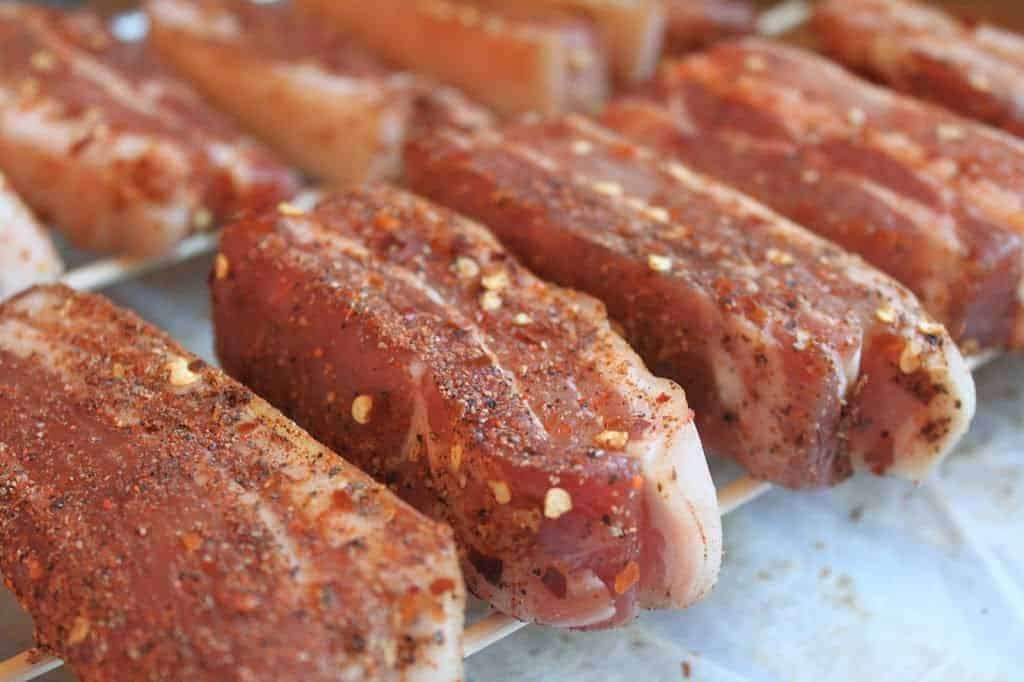
- Salt the pork pieces generously (like a light blanket of snow--see my photo) with Kosher salt and leave for 24 hours in the fridge.
- Do not substitute with other salt, it will not work properly.
- Day 2
- The next day, rinse the pork with water, pat dry with a paper towel, and rinse in white wine, but do not pat dry. You will be throwing away the white wine, so try to use as little as you can to still rinse the meat. This helps to preserve the pork.
- Prepare a plate or tray with the desired amount of pepper in any combination. (The amount shown did not make a very spicy pancetta.) Mix all the pepper together.
- Rub the pepper into the pancetta pieces until well coated, adding more pepper as needed. Again, measurements are not critical, just look at my photos for inspiration. Use as much as you like. Set aside on waxed paper.
- You will need a small tray which will fit long skewers to rest upon. This creates something that the pancetta pieces can be placed on to dry so that the air moves around it. You can see what I have done in the photos above. Place the pieces of pancetta spaced apart on top of the wooden skewers and place in a well ventilated fridge (not crowded).
- The following 2 or 3 weeks
- The pancetta pieces will be kept in the refrigerator, loosely covered with wax paper, for about 2 to 3 weeks. Turn the pieces everyday (using all 4 sides) until the pancetta has cured without becoming overly dry. If you used 2 lbs of pancetta, it should weight approximately 24 oz when it's cured.
- At this time, my preference is to seal it with a food sealer, which locks out all the air, allowing the pancetta to keep refrigerated a longer period of time.
- Finally, you can use the pancetta however you choose, but do not eat it without properly cooking it first.
Notes
- Use only fresh, never frozen pork belly for proper curing and safety.
- Kosher salt is essential for effective curing; avoid substituting with other salts.
- Adjust the amount of hot peppers to control the spiciness of your pancetta.
- Cook pancetta thoroughly before eating to reduce risks from uncooked cured meat.
- Patience is required as the curing and drying process take time for best results.
Nutrition Information
Show DetailsNutrition Facts
Serving: 1.5 lbs
Amount Per Serving
Calories 121 kcal
% Daily Value*
| Serving | 1 | |
| Calories | 121kcal | 6% |
| Carbohydrates | 1g | 0% |
| Protein | 14g | 28% |
| Fat | 11g | 17% |
| Saturated Fat | 4g | 20% |
| Polyunsaturated Fat | 8g | 47% |
| Cholesterol | 52mg | 17% |
| Sodium | 3836mg | 160% |
* Percent Daily Values are based on a 2,000 calorie diet.
User Reviews
Overall Rating
4.9
You'll Also Love