Homemade Pasta
User Reviews
5
-
Prep Time
30 mins
-
Cook Time
2 mins
-
Additional Time
30 mins
-
Total Time
1 hr 2 mins
-
Servings
3 to 4
-
Course
Main Course
-
Cuisine
Italian
Homemade Pasta
Description
Homemade Pasta calls for simple staples—flour, eggs, salt, and olive oil—combined into a dough that is kneaded until it comes together smoothly. After resting, the dough becomes pliable and easy to shape. This kneading and resting process is essential to develop gluten, resulting in pasta that holds together well when cooked.
The dough is divided, rolled thin, and cut into desired shapes, offering flexibility for different pasta types. Fresh pasta cooked from this dough will have a tender texture and can carry sauces effectively because of its surface texture and thickness.
Making pasta from scratch adds a personalized touch to meals and complements fresh or simple sauces nicely. It can bring a satisfying freshness you don’t get from dried store-bought pasta.
According to the notes, freshly made pasta can be refrigerated wrapped in plastic for up to two days, which helps with planning ahead for meals. This storage method preserves its texture and flavor until ready to cook.
Ingredients
- 2 cups all-purpose flour spooned & leveled
- 3 egg large
- ½ teaspoon salt sea salt
- ½ tablespoon extra-virgin olive oil
Instructions
- Place the flour on a clean work surface and make a nest. Add the eggs, olive oil, and salt to the center and use a fork to gently break up the eggs, keeping the flour walls intact as best as you can. Use your hands to gently bring the flour inward to incorporate. Continue working the dough with your hands to bring it together into a shaggy ball.
- Knead the dough for 8 to 10 minutes. At the beginning, the dough should feel pretty dry, but stick with it! It might not feel like it’s going to come together, but after 8-10 minutes of kneading, it should become cohesive and smooth. If the dough still seems too dry, sprinkle your fingers with a tiny bit of water to incorporate. If it’s too sticky, dust more flour onto your work surface. Shape the dough into a ball, wrap in plastic wrap, and let rest at room temperature for 30 minutes.
- Dust 2 large baking sheets with flour and set aside.
- Slice the dough into four pieces. Gently flatten one into an oval disk. Run the dough through the Pasta Roller Attachment or a pasta maker three times on level 1 (the widest setting).
- Set the dough piece onto a countertop or work surface. Fold both short ends in to meet in the center, then fold the dough in half to form a rectangle (see photo above).
- Run the dough through the pasta roller three times on level 2, three times on level 3, and one time each on levels 4, 5, and 6.
- Lay half of the pasta sheet onto the floured baking sheet and sprinkle with flour before folding the other half on top. Sprinkle more flour on top of the second half. Every side should be floured so that your final pasta noodles won't stick together.
- Repeat with remaining dough.
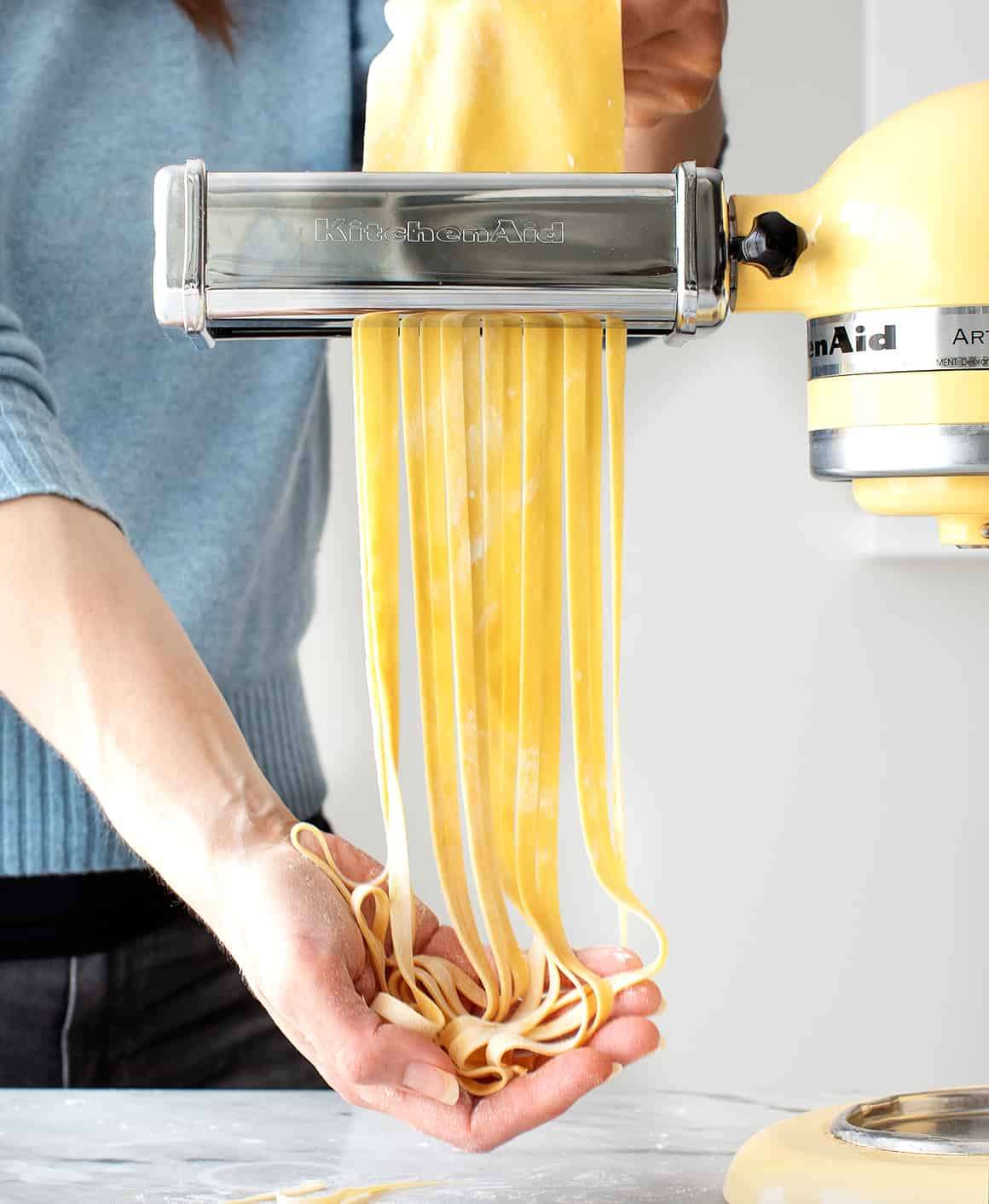
- Run the pasta sheets through the Pasta Cutter Attachment (pictured is the fettuccine cutter). Repeat with remaining dough. Cook the pasta in a pot of salted boiling water for 1 to 2 minutes.
Notes
- Wrap the dough tightly in plastic wrap and refrigerate for up to 2 days to preserve freshness.
- Resting the dough at room temperature for 30 minutes before rolling helps improve texture and elasticity.
User Reviews
Overall Rating
5
You'll Also Love