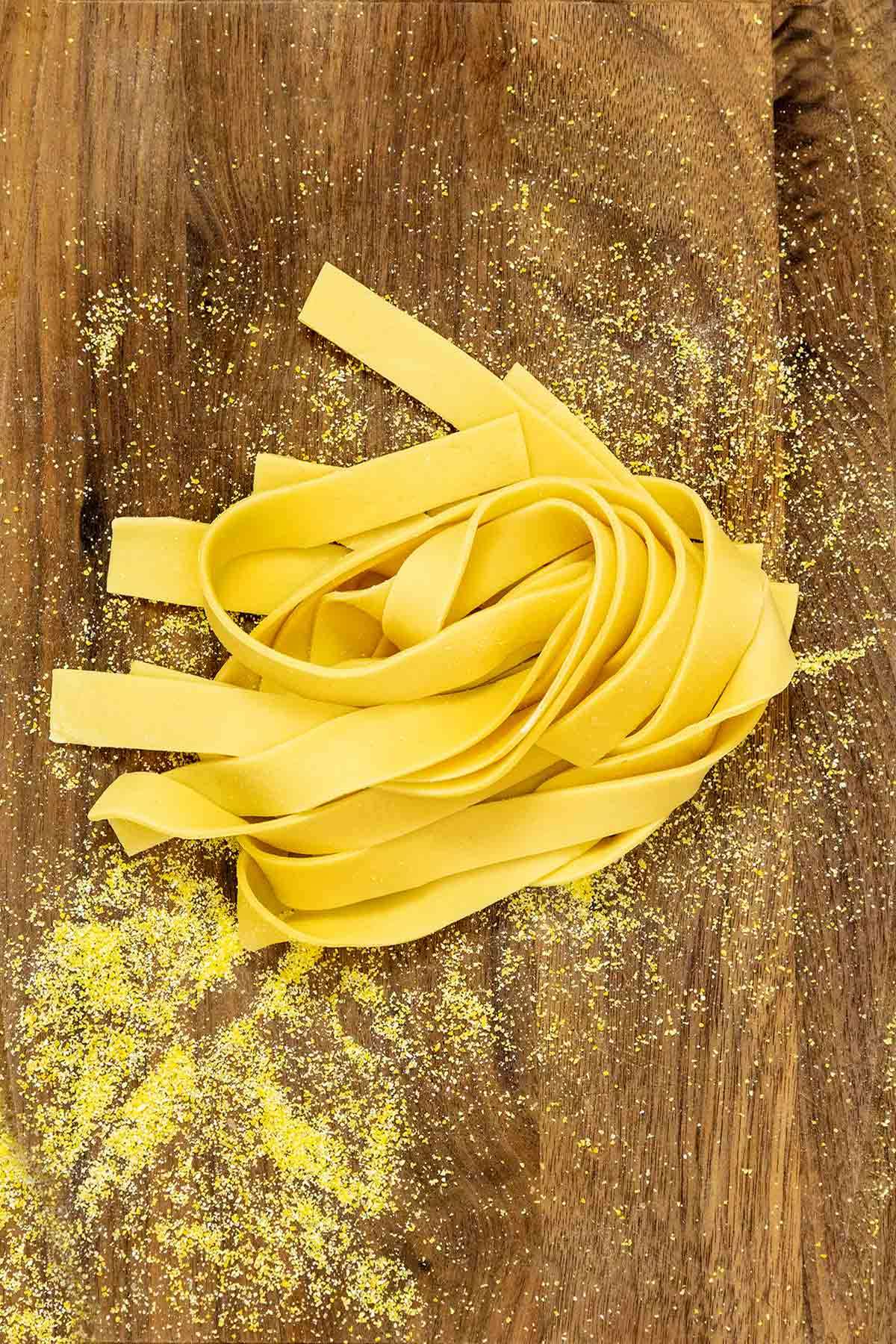
Homemade Pasta Dough
User Reviews
4.8
-
Prep Time
45 mins
-
Additional Time
30 mins
-
Total Time
1 hr 30 mins
-
Servings
2 servings
-
Calories
475 kcal
-
Course
Main Course
-
Cuisine
Italian
Homemade Pasta Dough
Description
The process begins by combining beaten eggs with a pile of "00" flour, known for its fine texture and ideal pasta-making qualities. Salt and optional olive oil add seasoning and moisture. The mixture is incorporated gradually with a fork, then kneaded by hand on a work surface until the dough is smooth and elastic, which may require 5–10 minutes of effort. If needed, a small amount of water or extra flour can adjust the dough consistency.
After kneading, the dough is shaped into a ball, wrapped in plastic, and allowed to rest at room temperature for at least 30 minutes. This resting period hydrates the flour fully and relaxes the gluten, making the dough easier to roll and shape.
Once rested, the dough is cut in half, and pieces are fed through a pasta machine or rolled by hand to the desired thickness. The method allows for shaping the dough into various pasta types like fettuccine or pappardelle.
This dough yields tender fresh pasta with a smoother texture than dried pasta and requires shorter cooking times. Proper resting and kneading are key to achieving the ideal texture.
Ingredients
- 1 1/2 cups plus 1 tablespoon Italian "00" flour or half Italian "00" flour and half farina di semola
- 2 large egg
- 1 tablespoon olive oil optional
- Pinch kosher salt
Instructions
Make the homemade pasta dough
- In a small bowl, beat the eggs well until combined.
- Dump the flour in a pile on a work surface (I like using a wooden cutting board) and make a well in the center with your hand. Pour the eggs into the well. Add the salt and oil if using.
- Using a fork, mix in the flour a bit at a time. Keep adding flour from the well wall and mixing until a firm, shaggy dough forms. If the dough feels dry, add a bit of water; if it feels too wet, sprinkle with a bit of the flour.
- Knead the pasta dough until it’s smooth and homogenous, 5 to 10 minutes. (Keep at it, it takes some muscle!) Roll the dough into a ball, wrap it with plastic, and let it rest at room temperature for at least 30 minutes so it can relax and hydrate.
Pass the dough through a pasta machine/attachment
- Cut the pasta ball in half. Wrap one half in plastic and set aside. Flatten the other half into a 1/2-inch-thick rectangle and carefully feed the dough through a pasta machine set on the widest setting. Once the pasta dough runs through the machine, fold it in thirds and feed it through once more, still on the widest setting.
- Repeat this process of passing the dough through the machine and folding it in thirds 4 more times. This conditions the dough, removes air bubbles, and makes it satiny smooth.
- Continue passing the sheet of pasta dough through the machine, gradually narrowing the setting, one notch for each pass, until the pasta achieves the desired thickness.
- Sprinkle a rimmed baking sheet liberally with cornmeal, lay the pasta sheet on top, and sprinkle with more meal. Let the dough air dry for about 5 minutes while repeating with the remaining pasta half
Cut the pasta by hand
- On a lightly floured cutting board, fold over the pasta in 2-inch sections to create a roll.
- With a sharp knife, cut the pasta crosswise into your preferred width. (I tend to cut these on the generous side.)Pappardelle about 1 inch wideTagliatelle about 1/2 inch wideFettuccine about 1/4 inch wideLinguine about 1/8 inch wide
- Immediately shake loose each bundle and toss it with cornmeal. Place the bundles on the rimmed baking sheet while you boil the water.
Cook the fresh pasta
- Bring 3 to 4 quarts of well-salted water to a boil. Toss in the pasta bundles, stirring to prevent the noodles from sticking to each other. Cook until al dente, 2 to 3 minutes, depending on the width and thickness of the pasta.
- Reserve 1/4 cup of the pasta water (it helps to emulsify the sauce you use) and drain the pasta.
- Return the pasta to the pot, stir in your sauce of choice. Dribble in a bit of pasta water--only if needed. Serve immediately with grated cheese.
Notes
- After kneading, the dough may feel rough or stiff, but resting softens it and improves texture.
- Approximately 1 egg per ¾ cup flour can be used to scale the recipe per serving size.
- Fresh pasta dough can be refrigerated up to 2 days or frozen in portioned nests for up to 4 weeks.
- Fresh pasta cooks in about 2 to 3 minutes depending on thickness; stir frequently to prevent sticking.
- Fresh pasta has a smoother and more tender texture than dried pasta and requires gentle handling.
Nutrition Information
Show DetailsNutrition Facts
Serving: 2servings
Amount Per Serving
Calories 475 kcal
% Daily Value*
| Serving | 1portion | |
| Calories | 475kcal | 24% |
| Carbohydrates | 72g | 24% |
| Protein | 16g | 32% |
| Fat | 13g | 20% |
| Saturated Fat | 3g | 15% |
| Monounsaturated Fat | 7g | 35% |
| Trans Fat | 1g | 50% |
| Cholesterol | 186mg | 62% |
| Sodium | 73mg | 3% |
| Fiber | 3g | 12% |
| Sugar | 1g | 2% |
* Percent Daily Values are based on a 2,000 calorie diet.
User Reviews
Overall Rating
4.8
You'll Also Love