Homemade Ricotta (Small-Curd Cottage Cheese)
User Reviews
5
Homemade Ricotta (Small-Curd Cottage Cheese)
Description
Homemade Ricotta (Small-Curd Cottage Cheese) uses simple ingredients: milk, salt, and an acid such as lemon juice for ricotta or white vinegar for cottage cheese. Heating the milk near a gentle boil and then adding acid causes immediate curdling with curds separating from whey. After cooling and draining through fine mesh or cheesecloth, the fresh cheese is salted and optionally mixed with heavy cream for a creamier texture. This method creates a fresh, soft cheese with a mild flavor that can substitute store-bought ricotta or cottage cheese in a variety of dishes.
The cheese produced can have a sweet note when lemon juice is used or a neutral taste with vinegar, adapting to different recipes. The draining time controls moisture content, from moist and soft to drier curds. This cheese is best stored refrigerated in a sealed container and used within about a week due to its freshness.
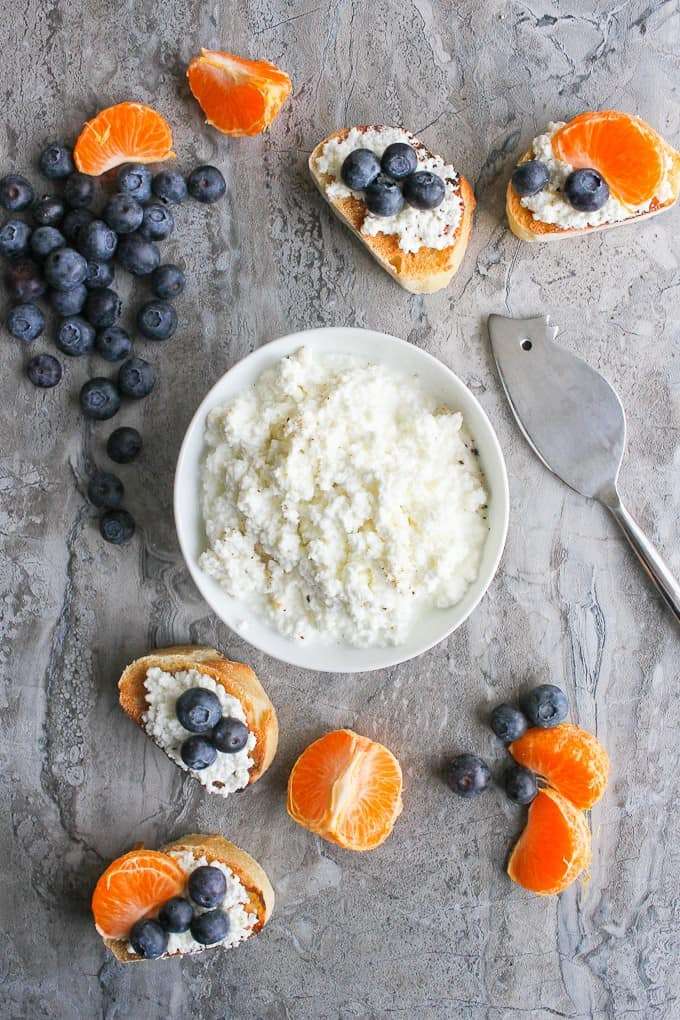
You can serve the cheese on toasted bread, as crostini with toppings like fruit, herbs, and honey, or as a side dish paired with peaches or berries and honey. It also works in any recipe calling for ricotta or cottage cheese, offering a fresh alternative.
Since the cheese is fresh, it has a limited shelf life and can be made in varied quantities depending on needs. Warming the milk in a microwave can speed the process and ease cleanup. Proper straining equipment helps achieve the best texture for the cheese.
Ingredients
- 4 cups milk No ultra-pasteurized milk, whole milk preferred
- 1 teaspoon salt
For Ricotta:
- ⅓ cup lemon juice freshly squeezed
For Small Curd Cottage Cheese:
- ⅓ cup white vinegar distilled
Optional Add-In:
- ¼ cup heavy cream
- salt
- black pepper
Instructions
- Bring milk to a simmer or soft boil. (Approximately 180°F.)Tip: Microwave milk for about 9 minutes instead of cooking it on the stovetop for faster cook time and easier clean-up.
- Add lemon juice or vinegar to the hot milk. Milk will immediately begin to curdle.Tip: Lemon juice will make the cheese sweet like ricotta. White vinegar will yield a more neutral-tasting cheese.
- Let mixture cool for about 10 minutes. The solid curds will begin to separate from the watery-whey.
- Pour the mixture into a fine mesh strainer. Allow the mixture to sit for at least 5 minutes, or up to an hour for a drier cheese.Tip: No fine mesh strainer? You can line a colander with butter cheesecloth or butter muslin, or multiple layers of regular cheesecloth or muslin.
- Add the salt, plus more salt to taste if desired. For a creamier cheese, stir in the heavy cream.
- Store cheese in a sealed container in the fridge, and use within a week.
Notes
- This recipe yields about 1 cup of homemade cheese and can be easily multiplied as needed.
- Keep the cheese refrigerated in an airtight container and consume within one week for best freshness.
- The choice of acid influences flavor: lemon juice adds a mild sweetness while vinegar results in a more neutral taste.
- Use fine mesh strainers or line a colander with multiple layers of cheesecloth to drain curds effectively.
- Serve the cheese on toasted bread as crostini or with fruit and honey as a light side dish.
- The cheese can replace store-bought ricotta or cottage cheese in recipes, providing a fresh alternative.
Nutrition Information
Show DetailsNutrition Facts
Serving: 4people
Amount Per Serving
Calories 205 kcal
% Daily Value*
| Calories | 205kcal | 10% |
| Carbohydrates | 13g | 4% |
| Protein | 8g | 16% |
| Fat | 13g | 20% |
| Saturated Fat | 7g | 35% |
| Cholesterol | 44mg | 15% |
| Sodium | 692mg | 29% |
| Potassium | 357mg | 8% |
| Sugar | 12g | 24% |
| Vitamin A | 615IU | 12% |
| Vitamin C | 9.3mg | 10% |
| Calcium | 290mg | 29% |
| Iron | 0.2mg | 1% |
* Percent Daily Values are based on a 2,000 calorie diet.
User Reviews
Overall Rating
5
You'll Also Love