How To Cook Pasta Al Dente
User Reviews
5
-
Cook Time
10 mins
-
Total Time
10 mins
-
Servings
4
-
Calories
278 kcal
-
Course
Main Course
-
Cuisine
Italian
How To Cook Pasta Al Dente
Description
How To Cook Pasta Al Dente details a method starting with boiling salted water in a pot filled two-thirds full to ensure even cooking. Adding pasta all at once and stirring every few minutes prevents clumping, especially for long noodles. Testing pasta firmness a few minutes before the package time ensures a tender yet slightly firm texture known as al dente.
The recipe notes the importance of reserving some pasta water before draining, which helps emulsify sauces, adding silkiness and better adherence. Avoiding rinsing after draining retains surface starches crucial for sauce binding and prevents chewiness and stickiness.
The method applies to different pasta types, emphasizing pot selection for short versus long pasta, and adjusting water volume and stirring frequency accordingly to achieve optimal texture and flavor integration with sauces.
Extra advice includes not strictly adhering to cooking times and using sensory cues, as pasta type, brand, and elevation affect doneness, promoting a more personalized approach to cooking pasta al dente.
Ingredients
- 300 g pasta
Instructions
- Fill ⅔ of a large saucepan with water, put the lid on, and bring to a boil over high heat.
- Remove the lid and add the sea salt.
- Stir in the pasta, then reduce the heat to medium heat.
- Stir the pasta with a wooden spoon every 3 minutes.
- Remove about 1 cup of pasta cooking water to emulsify the pasta sauce later.
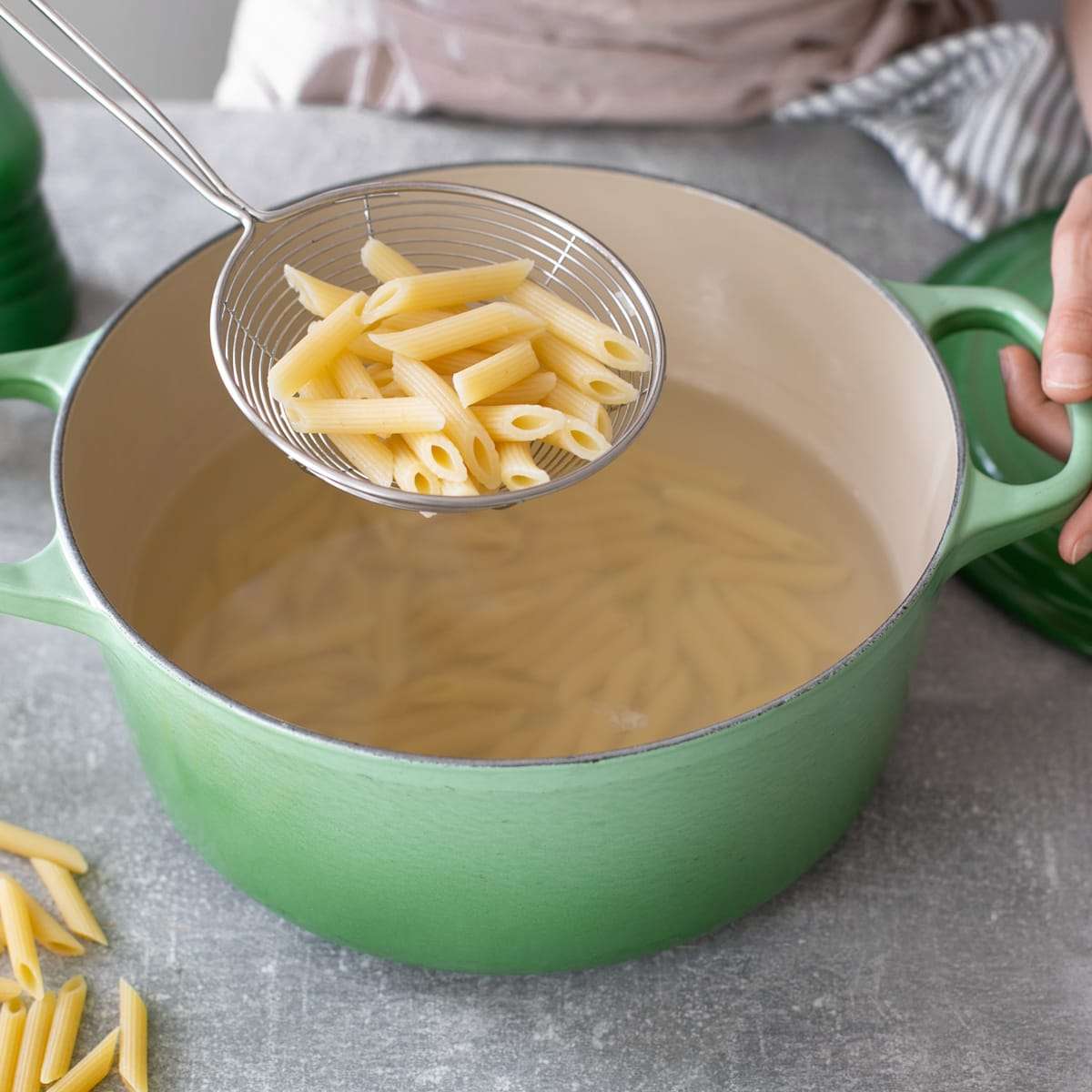
- Start testing the pasta about 4 minutes before the cooking time suggested on the package instructions. When it’s tender but still has a bite, drain the pasta in a colander over the sink or use a hand colander to scoop the pasta from the water.
- Return the pasta into the pot or transfer it into the pan with your favorite sauce, and mix by adding a little of the reserved pasta water until you reach the desired consistency.
Notes
- Do not rinse pasta after draining to maintain surface starches that improve sauce adherence and texture.
- Use a large pot for short pasta and a tall pot for long pasta to ensure even cooking.
- Fill the pot about two-thirds full with water and add pasta all at once for uniform cooking.
- Stir pasta every 2-3 minutes to avoid sticking, especially important for long pasta.
- Check pasta doneness a few minutes before the package recommends for better control over al dente texture.
- Always reserve some pasta water before draining to enhance sauces with a silky texture when mixed back in.
Nutrition Information
Show DetailsNutrition Facts
Serving: 4Serving
Amount Per Serving
Calories 278 kcal
% Daily Value*
| Calories | 278kcal | 14% |
| Carbohydrates | 56g | 19% |
| Protein | 10g | 20% |
| Fat | 1g | 2% |
| Saturated Fat | 1g | 5% |
| Polyunsaturated Fat | 1g | 6% |
| Monounsaturated Fat | 1g | 5% |
| Sodium | 5mg | 0% |
| Potassium | 167mg | 4% |
| Fiber | 2g | 8% |
| Sugar | 2g | 4% |
| Calcium | 16mg | 2% |
| Iron | 1mg | 6% |
* Percent Daily Values are based on a 2,000 calorie diet.
User Reviews
Overall Rating
5
You'll Also Love