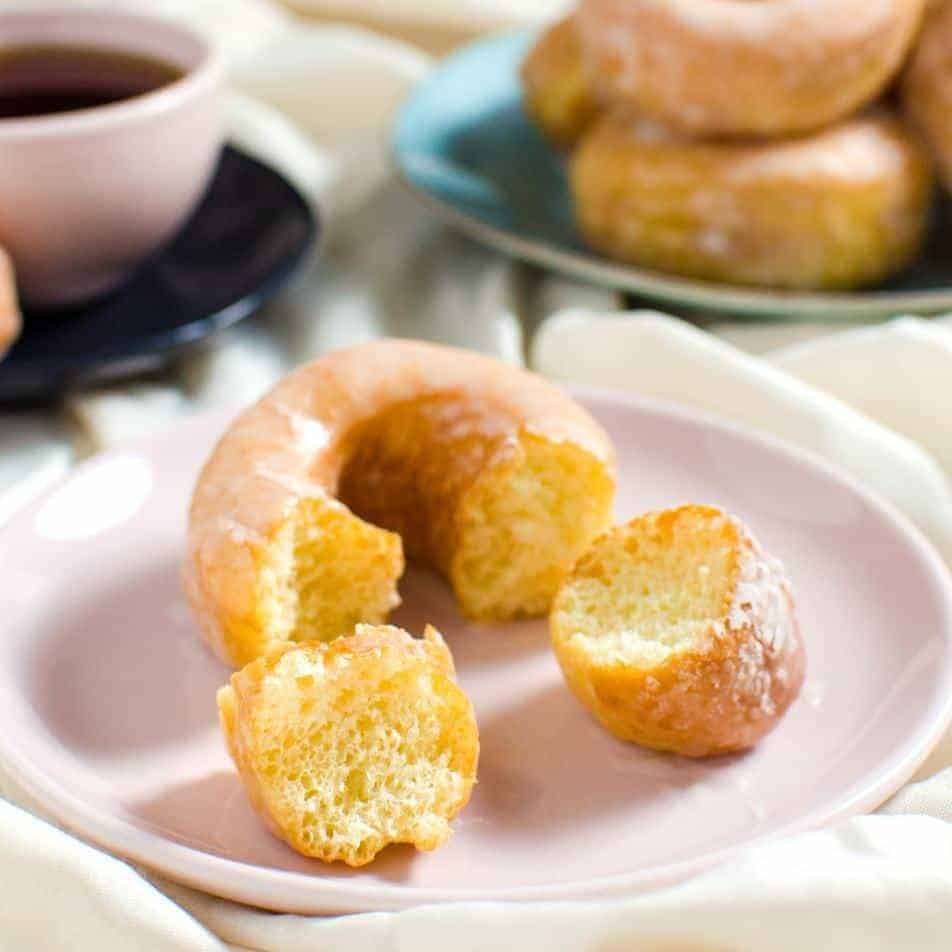
How to make glazed doughnuts (doughnut troubleshooting)
User Reviews
5
-
Prep Time
1 hr
-
Cook Time
10 mins
-
Additional Time
10 hrs 10 mins
-
Total Time
11 hrs 20 mins
-
Servings
12 donuts
-
Calories
337 kcal
-
Cuisine
North American, American
How to make glazed doughnuts (doughnut troubleshooting)
Description
The doughnut dough is prepared by activating yeast in lukewarm water, then mixing it with sugar, milk, eggs, flour, and salt. The dough is kneaded thoroughly, incorporating softened butter until the dough becomes soft, elastic, and tacky. After rising, the dough is shaped and fried in oil or shortening until golden.
The glaze combines icing sugar, milk, and vanilla to produce a smooth, sweet coating applied while the doughnuts are warm. This creates a shiny finish that adds sweetness and moisture. Proper yeast activation and kneading are key to obtaining the desired texture.
This doughnut recipe works best when consumed fresh, ideally on the same or next day. Doughnuts can be frozen individually and thawed later. If yeast freshness is uncertain, proofing it before mixing can ensure proper rise and texture. Careful attention to dough consistency and cooking temperature improves results.
Ingredients
Dough for the doughnuts
- 500 g all-purpose flour approximately 4 cups, spoon and leveled
- 120 mL water ½ cup, lukewarm
- 120 mL milk ½ cup, lukewarm
- 1 tbsp active dry yeast
- 1 egg large
- 1 egg yolk, large
- 50 g sugar ¼ cup
- 115 g butter 1 stick / ½ cup. Softened
- ½ tsp salt sea salt
- oil for deep frying, or shortening
Glaze
- 226 g icing sugar approximately 2 cups, spooned and leveled, or confectioner's sugar
- 80 - 100 ml milk about ⅓ cup, whole
- 1 tsp vanilla
Instructions
Doughnut dough
- Dissolve about 1 tsp of sugar in lukewarm water. Sprinkle the yeast over the water and stir to combine. Set aside for 10 - 15 minutes to activate the yeast. The yeast should become frothy when activated.
- Add the activated yeast into the mixing bowl, along with the rest of the sugar, milk, egg and yolk.
- Set aside about ¼ cup of the flour and place the rest in the mixing bowl with the other ingredients. Finally add the salt.
- Mix on low speed with the paddle attachment or kneading hook on your mixer, until the mix comes together. You can also use a spatula for this as well.
- If you used the paddle mix, switch to the dough hook and start kneading the dough for about 5 minutes.
- Add the softened butter (½ - 1 tbsp at a time) until it's all incorporated. Add some flour, if you need to get the dough off the sides of the bowl. Add the rest of the flour if needed, to form a soft dough ball. The dough should be tacky and soft.
- Knead the dough for about 5 - 7 minutes until you have a soft, shiny, slightly tacky dough. Check if the dough is kneaded well with the window pane test.
- Knead the dough for a couple of minutes in your hands till you have a smooth dough ball.
- Place this ball of dough in a lightly oiled bowl (with enough room to rise) and cover with plastic wrap. (remember to place the dough with the seam side down).
- Let the dough rise at room temperature (70-75°F) until it is has doubled in size - this should take about an hour, maybe less depending on how warm the ambient temp. is. (If you are pressed for time, you can let it proof in the fridge - for at least hours upto 24 hours, and continue from step 10).
- If you allowed the dough to rise at room temperature - gently release the air in the dough.
- OPTIONAL BUT RECOMMENDED - Reshape the dough, and place it in the bowl again for an overnight proof in the fridge. This helps develop the flavors of the dough better and the dough is also easier to handle when chilled. The nxt morning you can remove the dough from the bowl and proceed with the recipe. If you want to skip the overnight proof, then skip this step.
- Place the dough out on to a floured surface and roll it out to a ½ inch thickness.
- With a 3 to 3.5 inch diameter cookie cutter / donut cutter, cut out the donuts from the dough. Use a smaller cookie cutter to punch out the center whole.
- Place the donuts and donut holes on a parchment paper lined baking tray and cover with plastic wrap or towel.
- Knead the left over dough lightly and let it rest for about 30 minutes, and repeat rolling and cutting once more.
- Cover the cut donuts and donut holes with plastic wrap and let them rise for about 1 hour or until proofed properly. (see tips in the post to check if the doughnuts are proofed properly).
- Heat a good amount of oil or shortening (the donut needs to float at least 2 inches above the bottom of the pan) in a heavy bottomed pan.
- When the oil is heated to 375°F/190°C, carefully drop in a doughnut. After 30 - 45 seconds, check to see if the donut has turned a golden brown. If it has, flip it over. If it hasn't, leave it for a few seconds longer and then flip it over (the doughnut will darken as they cool down, so be careful not to let it darken too much while frying). If the donuts brown too quickly, lower the heat of your stove.
- Transfer the donut to a wire rack to let it cool.
- To glaze, place a donut in the prepared glaze and turn to coat it completely. Then keep it on a wire rack to let the excess glaze drip. Sprinkle with funfetti or sprinkles if you like, before the glaze sets.
For the glaze
- Sift the icing sugar, add vanilla and whisk in the milk or water - 1 tbsp at a time, until you get a pourable consistency. Add coloring if you like.
- Make more as needed.
Notes
- Doughnuts are best eaten on the day they are made or the next day if refrigerated to maintain freshness.
- Freeze doughnuts individually for longer storage and thaw them before serving.
- If yeast freshness is uncertain, activate (proof) it first by dissolving in lukewarm water with sugar until frothy before mixing into the dough.
Nutrition Information
Show DetailsNutrition Facts
Serving: 12donuts
Amount Per Serving
Calories 337 kcal
% Daily Value*
| Serving | 1donut | |
| Calories | 337kcal | 17% |
| Carbohydrates | 56g | 19% |
| Protein | 6g | 12% |
| Fat | 10g | 15% |
| Saturated Fat | 6g | 30% |
| Polyunsaturated Fat | 1g | 6% |
| Monounsaturated Fat | 3g | 15% |
| Trans Fat | 1g | 50% |
| Cholesterol | 53mg | 18% |
| Sodium | 176mg | 7% |
| Potassium | 95mg | 2% |
| Fiber | 1g | 4% |
| Sugar | 24g | 48% |
| Vitamin A | 321IU | 6% |
| Vitamin C | 1mg | 1% |
| Calcium | 44mg | 4% |
| Iron | 2mg | 11% |
* Percent Daily Values are based on a 2,000 calorie diet.
User Reviews
Overall Rating
5
You'll Also Love