How To Make Homemade Tomato Sauce
User Reviews
5
How To Make Homemade Tomato Sauce
Description
How To Make Homemade Tomato Sauce involves blanching and processing fresh tomatoes to remove skins and seeds using a food mill. The sauce blends sautéed onions, garlic, and bay leaves cooked gently in olive oil for flavor and aroma before adding the tomato puree and salt. It is simmered to develop depth and thickness over about an hour.
The sauce features the brightness of fresh basil and a measured amount of acid—citric acid is recommended for preserving and maintaining flavor balance, though bottled lemon juice or vinegar may be used with careful adjustments. This sauce serves as a versatile base for pasta, pizza, or other dishes that call for a fresh tomato taste.
When preparing for storage or canning, adding the right acidity is crucial to ensure safe preservation. Sautéing the aromatics in water instead of oil is possible for an oil-free version, with care taken to avoid burning.
Ingredients
- 1 bushel Roma tomato washed, or San Marzano, approx. 52 pounds
- ½ cup olive oil see notes for oil free
- 2 onion peeled & cut in quarters, yellow
- 1 red onion peeled & cut in quarters
- 12 cloves garlic peeled
- 4-5 bay leaf
- 2 tablespoon salt or to taste, sea salt
- 1 cup basil loosely packed, fresh leaves
- 10 teaspoons citric acid or lemon juice or vinegar, see notes*
Instructions
- Using a food processor, process your onions and garlic until finely chopped, but not pureed. Set aside.
- Slice each tomato in half, looking for any bad spots as you cut into them. (You do not want to use any rotten tomatoes, as this may ruin the batch of sauce.)
- Bring a large pot of water to a boil and add the cut tomatoes. The cold tomatoes will likely cause the water to stop boiling. Once it returns to a low boil, drain the tomatoes immediately. Do NOT overcook the tomatoes in this step. Drain them once the water starts boiling, and/or once you see that the water is foaming orange on top. (See pic for reference.)
- Use a food mill to crush your tomatoes which will separate the skins and seeds and leave you with only the tomato sauce.
- Heat the oil with the onions, garlic and bay leaves and cook for about 5 minutes, until onions and garlic are slightly golden. Watch carefully not to burn. Add the sauce and salt to the pot and bring to a low boil. Cook for 1 hour, adding the basil in the last 20 minutes or so. Stir often! You do not want any sauce to burn at the bottom of the pot, or you may spoil the entire batch. Taste for salt, and adjust if desired.
- Now depending on the size of jars you're using, add the citric acid to the bottom of each jar. *see notes
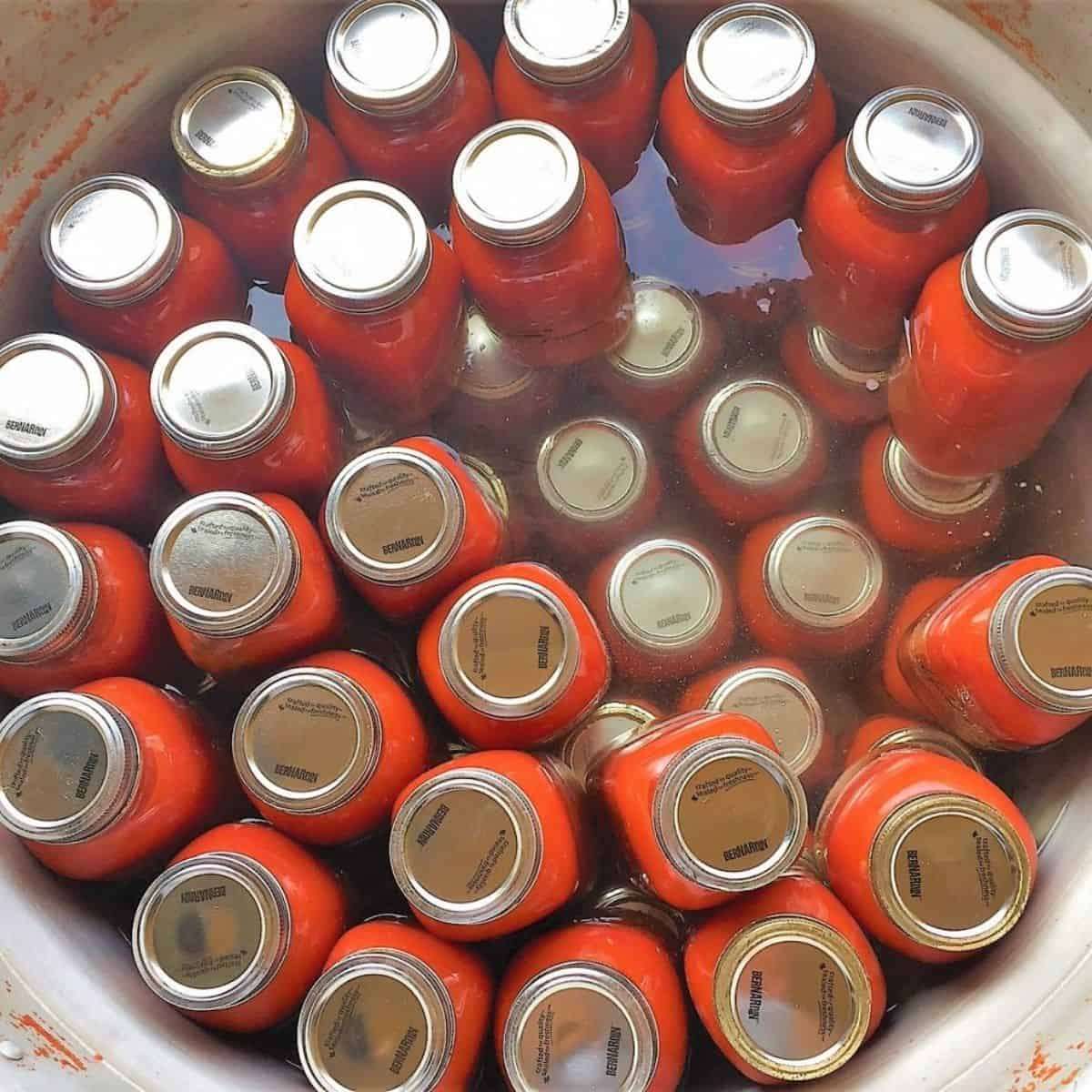
- Carefully fill your jars leaving ¼" space from rim of the jar. Then tightly seal your mason jars using Bernardin lids and rings.
- Heat a couple inches of water in a large pot and place the sealed jars into your pot once heated. Do not add the jars to cold water! The jars are very hot, and adding them to a pot of cold water may cause them to crack. Once the jars have all been placed in the pot, slowly fill with enough water to cover all the jars and bring to a boil for at least 30 minutes, then turn off the heat and let them sit for 12 hours or overnight. (So call it a day.) Once the water and jars are cooled enough to handle, remove from the pot and store in a cold dark place for up to 12 months.
Notes
- Add ½ teaspoon citric acid per quart or ¼ teaspoon per pint jar for proper acidity when canning the tomato sauce.
- Lemon juice or vinegar can substitute citric acid, but adjust quantities carefully to preserve flavor and acidity; bottled lemon juice is preferred over fresh for consistency.
- For an oil-free version, sauté onions and garlic in water, monitoring closely to prevent sticking or burning during cooking.
Nutrition Information
Show DetailsNutrition Facts
Serving: 12Quarts
Amount Per Serving
Calories 98 kcal
% Daily Value*
| Serving | 1Cup | |
| Calories | 98cal | 5% |
| Carbohydrates | 19g | 6% |
| Protein | 4g | 8% |
| Fat | 3g | 5% |
| Saturated Fat | 1g | 5% |
| Sodium | 315mg | 13% |
| Potassium | 1134mg | 24% |
| Fiber | 6g | 24% |
| Sugar | 13g | 26% |
| Vitamin A | 3963IU | 79% |
| Vitamin C | 66mg | 73% |
| Calcium | 51mg | 5% |
| Iron | 1mg | 6% |
* Percent Daily Values are based on a 2,000 calorie diet.
User Reviews
Overall Rating
5
You'll Also Love