How to make Paneer (Indian Cottage Cheese)
User Reviews
4.9
-
Prep Time
2 mins
-
Cook Time
13 mins
-
resting time
30 mins
-
Total Time
15 mins
-
Servings
200 grams
-
Calories
145 kcal
-
Course
Main Course
-
Cuisine
Indian
How to make Paneer (Indian Cottage Cheese)
Description
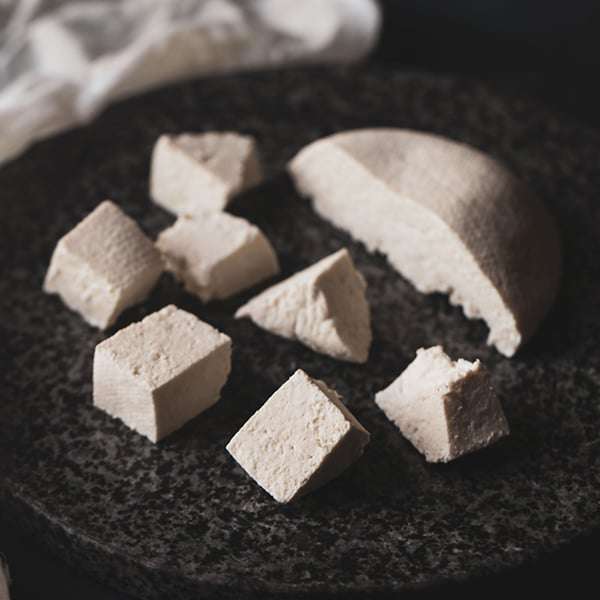
To make paneer, whole milk is heated gently to boiling, stirring frequently to prevent scorching. When the milk reaches boiling, an acid such as lemon juice, vinegar, or yogurt is added to curdle it fully, separating curds from the greenish whey. Care is taken not to overcook once curdled to avoid a tough texture. The curds are then strained through cheesecloth or muslin, and pressed with weight to form a firm block of cheese ready for cutting and cooking.
Paneer made this way retains mild flavors influenced slightly by the acid used, with a soft and creamy texture. It can be refrigerated for a few days in airtight containers, either dry or submerged in water to keep it moist. Freezing is also possible by cutting paneer into cubes before storing.
Ingredients
Ingredients
- 1 litre milk - whole milk or full fat
- 2 to 4 teaspoons lemon juice or vinegar or 3 to 4 tablespoons curd or yogurt
Materials required
- cheese cloth or muslin or a thin cotton napkin
- some bowls and a heavy weight object or plates
Instructions
Boiling milk
- First, rinse a large, heavy duty pot with water. Add milk to the pot.
- Then begin to heat the milk on a medium-low heat.
- Stir occasionally so that the skin does not form on the surface and also so that the milk does not get burnt from the bottom.
- Meanwhile, take a pan or a bowl. Place a strainer on the pan. Line the strainer with clean muslin or cheesecloth or cotton napkin. You can even line the pan directly with the muslin.
Adding food acid
- When the milk starts boiling, add the lemon juice or vinegar. Begin to stir.
- The milk has to curdle completely. Stir the milk when it is curdling so that the curdled milk does not stick to the base of the pan.
- Sometimes you will see the milk has curdled partly but no watery whey can be seen. In this case also add 1 to 2 teaspoons more of the food acid and stir again. You should see the greenish colored whey in the milk.
- After the milk has curdled completely and you see the greenish whey, switch off the heat and then immediately pour the entire mixture in the strainer lined with the muslin, cheesecloth or cotton napkin.
- Carefully gather the edges of the muslin as the coagulated milk mixture will be very hot. While doing this more of the whey will be strained.
- Run some clean fresh water on the gathered muslin all over.
Making paneer
- With the ends tightly gathered, run clean, fresh water all over the cloth to rinse.
- Keep a heavy weight on top of the muslin or cheesecloth for 30 to 40 minutes. Use a heavy object having 500 to 600 grams weight. You can even hang the muslin bundle for an hour on your kitchen basin faucet if not using a heavyweight object.
- Some more whey will be strained when you place the heavyweight object. So remove the whey from the plate.
- After 30 to 40 minutes the paneer will set.
- Once warm or cooled cut homemade paneer into cubes or any shape.
- You can also refrigerate the paneer. Keep it in an air tight container or immerse the paneer block in a bowl of water and keep in the fridge.
- Homemade paneer stays fresh for 2 to 3 days in the fridge in an air-tight container. You can slice the paneer cheese later and use it any recipe.
Notes
- Use good quality, full-fat milk for best results with soft paneer.
- Choose an acid carefully: lemon juice, vinegar, or yogurt each impart a subtle flavor difference.
- Do not overcook after curdling to avoid tough paneer.
- Store paneer in an airtight container in the fridge for 2-3 days; soaking it in water helps keep it soft.
- Paneer can be frozen if cut into cubes and stored properly.
Nutrition Information
Show DetailsNutrition Facts
Serving: 200grams
Amount Per Serving
Calories 145 kcal
% Daily Value*
| Serving | 50grams | |
| Calories | 145kcal | 7% |
| Carbohydrates | 1g | 0% |
| Protein | 7g | 14% |
| Fat | 13g | 20% |
| Saturated Fat | 8g | 40% |
| Cholesterol | 33mg | 11% |
| Sodium | 13mg | 1% |
| Calcium | 240mg | 24% |
* Percent Daily Values are based on a 2,000 calorie diet.
User Reviews
Overall Rating
4.9
You'll Also Love