How to Make the PERFECT Pie Crust
User Reviews
5
How to Make the PERFECT Pie Crust
Description
How to Make the PERFECT Pie Crust starts with sifting dry ingredients—flour, salt, sugar, and baking powder. Shortening is incorporated in stages to form crumbly textures essential for flakiness. The dough is then brought together with a mixture of ice-cold water, egg, and vinegar, avoiding overmixing to maintain texture. After dividing into two portions and shaping, the dough is rolled out to about 1/4 inch thick, slightly larger than the pie plate for fitting and trimming.
The dough’s fat distribution and minimal handling result in a tender, flaky crust once baked. For a top crust or decorative accents, brushing with milk and sprinkling sugar before baking adds sweetness and shine. Proper venting via slits or holes prevents sogginess. This recipe yields enough dough for two crusts, suitable for double-crust pies or with some leftover for extra uses.
Following these steps ensures a balanced, workable dough that bakes to a crisp yet tender crust primed for assorted pie fillings.
Ingredients
- 3 cups all-purpose flour
- 1 teaspoon salt
- 1 tablespoon sugar
- 1/2 teaspoon baking powder
- 1 1/4 cup shortening divided
- 1 egg
- 1/2 cup water yes, really ice cold water - it needs to be extremely cold, ice
- 1 tablespoon white vinegar
Instructions
- Preheat oven to 425 degrees. In a large plastic bowl, sift together all dry ingredients. Add 1/2 cup of shortening and cut it in with a pastry blender or with your hands. Work all of the fat into the flour mixture until fine crumbles form.
- Add the rest of the shortening and cut it again. Make sure it is evenly and fully blended in. It should form larger crumbles this time.
- In a small bowl, whisk egg, ice water, and vinegar.
- Add the egg mixture into the flour mixture. Use your hands to fold the ingredients together. DO NOT OVER MIX. Mix just until the dough comes together.
- Divide the dough into halves and form a ball with each half. Push the dough down to compress the cracks. Cover the half you aren't working with with plastic wrap so it doesn't dry out. Flour a large surface and a rolling pin. Slowly roll out the dough. Smooth out any cracks. Roll the dough until it is 2 inches larger in diameter than the pie plate. It should be about 1/4 inch thick.
- Use the rolling pin to roll up the pie dough and transfer it to the pie dish. Don't stretch the dough. Gently mold the crust into the pie plate. Trim edges with a butter knife. Press the dough so that it extends slightly past the edges of the plate because it will shrink a little while baking.
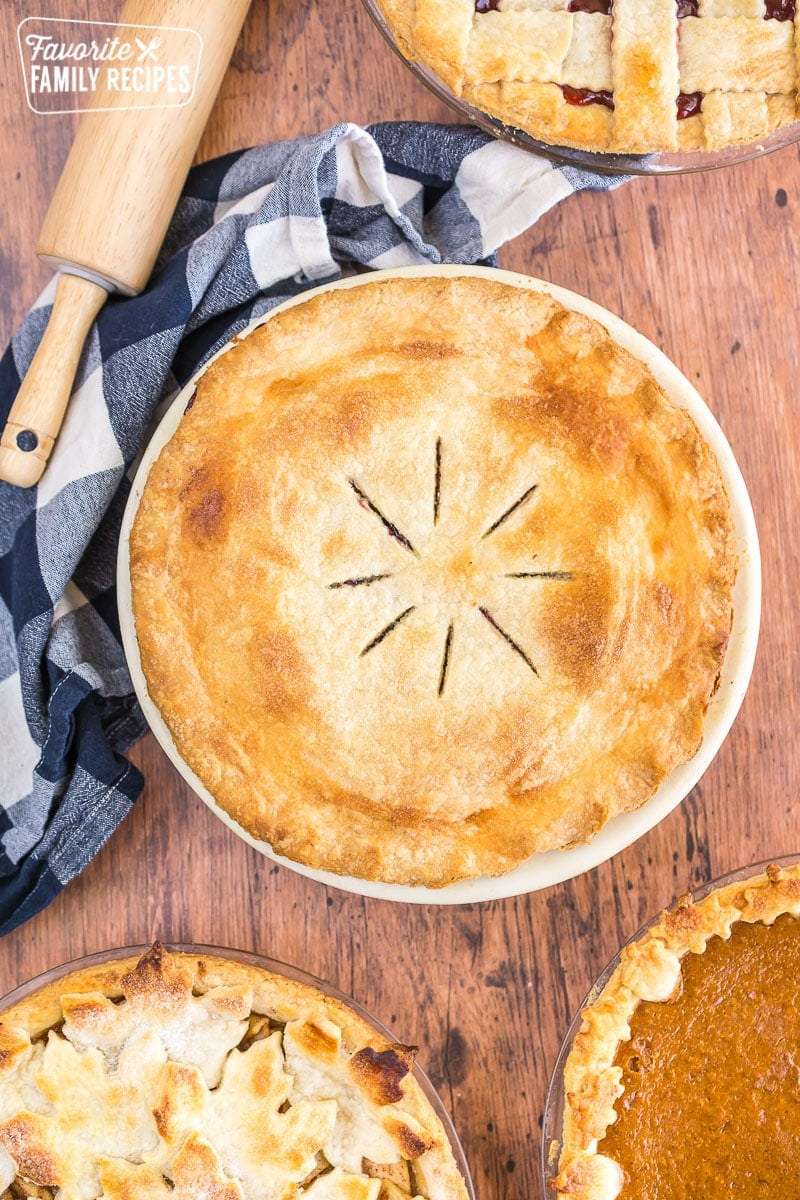
- Add your top crust or decorations as desired. (See note below about top crust and decorations) Bake for 35-40 minutes or until crust is golden brown and filling is bubbly. If pre-baking the crust, poke holes in the crust with a fork and bake for 10-12 minutes.
Notes
- Brush the top crust with milk and sprinkle sugar before baking to add sweetness and a slight crunch.
- If using a full top crust, crimp edges well and cut slits or holes to allow steam to escape.
- This dough quantity makes two pie crusts or one double crust plus a small amount leftover for decorations or hand pies.
Nutrition Information
Show DetailsNutrition Facts
Serving: 16(2 pie crusts or top and bottom crust)
Amount Per Serving
Calories 234 kcal
% Daily Value*
| Calories | 234kcal | 12% |
| Carbohydrates | 19g | 6% |
| Protein | 3g | 6% |
| Fat | 17g | 26% |
| Saturated Fat | 4g | 20% |
| Polyunsaturated Fat | 5g | 29% |
| Monounsaturated Fat | 7g | 35% |
| Trans Fat | 2g | 100% |
| Cholesterol | 10mg | 3% |
| Sodium | 151mg | 6% |
| Potassium | 42mg | 1% |
| Fiber | 1g | 4% |
| Sugar | 1g | 2% |
| Vitamin A | 15IU | 0% |
| Calcium | 11mg | 1% |
| Iron | 1mg | 6% |
* Percent Daily Values are based on a 2,000 calorie diet.
User Reviews
Overall Rating
5
You'll Also Love